Office design directly affects the productivity and satisfaction of employees. Closed offices and open offices are the two main models in modern workspace design, each with its own advantages and challenges. This article will analyze closed and open offices in detail, comparing their characteristics, pros and cons, and their impact on the working environment.

What is a Closed Office?
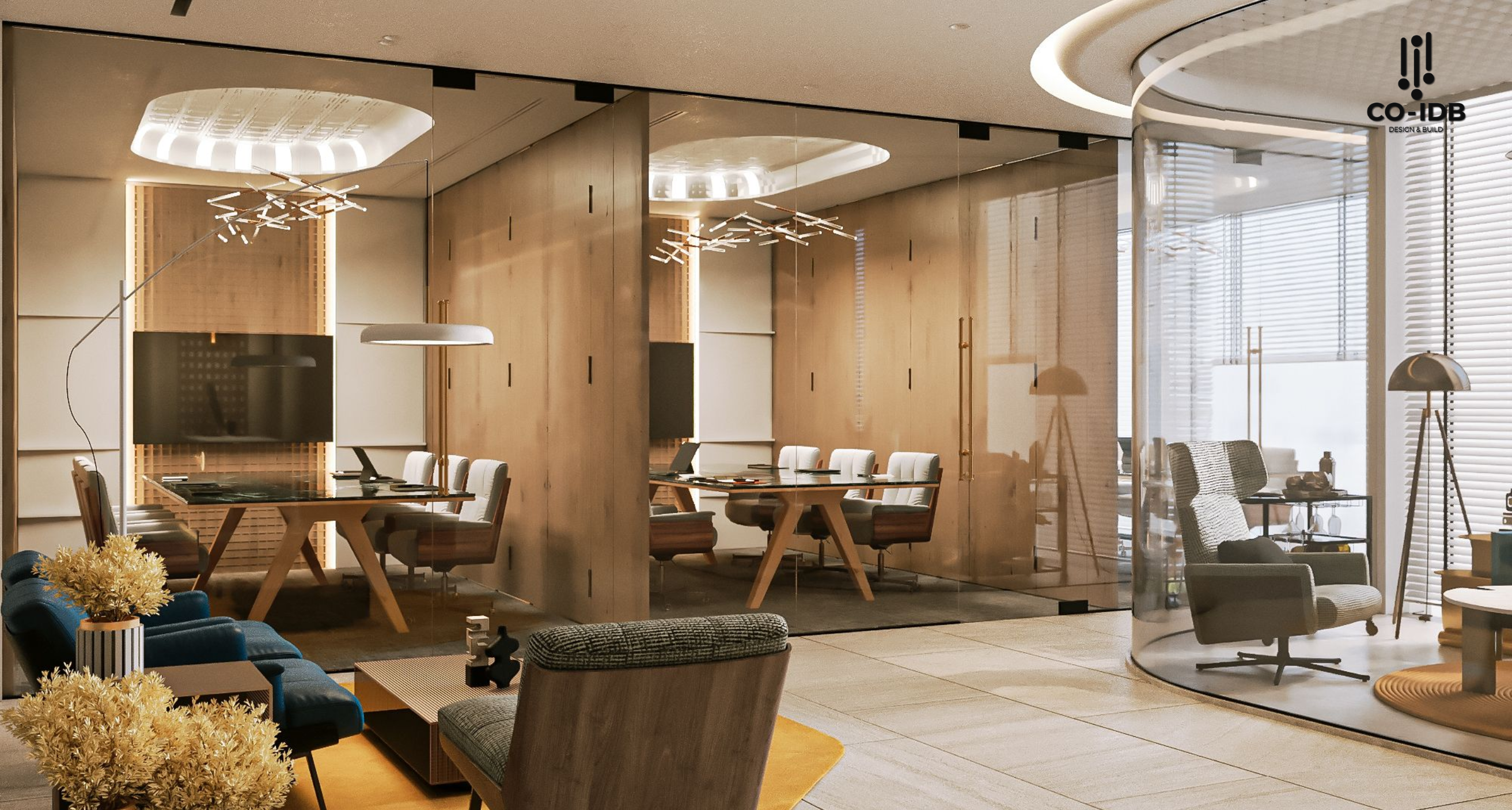
A closed office creates a separate workspace for each employee or small group. Basic features of a closed office include partition walls or full-height floor-to-ceiling partitions, private doors, and individual workspace. Closed offices are typically divided into two main types:
-
Private room: For senior employees or individuals who need independent workspace.
-
Executive office: Specially designed for high-level leadership, often more spacious and luxurious.
Closed offices provide many benefits regarding privacy and focus. However, this type of office can also create communication barriers and reduce interaction between employees.

The Evolution of Closed and Open Offices
Offices have evolved from private room models to open spaces over time. This evolution reflects changes in working methods and corporate culture:
-
Early 20th Century: Closed offices dominated, reflecting strict hierarchical structures.
-
Mid-20th Century: The “office without partitions” concept emerged, the precursor to the open office.
-
Late 20th Century: Open offices became popular, especially among tech companies and startups.
-
Early 21st Century: A trend of combining closed and open offices, leading to the **rise of the hybrid office**.
>> See more: Characteristics of traditional offices
The following table summarizes the development of office design through the ages:
|
Period |
Dominant Office Type |
Main Characteristics |
|
Early 20th Century |
Closed Office |
Private rooms, clear hierarchical structure |
|
Mid-20th Century |
Office without partitions |
Reduced partition walls, increased interaction |
|
Late 20th Century |
Open Office |
Open-plan spaces, promoting collaboration |
|
Early 21st Century |
Hybrid Office |
Combines the advantages of closed and open offices |

Closed Office Layout and Design
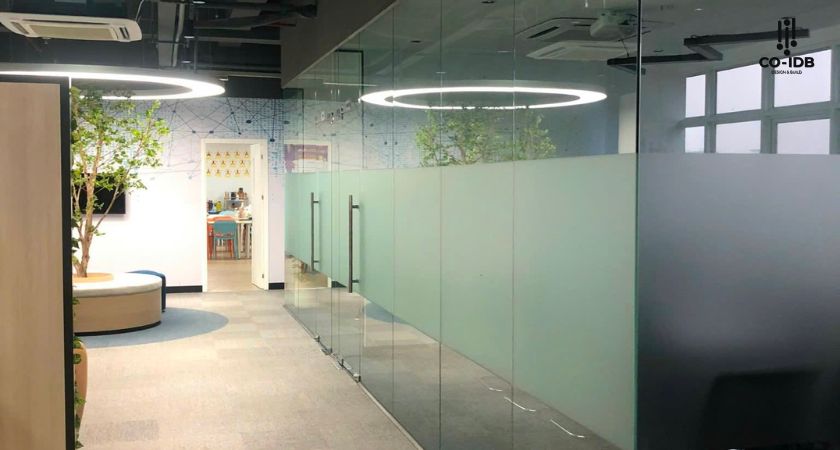
Closed office design follows certain principles to optimize space and work efficiency. A closed office layout focuses on creating a private and professional work environment.

Principles of closed office design include:
-
Space optimization: Each room is designed to maximize usable area.
-
Natural light: Arranging windows to ensure sufficient natural light for each room.
-
Effective soundproofing: Using soundproofing materials to minimize external noise.
-
Ergonomics: Interior design that aligns with ergonomics to increase comfort and efficiency.
Managing space and noise in a closed office is achieved through:
-
Using acoustic partitions between rooms
-
Installing sturdy, sound-insulating doors
-
Placing common areas (such as meeting rooms) in central locations to reduce movement and noise

Comparing Closed Offices and Open Offices
Privacy and Security in Office Spaces
An enclosed office offers many advantages regarding privacy and information security. Information security is better guaranteed in a closed office environment due to the ability to control access and limit exposure to sensitive information.
Advantages of information security in closed offices:
-
Access control: Each room can be protected by a private lock.
-
Minimized eavesdropping risks: Important conversations can take place without worry of being overheard.
-
Physical document protection: Easy to store and protect important documents within a private space.

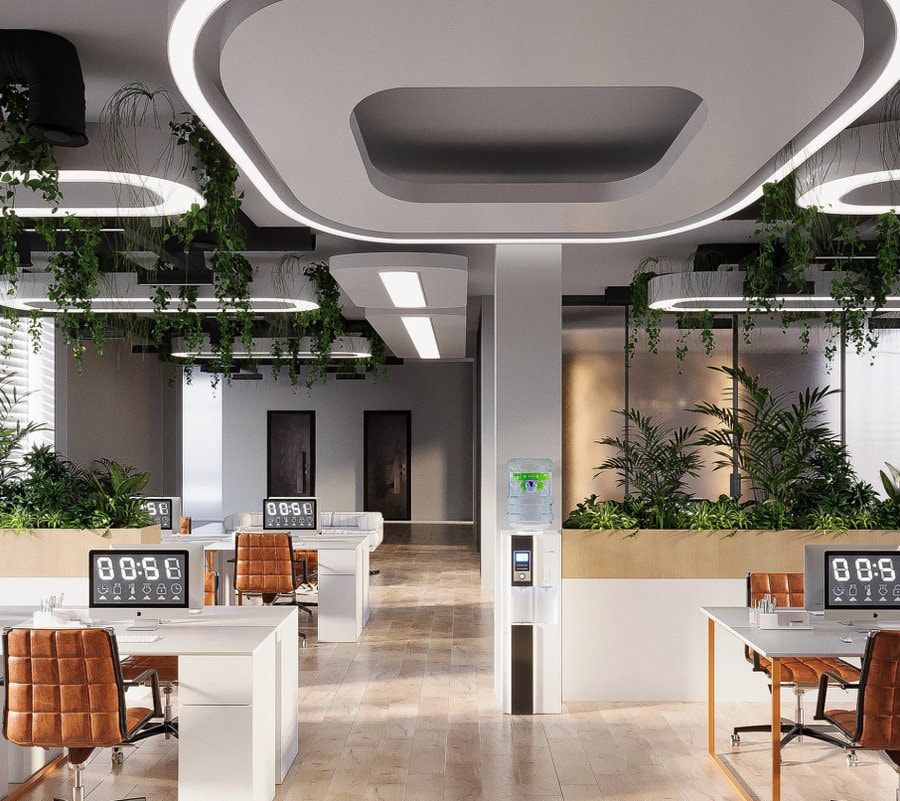
In contrast to closed offices, an office without partitions promotes natural interaction between employees. Team communication is significantly improved in an open office environment due to direct and quick access to colleagues.
How open offices promote natural interaction:
-
Open visibility: Employees can easily see and approach colleagues.
-
Reduced physical barriers: No partition walls or closed doors hindering exchanges.
-
Spontaneous meeting opportunities: Common areas like the pantry or entertainment zones foster informal conversations.

Costs and Economic Efficiency
A corporate office following the closed model usually requires higher construction and maintenance costs. However, this type of office can provide long-term economic benefits by optimizing employee productivity.
Construction and maintenance costs of a closed office include:
-
Building materials: More walls, doors, and soundproofing materials are needed.
-
HVAC systems: Each room might require an individual air conditioning system.
-
Furniture: More furniture is needed as each room must be fully equipped.
On the other hand, an open-plan office is often considered a more cost-effective and space-optimized solution. However, both direct and indirect costs must be considered when evaluating the economic efficiency of this office type.

How open offices save costs and optimize space:
-
Reduced construction costs: Fewer partition walls and doors reduce material and labor costs.
-
Energy savings: Centralized HVAC and lighting systems are more efficient.
-
Layout flexibility: Easy to change the layout when scaling up or down is necessary.
Cost and economic efficiency comparison table between closed and open offices:
|
Factor |
Closed Office |
Open Office |
|
Initial construction cost |
High |
Low |
|
Maintenance cost |
Average |
Low to Average |
|
Space utilization efficiency |
Low to Average |
High |
|
Energy efficiency |
Low |
High |
|
Expansion cost |
High |
Low |
|
Employee productivity |
Can be higher (due to focus) |
Can be lower (due to distractions) |

Read more: 5 tips to optimize costs in office interior design
How to Choose the Right Office Type for Your Business
Choosing between a closed office, an **open office**, or a hybrid model depends on many factors. Businesses need to consider carefully to select the office type that best fits their needs and corporate culture.
Factors to consider when choosing an office type:
-
Company scale: Large companies may need a combination of different types of spaces.
-
Industry: Some sectors requiring high security may be more suited to closed offices.
-
Company culture: Companies that encourage collaboration may prefer an open office.
-
Budget: Consider long-term construction and operating costs.
-
Flexibility: The ability to adapt to future changes.
Analyzing organization and employee needs:
-
Employee surveys: Understand the preferences and needs of the workforce.
-
Workflow assessment: Determine the predominant type of work (individual vs. group).
-
Consider long-term strategy: Choose an office type that aligns with the company’s growth plan.

In conclusion, choosing between a closed office and an open office is a critical decision that can affect performance, culture, and employee satisfaction. There is no one-size-fits-all solution; each business must consider carefully based on its specific needs. **Co-IDB** has extensive experience brainstorming design samples suitable for **current office types**. Therefore, if you are still undecided on the best choice for your business, contact us immediately so we can assist and **provide 24/7 consultation for you.**
>>> See more: Office Interior Design Quotation: detailed full-package price list