What is veneer? This solution emerged to help businesses in the wood industry save production costs while still creating interior products with beautiful, natural colors and wood grains like real solid wood. Join Co-IDB to explore the details of Veneer wood, the outstanding advantages of this material, and its prominent applications in modern interior design.

What is Veneer Wood?
Veneer, also known as wood veneer or sliced wood, consists of thin sheets of wood sliced directly from natural wood logs, with a thickness ranging from 0.3mm to 0.6mm and a maximum of no more than 3mm.
These veneer sheets are typically glued onto the surface of industrial wood core materials such as MDF, Plywood, MFC, or wood chips. As a result, they create office furniture items at a low cost while still preserving the natural beauty of the wood grain, effectively meeting the aesthetic needs and budgets of many customers. Some common applications of veneer include wardrobes, sofa coffee tables, cabinets, dining tables,… Currently, there are three popular methods for veneer production:
-
Rotary cutting: The wood is peeled from the outside surface to the core, similar to slicing a paper roll, creating continuous veneer sheets.
-
Flat slicing: The log is cut in half, and then the knife slices parallel to the wood’s core, resulting in veneer sheets with characteristic cathedral (mountain) grain patterns.
-
Quarter slicing: The log is divided into four parts before slicing, yielding veneer sheets with straight, even grain patterns.
>> See more: All about wood furniture for office spaces

Popular Types of Veneer Sheets Today
Oak Veneer Sheet
Oak veneer, also known as sliced oak wood, is a material thinly sliced from natural oak wood, with an average thickness of about 0.1 – 0.2mm. These veneer sheets are typically used as a surface covering, pressed onto an industrial wood core to create the finished product.
Advantages of oak veneer:
-
Lightweight, easy to transport and install.
-
Good resistance to termites and wood borers, especially white oak veneer.
-
High hardness and compression resistance of red oak veneer, ensuring superior durability.
-
Does not warp, shrink, and maintains a long lifespan.
-
Stable color that does not fade over time.
-
Smooth, beautiful surface, natural wood grain, bringing a luxurious look to the space.
-
Environmentally friendly and safe for user health.
-
Reasonable cost, significantly lower than natural solid oak wood.
Disadvantages of oak veneer:
-
Poor water resistance, not suitable for humid environments.
-
Difficult to disassemble, limiting flexibility when repairs are needed.

Walnut Veneer Sheet
Walnut veneer is a material exquisitely sliced from natural walnut wood, with an average thickness of about 0.3cm. These veneer sheets are then glued onto the surface of industrial wood cores such as MDF, MFC,… to create a finished product with natural and luxurious beauty.
Advantages of walnut veneer:
-
Resistant to warping, helping the product maintain stability over a long period.
-
Beautiful, luxurious wood grain, bringing class and sophistication to the interior space.
-
High heat resistance, good moisture resistance, and load-bearing capacity, suitable for various usage conditions.
Disadvantages of walnut veneer:
-
Environmental impact due to excessive exploitation of natural walnut wood.
-
High cost, not suitable for low budgets.

Ash Veneer Sheet
Ash veneer is a material thinly sliced from natural ash wood, with an average thickness ranging from 0.1 – 0.3cm. Similar to walnut veneer, these veneer sheets are typically glued onto the surface of industrial wood cores such as MDF, HDF, or plywood to create beautiful and durable interior products.
Advantages of ash veneer:
-
Bright and naturally beautiful wood grain, bringing a youthful and modern look to the space.
-
Good resistance to warping, maintaining stability over time.
-
High durability, relatively good impact resistance.
-
Easy to process, suitable for various furniture styles and designs.
-
Reasonable cost, lower than solid natural wood.
Disadvantages of ash veneer:
-
Poor water resistance, not suitable for humid or outdoor environments.
-
Prone to scratching, requires care during use.
-
Limited heat resistance, not suitable for contact with high heat sources.

Sappanwood Veneer Sheet (Xoan Đào)
Sappanwood veneer (Xoan Đào) is a material thinly sliced from natural Sappanwood, with an average thickness of about 0.117 inches. These veneer sheets are used as a surface covering, combined with an industrial wood core to create the finished interior product.
Advantages of Sappanwood veneer:
-
Beautiful wood grain, bringing a natural and warm look to the space.
-
High durability, ensuring a long lifespan for the product.
-
Good load-bearing capacity, suitable for interior designs requiring sturdiness.
-
Limited warping, maintaining a stable shape over time.
Disadvantages of Sappanwood veneer:
-
Poor water resistance, not suitable for humid environments.
-
Low hardness, easily scratched if subjected to strong impact.
-
Limited heat resistance, not suitable for use near high heat sources.

Veneer and Its Applications in Office Interior Design
Veneer Wood Flooring
With its natural beauty and superior durability, veneer wood flooring brings a luxurious, modern space to offices. Compared to other types of natural wood, veneer wood flooring has a much more reasonable price, while still ensuring high aesthetics and good load-bearing capacity.

Veneer Wood Office Doors
With good load-bearing capacity, resistance to warping and termites, veneer wood doors are easy to maintain, making them an ideal choice for modern offices.
Veneer Wood Desks
Some office furniture items, such as desks, can be crafted from veneer wood. Desks made from veneer wood not only have high durability but also possess good water and termite resistance, helping to maintain long-lasting quality.

Veneer Wood Office Filing Cabinets
Veneer cabinets not only have high durability but also possess sophisticated aesthetics, making the office space more luxurious. In addition, the easy fabrication of veneer wood provides flexibility, making the cabinets suitable for various designs and usage needs in the office.

Veneer Plywood Wall Cladding
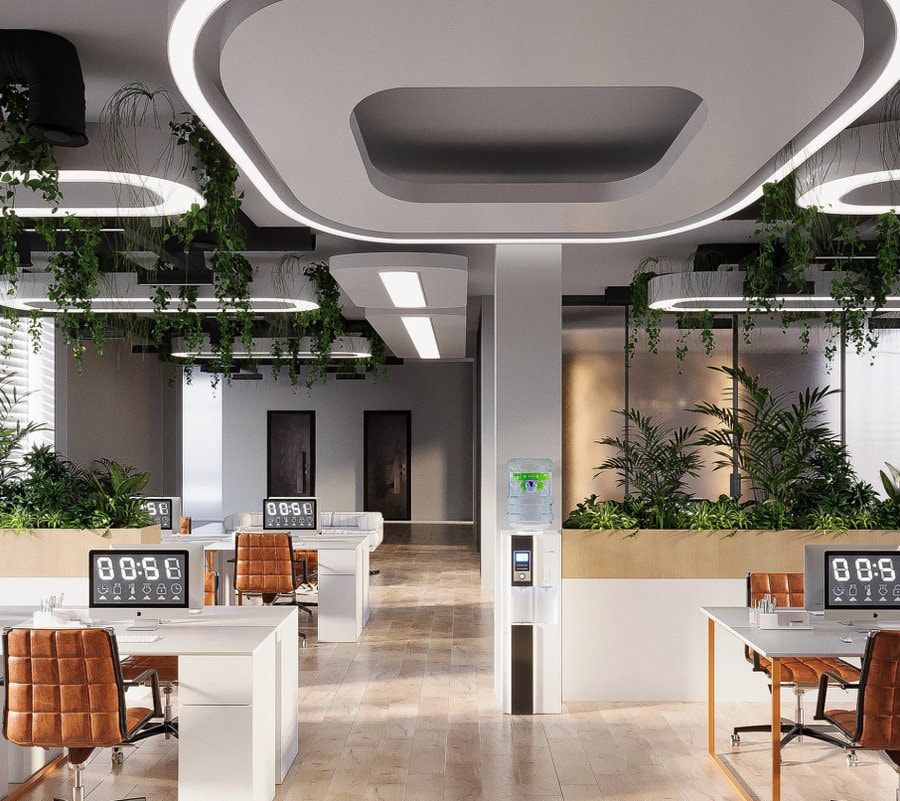
Veneer plywood wall cladding is a perfect solution to create an aesthetic highlight for the office space. With a beautiful natural wood grain surface, veneer wall cladding brings luxury and warmth. Veneer plywood has high durability, resists warping, and is easy to install, creating a professional and modern workspace.
Veneer Wood Partitions
Veneer wood partitions are an ideal choice for office spaces, not only ensuring superior durability but also enhancing the aesthetics of the workspace. Using veneer wood helps create a luxurious, modern, and professional office environment, while contributing to improving the quality of the workspace.

Veneer Wood Price List by Type for Businesses
Below is a reference price list for common types of veneer wood that businesses can use for office projects:
|
Veneer Wood Type |
Unit Price (VNĐ/m2) |
Characteristics |
|
Oak Veneer |
450,000 – 650,000 |
Beautiful wood grain, durable, good resistance to warping and shrinking |
|
Walnut Veneer |
1,200,000 – 1,500,000 |
Luxurious wood grain, good heat and load resistance, high durability |
|
Sappanwood Veneer (Xoan Đào) |
350,000 – 500,000 |
High durability, good load resistance, beautiful wood grain |
|
Ash Veneer (Tần Bì) |
400,000 – 600,000 |
Bright wood grain, good warping resistance, easy to fabricate |
Note: Prices may vary depending on the size, thickness of the veneer, and the supplier’s location.
>> See more: What is Laminate? All information about this interior material
Hopefully, the article above can answer your question, “What is Veneer?” With its natural beauty and high durability, veneer is widely applied in office design for items such as filing cabinets, desks, and partitions. Popular veneer types like oak, walnut, sappanwood, and ash bring sophistication to the space. Contact Co-IDB for detailed consultation on veneer solutions for your office!