“What is a Defect List?” is a question Co-IDB has frequently received from businesses lately. During the completion of office projects, the occurrence of defects is often unavoidable. So, what exactly is a construction defect, and how can it be effectively resolved? Join Co-IDB as we explore basic concepts and practical solutions to minimize and handle construction errors through the article below.

What is a Defect List?
A defect, often referred to as a construction fault, is an error arising during the building process that results in a project failing to meet quality, aesthetic, safety, or technical standards specified in the contract or design documents.
These errors can occur at any stage, from preparation to finishing. Timely identification and rectification via a “snag list” (or defect list) ensures the sustainability and efficiency of the workspace.
How to Create a Defect List by Categorization
Classification by Severity
Minor Defects
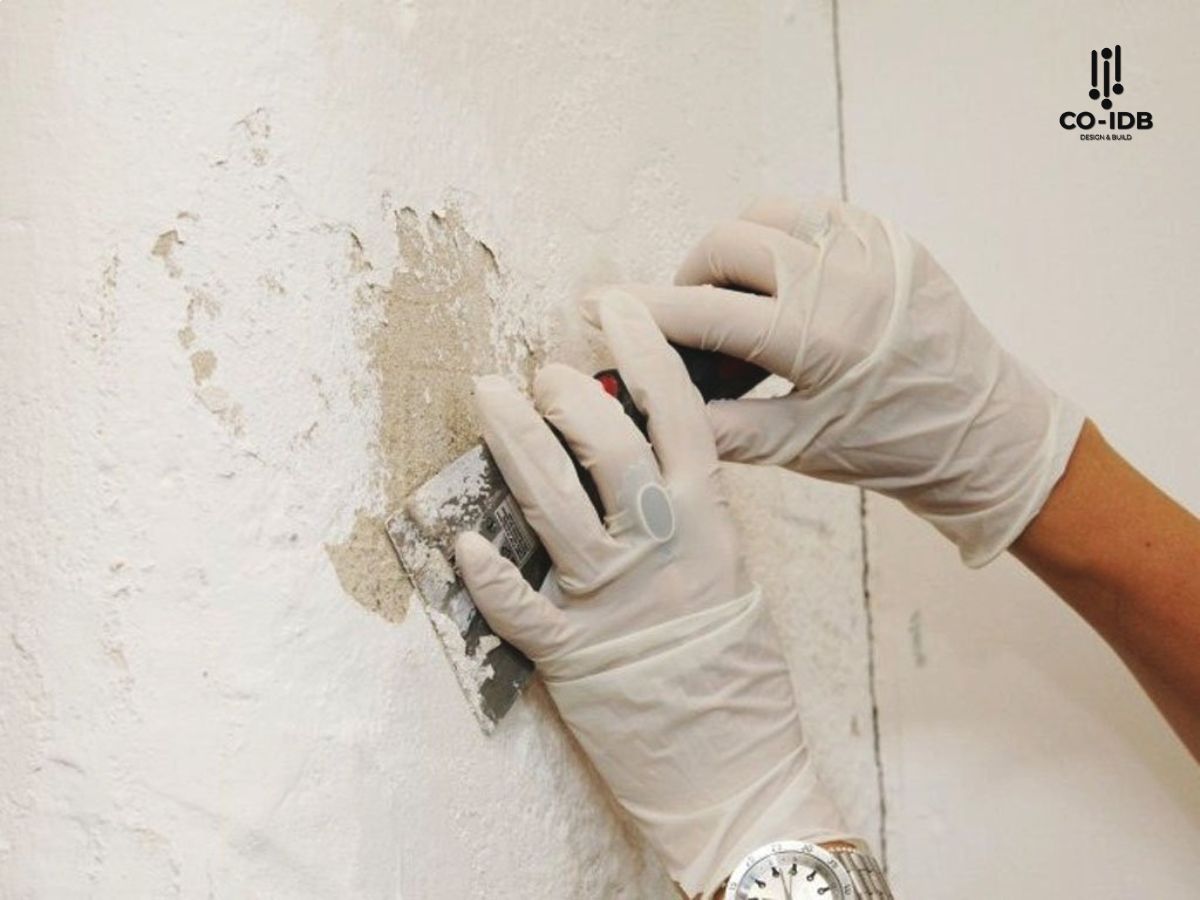
These are faults that do not affect the structural integrity but impact aesthetics and functionality. Examples include small cracks in paint, uneven flooring, or slight misalignments in decorative trim. Businesses should pay close attention to these during the cleaning and project acceptance phase.
Major Defects
These errors seriously impact the structure and load-bearing capacity, posing safety risks. Deep cracks in beams, columns, foundations, or deviations in structural axis and height are major defects requiring immediate correction.

Classification by Location
Structural (Shell) Defects
Errors occurring during the “rough-in” stage, involving foundations, slabs, and columns. These include dimensional deviations or sub-standard concrete and steel quality.
Finishing Defects
Faults appearing during painting, tiling, or MEP (Mechanical, Electrical, Plumbing) installation. Common examples include peeling paint or water leaks. Ensure these are noted during the project handover for contractor support.

Classification by Cause
- Design Errors: Blueprints that don’t match site conditions or ignore geological factors.
- Workmanship Errors: Poor execution by unskilled labor or improper techniques.
- Material Defects: Use of low-quality or counterfeit materials (e.g., weak concrete).
- Environmental Factors: Extreme weather or high humidity causing mold and material degradation. Frequent office maintenance helps in early detection.
4 Effective Solutions to Resolve Defects
1. Detailed Implementation Planning
A granular plan from day one minimizes avoidable errors and ensures the project stays on schedule. Proactive resource calculation saves time on future rectifications.
2. Select a Reputable Contractor
Partnering with an experienced contractor like Co-IDB ensures professional management. We are proud that nearly 100% of our clients, including MB Ageas, Hanh Nguyen Logistics, and Acecook, highly rate our defect-free delivery.

3. Prioritize High-Quality Materials
Investing in durable, high-spec materials from the start prevents issues like subsidence or corrosion, ultimately saving long-term maintenance costs.
4. Regular Inspection and Maintenance
Periodic checks catch defects before they become critical. A systematic snagging process protects the structure and extends the life of the office.
What is a Defect List? Hopefully, this information has answered your concerns. Rapid defect identification not only guarantees quality but also saves costs. For expert consultancy on office construction and quality control, contact Co-IDB today!
>> See more: