Effective site logistics and floor plan layout must adhere to key principles that optimize both functionality and aesthetics. A well-organized workspace fosters professionalism and boosts employee productivity. Join Co-IDB as we explore professional office layout strategies and the critical factors influencing spatial organization in the article below!

What is Floor Plan Layout Planning?
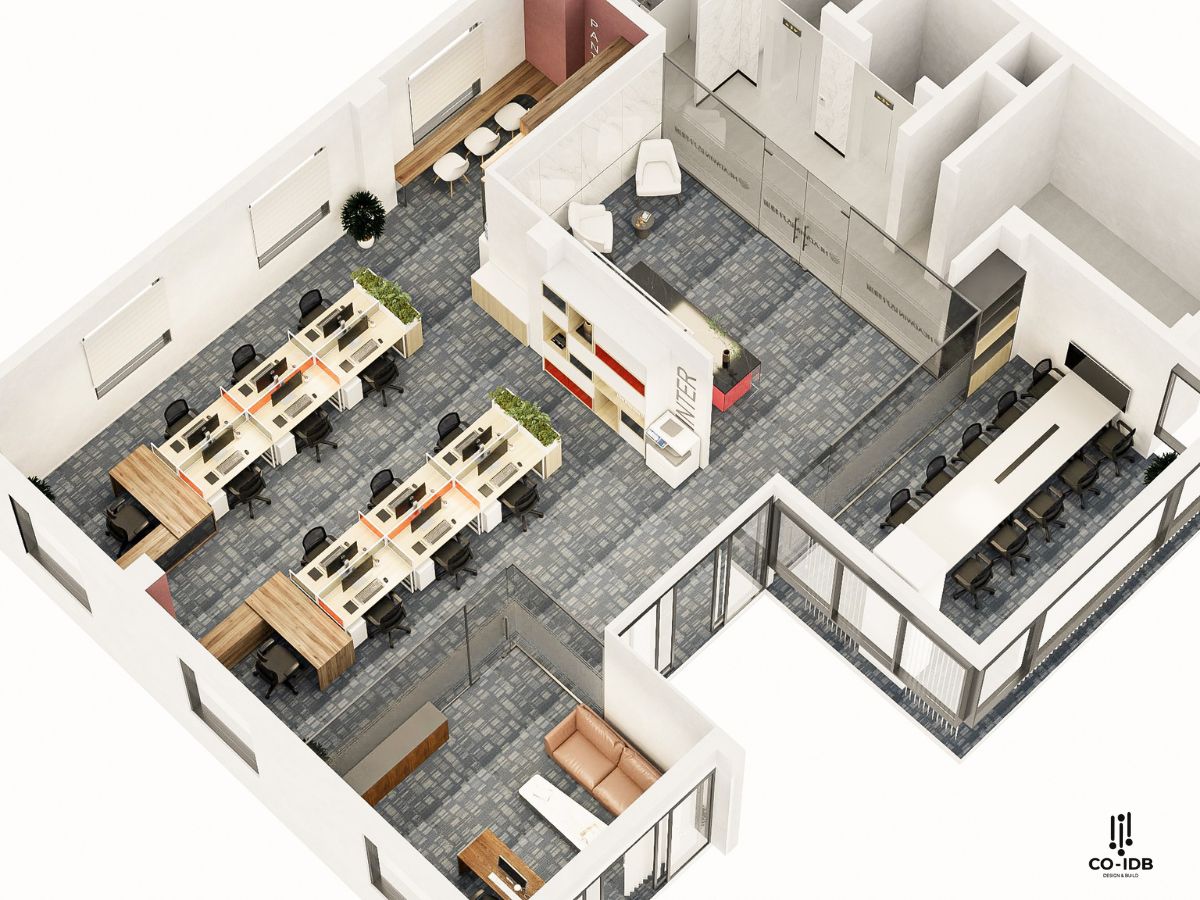
Floor plan layout is the process of strategically organizing space to ensure functionality, aesthetics, and operational efficiency within a specific facility. To create a harmonious and convenient environment, this process includes:
- Defining room positioning.
- Allocating functional zones.
- Mapping circulation paths and traffic flow.
- Integrating auxiliary support elements.
In design and construction, effective layout planning optimizes space while meeting Feng Shui, safety, and utility standards, ultimately enhancing user experience and property value.
>> See more: Office Project Planning: A-to-Z Detailed Guide
The Role of Strategic Office Layouts
Scientific Spatial Organization
A professional layout enables logical zoning based on departmental functions, ensuring seamless operational flow.
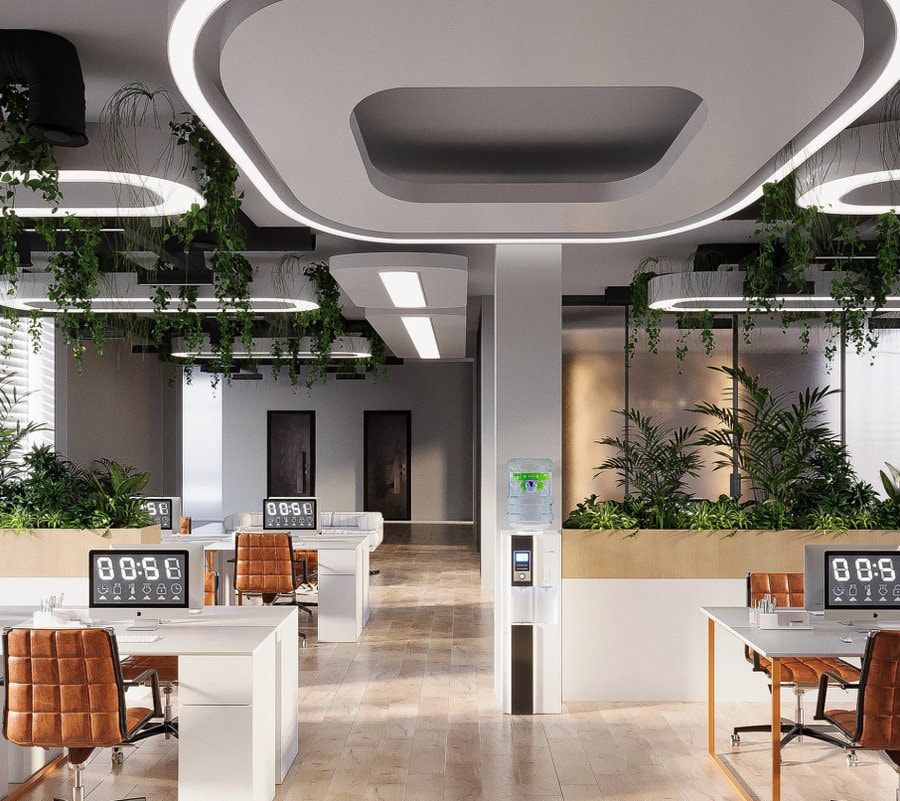
- Reception areas are placed for easy accessibility, while workstations prioritize biophilic design (natural light).
- Functional zones are optimized for interaction. Departments that collaborate frequently are positioned adjacent to each other, with minimalist furniture arrangements to support workflow efficiency.

Customized Branding & Culture
Every business has a unique culture and working style. Within the same footprint, a customized floor plan reflects the brand’s identity, ensuring the environment is tailored to specific corporate characteristics.
Employee Well-being & Motivation
A space designed with the user in mind—combining ergonomic layout with optimized lighting—serves as a catalyst for employee inspiration. This leads to higher productivity and helps the enterprise achieve its strategic goals.
Critical Factors Affecting Site Logistics & Layouts
Spatial Dimensions & Geometry
The size and shape of the floor plate are the primary constraints. While square spaces are easier to organize, irregular or narrow footprints require creative spatial problem-solving. The challenge is maximizing usable square footage without compromising staff comfort or traffic flow.
>> See more: Office Interior Detailing: Construction Planning from A to Z
User Requirements & Headcount
Employee density directly impacts the ratio between private workstations, collaborative zones, meeting rooms, and breakout spaces. In high-density offices, clear zoning of communal areas like pantries is vital to maintain order and encourage healthy interaction.
Functional Zoning
Each zone has a distinct purpose: meeting rooms require acoustic privacy, while “Agile zones” need open configurations to foster communication. Functional division ensures daily operations run smoothly without interference.

Top 4 Common Office Layout Models
1. Small-Scale Office Optimization
In urban hubs like Ho Chi Minh City, small offices require intensive space optimization. Full-service Design & Build solutions are ideal for maximizing utility while maintaining brand aesthetics in limited square footage.
2. Large-Scale Corporate Headquarters
Spacious floor plans allow for expansive display areas, premium executive suites, and diverse amenity zones (gyms, lounges). High-end furniture and sophisticated design languages are often used to define prestige.
3. Open-Plan Concept
Characterized by minimal partitions, this layout promotes transparency and biophilia. Soundproof glass dividers are used for meeting rooms to maintain acoustic integrity while keeping the visual flow uninterrupted.
4. Multi-functional & Agile Workspaces
These integrate various departments into a unified ecosystem, fostering deep collaboration. Specific zones for quiet work and leadership remain separate but accessible, facilitating high flexibility.
Essential MEP Systems in Site Logistics
Electrical & Data Layout
Positioning of power outlets, data points, and control panels must be meticulously mapped in the interior design drawings to prevent traffic obstruction and ensure future scalability for tech equipment.
Ceiling & Lighting Grid
An effective lighting layout ensures uniform illuminance. The grid must balance natural light with artificial sources (LED panels, task lighting) to reduce eye strain and promote workplace health.

Plumbing & Wet Zone Coordination
Coordination for wet zones (pantries, restrooms) is a critical technical requirement. Systems must prioritize easy maintenance access, leak prevention, and optimal resource management without compromising the office’s aesthetics.
Site logistics and layout planning require a contractor with high technical calculation skills to harmonize utility with design. Contact Co-IDB for expert consultation and optimize your office design today!