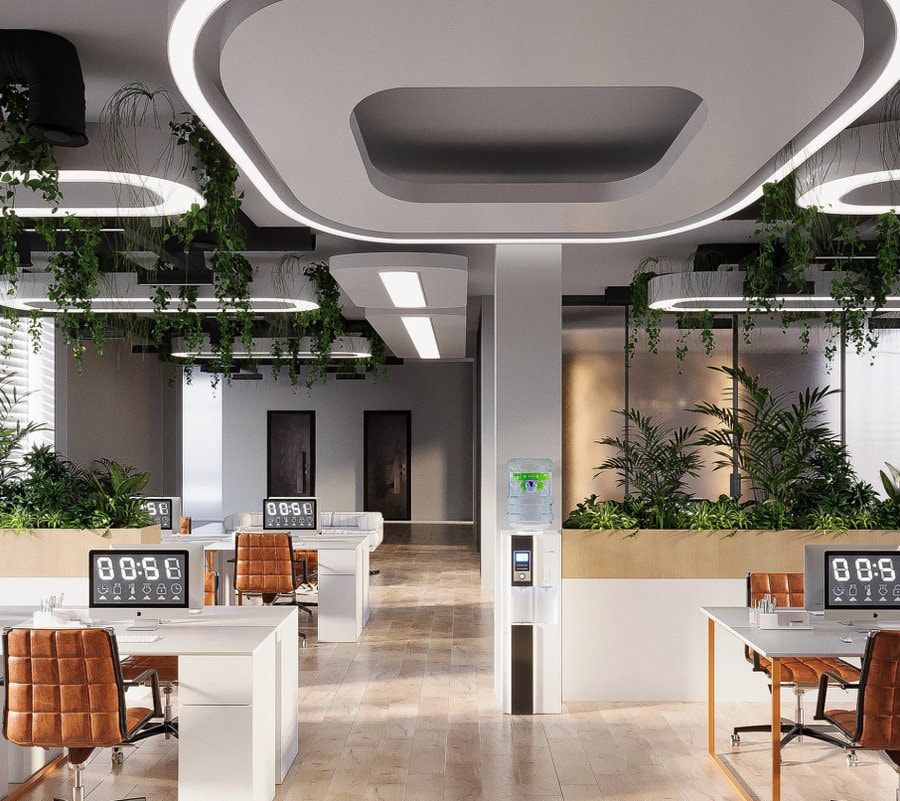
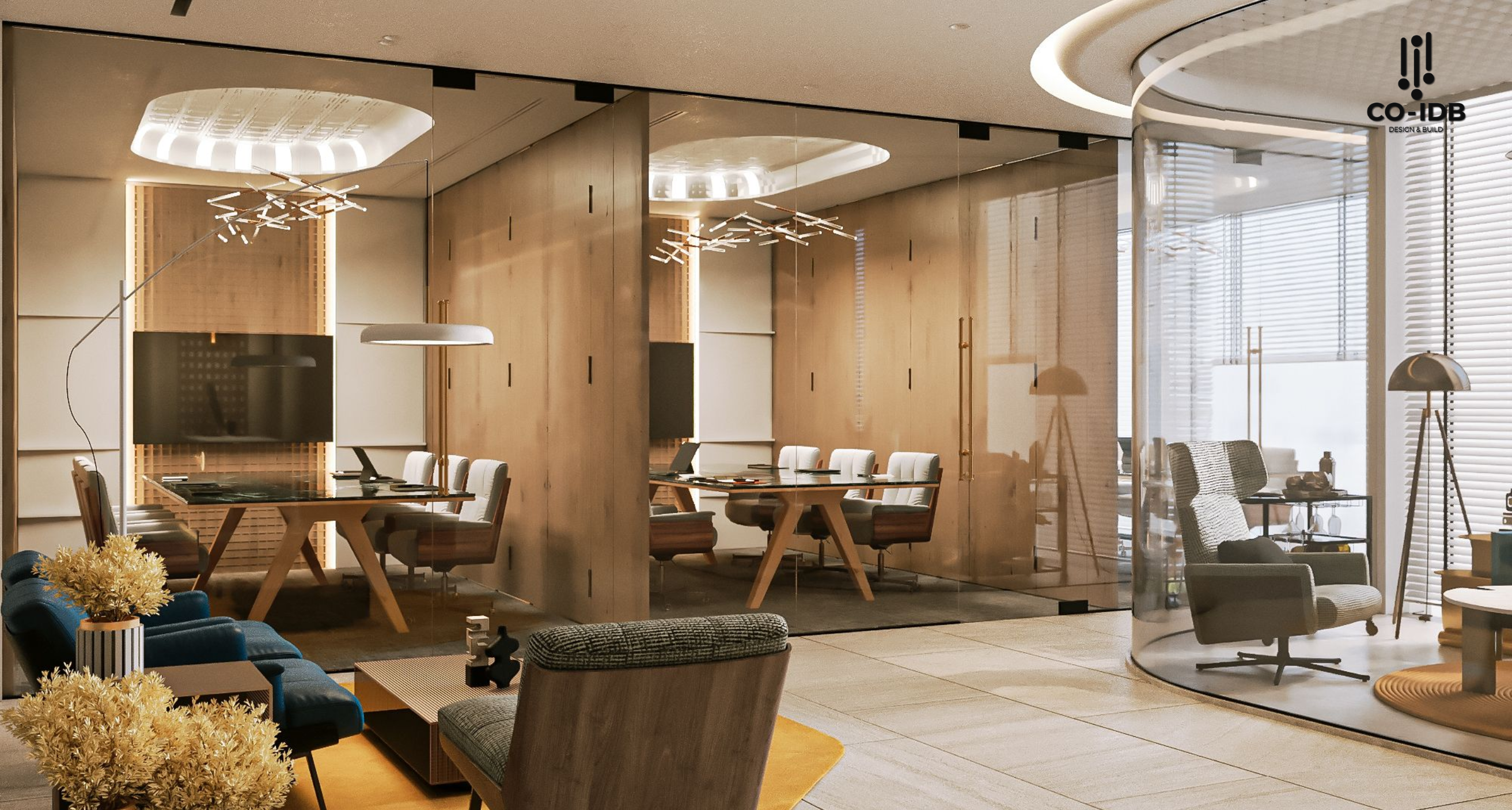
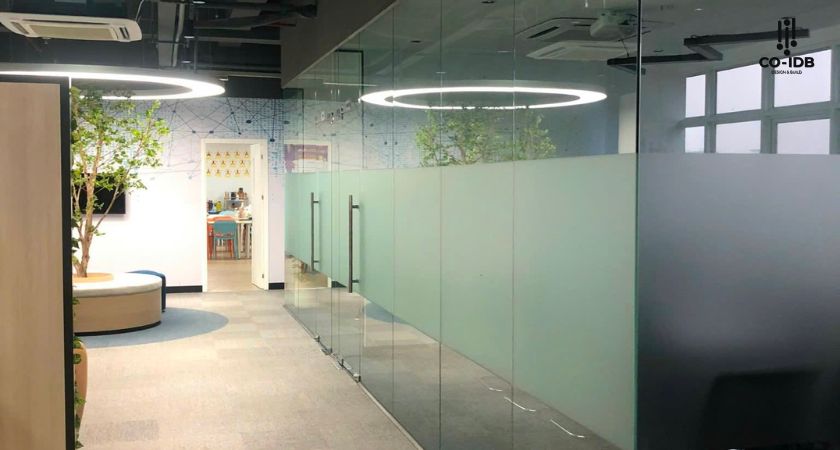
Shared office spaces are becoming a popular trend chosen by many small and medium-sized enterprises to optimize operating costs. The following article will provide detailed instructions on how to effectively design a shared office, helping businesses maximize budget savings.

What is a Shared Office?
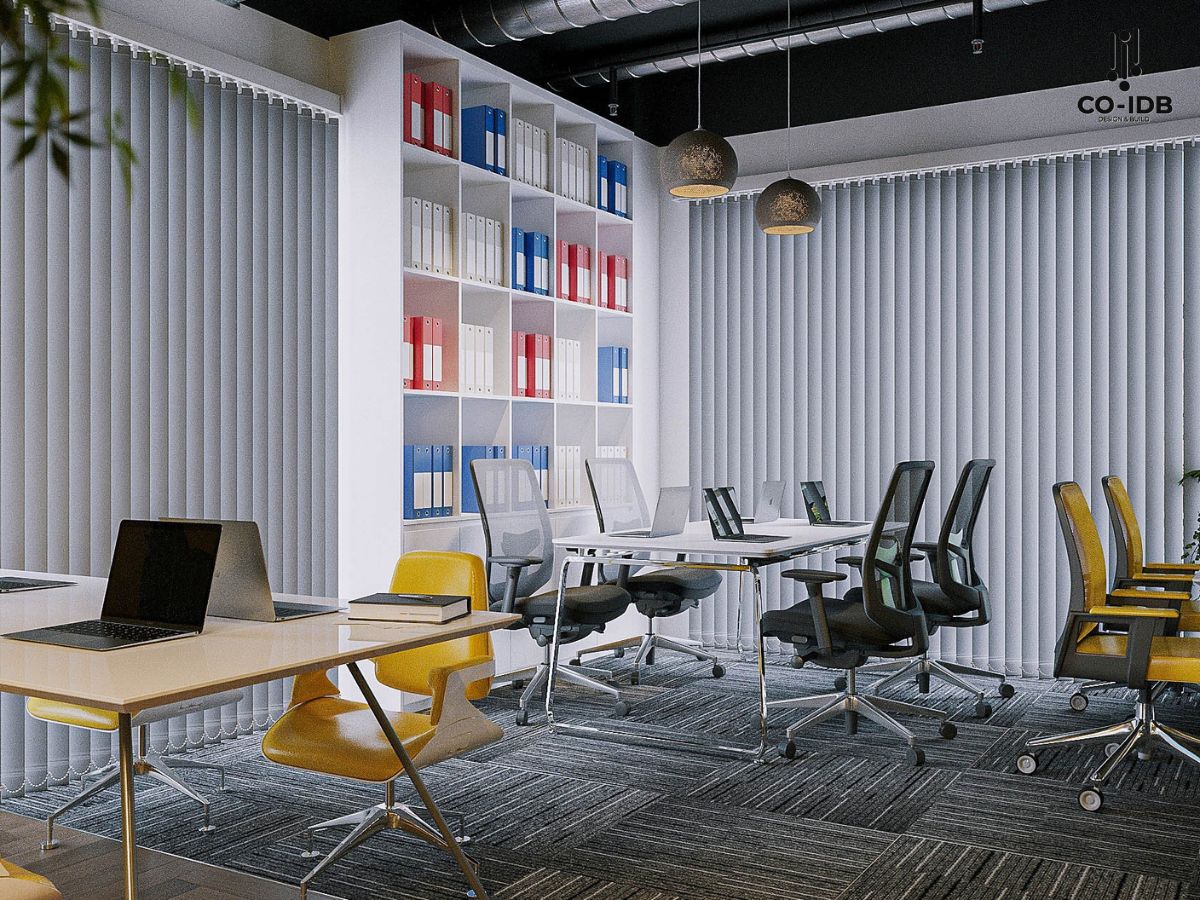
A shared office is a workspace designed for multiple businesses to use, maximizing functionality and saving operating costs. Unlike the traditional office model, this common workspace allows businesses to share facilities, utilities, and operating expenses, thereby optimizing the investment budget.
The shared office trend is developing strongly in the Vietnamese market, especially in major cities like Hanoi and Ho Chi Minh City. According to a VTV report, the demand for renting shared offices has increased by 30% annually since the COVID-19 pandemic, reflecting a shift in how businesses approach workspaces.

Classification of Shared Office Models
The shared office model includes diverse forms, meeting the different needs of businesses:
|
Type |
Characteristics |
Suitable for |
|
Hot desk |
– Flexible seating – Lowest cost – Open space |
Freelancers, Early-stage Startups |
|
Dedicated desk |
– Fixed seating – Personal locker – Stable workspace |
Small teams, Medium enterprises |
|
Private office |
– Separate room – Fully equipped – High security |
Developed businesses |
>> See more: The most common types of offices today

Characteristics and Needs of Target Businesses
Small and medium-sized enterprises need office solutions that meet the following criteria:
-
Optimal and flexible costs
-
Scalability according to needs
-
Professional facilities
-
Networking environment
Startups and freelancers prioritize workspaces with high flexibility and reasonable costs. Meanwhile, remote teams require a hybrid solution that effectively combines online and offline work.
Cost Benefits of Shared Office Space
Shared office space brings many financial benefits:
-
Save 30-50% on premises rental costs
-
Reduce 40-60% of initial setup costs
-
Optimize 25-35% of monthly operating costs
This model allows businesses to flexibly adjust space according to actual needs, avoiding resource waste and optimizing the budget.

Guide to Cost-Effective Shared Office Design
Basic Design Principles
Shared office design is based on three core principles to ensure usage efficiency and cost optimization. Optimal space is created through the application of modular design principles, allowing flexible layout changes according to actual needs.
Optimizing Space Utilization:
-
Usage density: 70-80% of net area
-
Multi-functional space: 40-50% of total area
-
Circulation area: 20-25% of area
-
Area/person ratio: 4-6m²
Flexible, Multi-functional Design:
-
Smart mobile partitions
-
Foldable furniture
-
Modular electrical and plumbing systems
-
Raised technical flooring
|
Design Factor |
Minimum Standard |
Optimal Standard |
|
Ceiling height |
2.7m |
3.0m |
|
Aisle width |
1.2m |
1.5m |
|
Workspace distance |
1.0m |
1.2m |
|
Area/workstation |
4m² |
6m² |

Dividing Necessary Functional Areas
Functional zoning follows the principle of optimizing movement flow. The common working area is positioned where natural light is best, while meeting rooms are placed in areas that ensure privacy.
Common Working Area:
-
Hot desk zone:
-
Area: 30-35% of total area
-
Density: 1 person/4m²
-
Equipment: Flexible single desks and chairs
-
Dedicated desk area:
-
Area: 25-30% of total area
-
Density: 1 person/5m²
-
Equipment: Fixed desks, personal lockers
Meeting Rooms and Collaboration Spaces:
-
Large meeting room: 15-20 people
-
Medium meeting room: 6-8 people
-
Small meeting booths: 2-4 people
-
Open brainstorming area

Other Solutions for Cost Savings
Cost optimization solutions focus on three main aspects: smart furniture, technical systems, and management technology.
Choosing Smart Furniture:
Smart furniture is a key factor in optimizing costs and space utilization. Mobile partitions allow flexible separation of space according to actual needs. Multi-functional storage cabinets combine various functions, minimizing occupied area.
In addition, furniture should be selected according to the following criteria:
-
Flexible adjustability
-
High durability
-
Low maintenance cost
-
Minimalist design, easy to combine

Optimizing Electrical and Plumbing Systems:
-
Lighting:
-
Smart LED with motion sensors
-
Maximizing natural light
-
Zoned control
-
-
Air conditioning:
-
Energy-saving VRV/VRF system
-
Automatic temperature sensors
-
Zoned air conditioning based on usage density
-
-
Water:
-
Water-saving sanitary equipment
-
Recirculating water treatment system
-
Smart leak sensors
-
Applying Management Technology:
-
Automatic booking system
-
Smart utility management
-
Real-time energy monitoring
-
Access control with magnetic cards

The initial investment for these solutions may be 15-20% higher than traditional office design, but the ROI is achieved after 18-24 months through 30-40% savings in operating costs.
Frequently Asked Questions about Shared Office Space
What is the setup cost for a 100m² shared office?
The average setup cost for a 100m² shared office ranges from 800 million to 1.2 billion VND, including space renovation, furniture, and technical systems. ROI is typically achieved after 24-36 months with a utilization rate of 75% or more.
What are the standards for the HVAC system in a shared office?
The HVAC system needs to ensure an air exchange rate of 8-10 times/hour and maintain CO2 below 800ppm. VRV/VRF inverter with COP >4.0 is the optimal choice for energy efficiency.
What is the required phone booth area ratio in a shared office?
Phone booths should occupy 5-7% of the total area with a density of 1 booth/15-20 users. Each booth has a minimum area of 2.5m² and is equipped with soundproofing reaching NIC 35.

What special requirements need attention when designing a server room for a shared office?
The server room needs to be designed with a cooling density of 4-5kW/rack and N+1 redundancy for the cooling system. Two-layer access control with biometric authentication and 24/7 camera surveillance ensures security for the data infrastructure.
What type of sound system should be chosen for the common workspace?
The background sound masking system is set at 42-45dB with a frequency from 100-5000Hz to create optimal white noise. Zone-based sound masking technology allows for separate adjustments for each functional area.
Through this article, Co-IDB has provided a comprehensive view of cost-optimized shared office design, from basic principles to future trends. Businesses can refer to this to build an efficient, cost-saving, and market-trend-aligned workspace.

> See more: What is the right definition of an ideal office