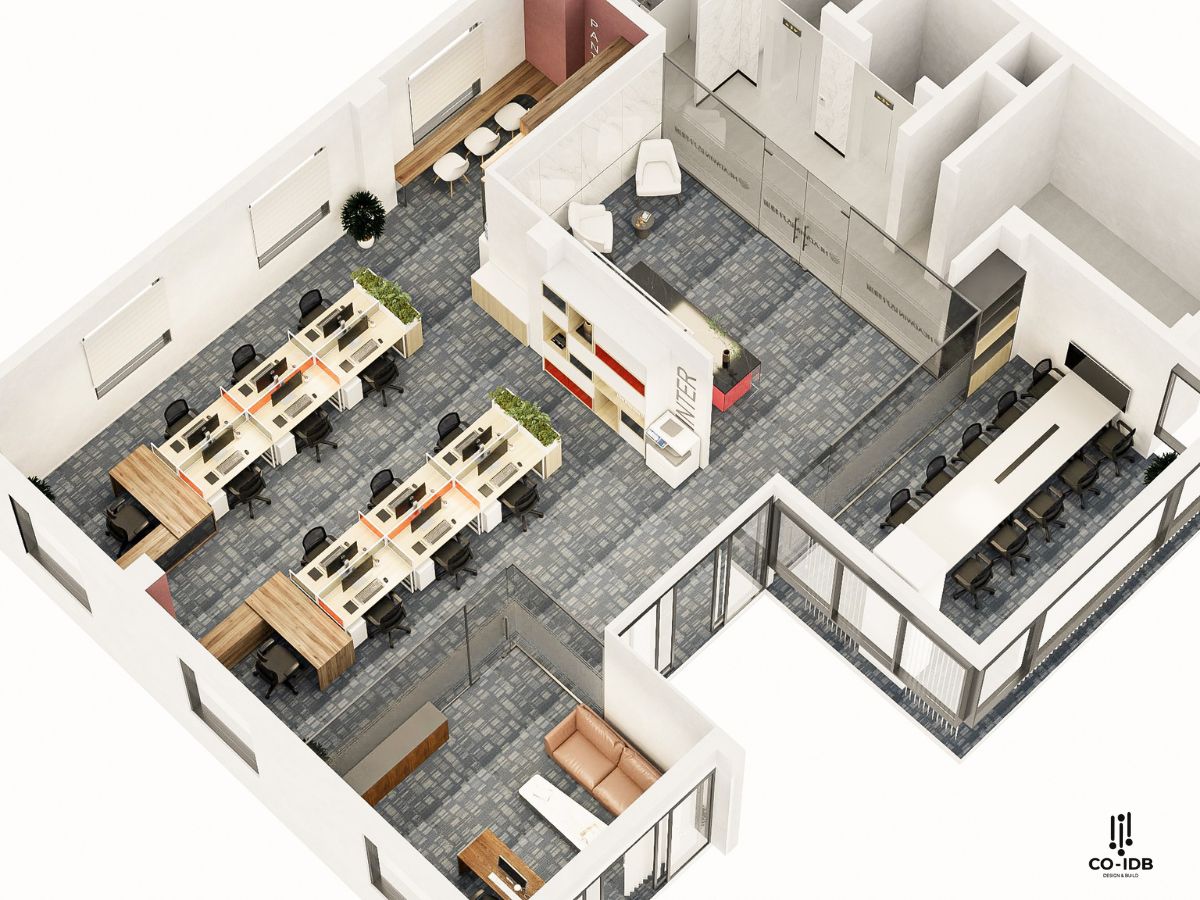
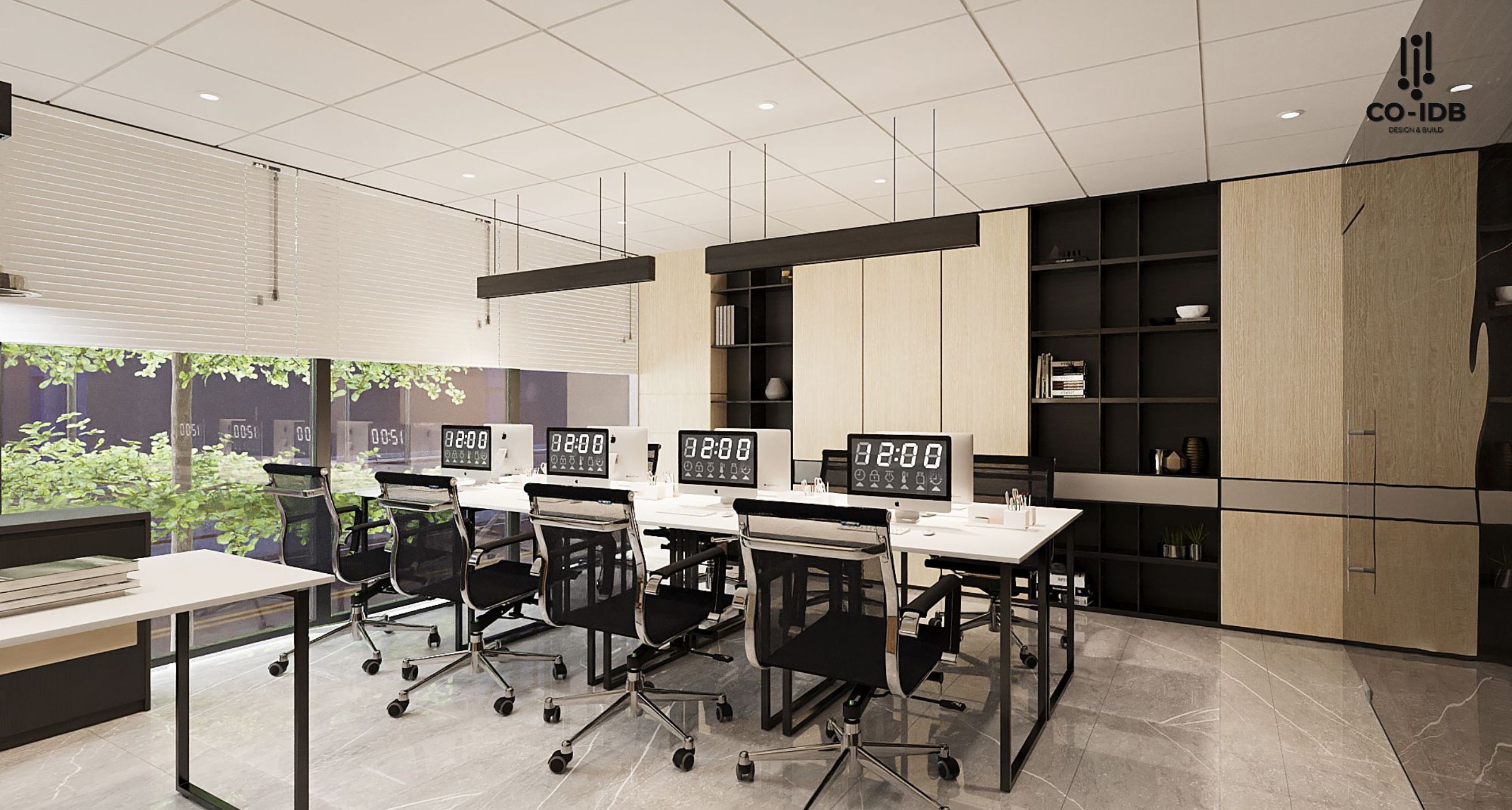
Office lighting is far more than just a source of brightness; it is a critical element of interior styling. Each lighting type complements different workplace cultures and designs. In this article, join Co-IDB as we explore aesthetically pleasing office lighting models and essential layout principles for modern workspace design.
1. Lighting Standards for Office Design
To create a comfortable, safe, and high-performance work environment, office lighting systems must adhere to technical standards (TCVN). Below are the key metrics:
| No. | Space | Illuminance (Lux) | Uniformity | CRI | LPD (W/m2) | UGR (Glare) |
|---|---|---|---|---|---|---|
| 1 | Working Room | 300 – 500 | 0.7 | ≥80 | ≤ 11 | 19 |
| 2 | Meeting Room | 300 – 500 | 0.7 | ≥80 | ≤ 11 | 19 |
| 3 | Lobby/Reception | 200 – 300 | – | ≥80 | ≤ 11 | 22 |
| 4 | Hallway | 100 – 150 | 0.5 | – | ≤ 7 | 28 |
| 5 | Restroom | 200 – 300 | 0.5 | ≥80 | ≤ 11 | 25 |
Key lighting requirements to keep in mind:
- Color Rendering Index (CRI): Use bulbs with a CRI > 80 to ensure accurate color representation.
- Beam Angle: For large open spaces, opt for fixtures with a 90° – 120° beam angle.
- Correlated Color Temperature (CCT): Cool white light (5000K-6500K) is recommended to enhance focus and productivity.
- Daylight Integration: Combine artificial light with natural daylight through smart office curtain placement for energy efficiency and wellness.

2. Popular Office Lighting Types
2.1. LED Panel Lights
LED Panels are the staple of modern office lighting. These flat, rectangular fixtures provide a sleek look and are typically recessed into drop ceilings. The 600 x 600 mm size is the standard choice for general work areas due to its broad and even light distribution.
2.2. Recessed LED Downlights
Ideal for low ceilings or small-to-medium offices, these ultra-thin fixtures offer a clean, minimalist aesthetic. Available in both square and round shapes, they blend seamlessly into gypsum ceilings to create a spacious feel.
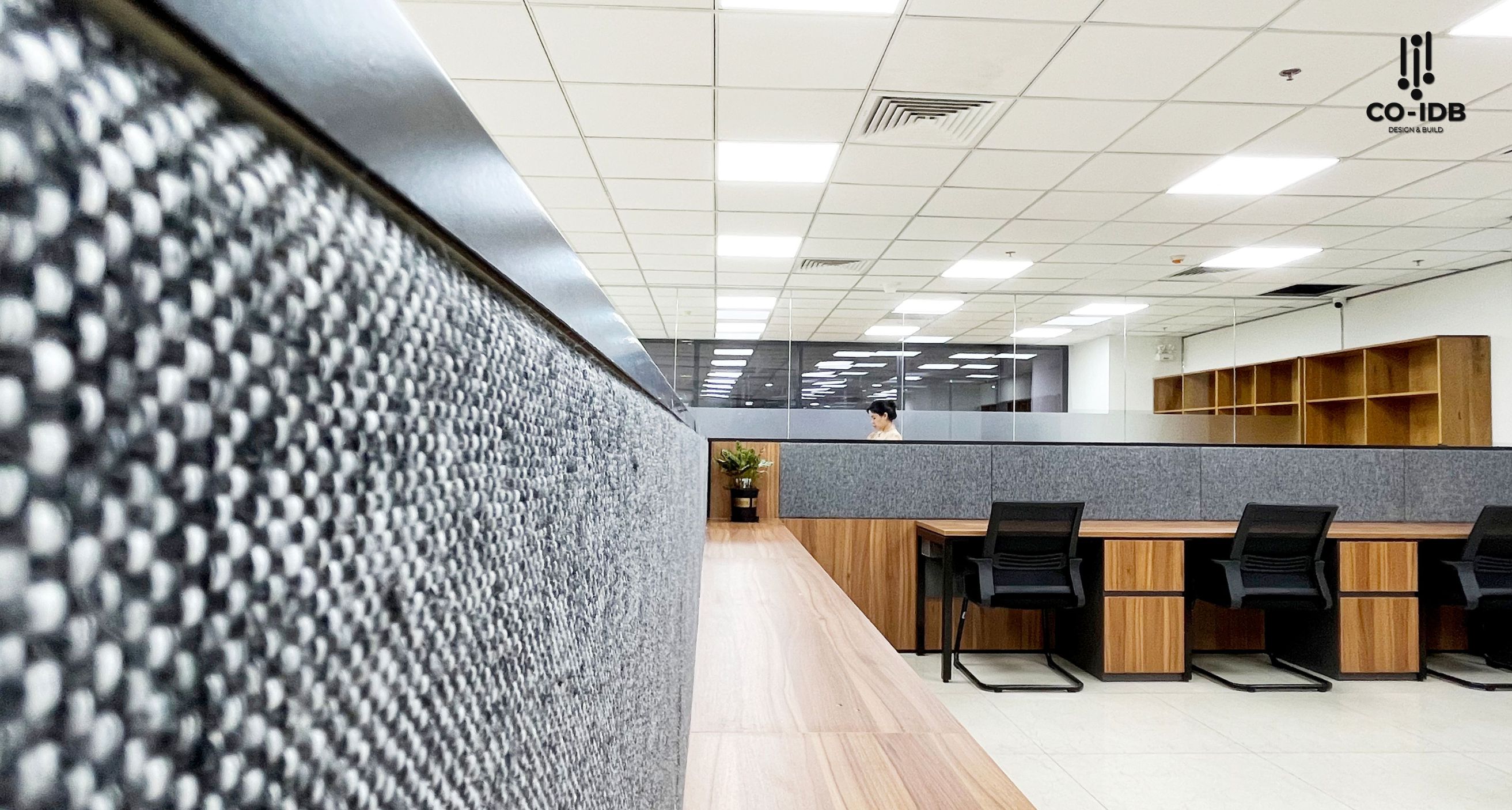
2.3. Pendant (Hanging) Lights
Office pendant lights serve as both illumination and decorative accents. They are perfect for reception areas, breakout zones, or meeting hubs. While they can save up to 70% energy compared to old bulbs, they are primarily used to create focal points and visual interest.
2.4. Linear LED Tubes
Modern LED tubes (9W or 22W) are the cost-effective successor to old fluorescent lights. They operate silently, without flickering, and provide 2-3 times higher efficiency. The 1.2m length is the most practical choice for standard office modules.

2.5. CCT Tunable LED (Color Changing)
Tunable LEDs allow you to adjust the light temperature based on the time of day or season—using warm tones in winter for comfort and cool white in summer to stay refreshed. This flexibility helps maintain high concentration levels throughout the day.
3. Professional Layout Principles
- Reduce Glare: Align lighting rows parallel to the line of sight and windows to minimize reflection on computer screens.
- Uniform Distribution: Place fixtures directly above workstations to ensure even light coverage without harsh shadows.
- Avoid Flicker & Obstruction: Ensure ceiling fans are positioned below light fixtures or at a specific height (approx. 2.5m) to prevent strobing effects.
4. Strategic Selection by Area
- General Workspace: Prioritize wide beam angles and high CRI white light to mimic natural daylight and reduce eye strain.
- Meeting Rooms: Opt for smart, dimmable LED systems that can transition between presentation mode and creative brainstorming mode.
- Lobby & Reception: Use statement lighting that reflects your brand’s prestige and professionalism.
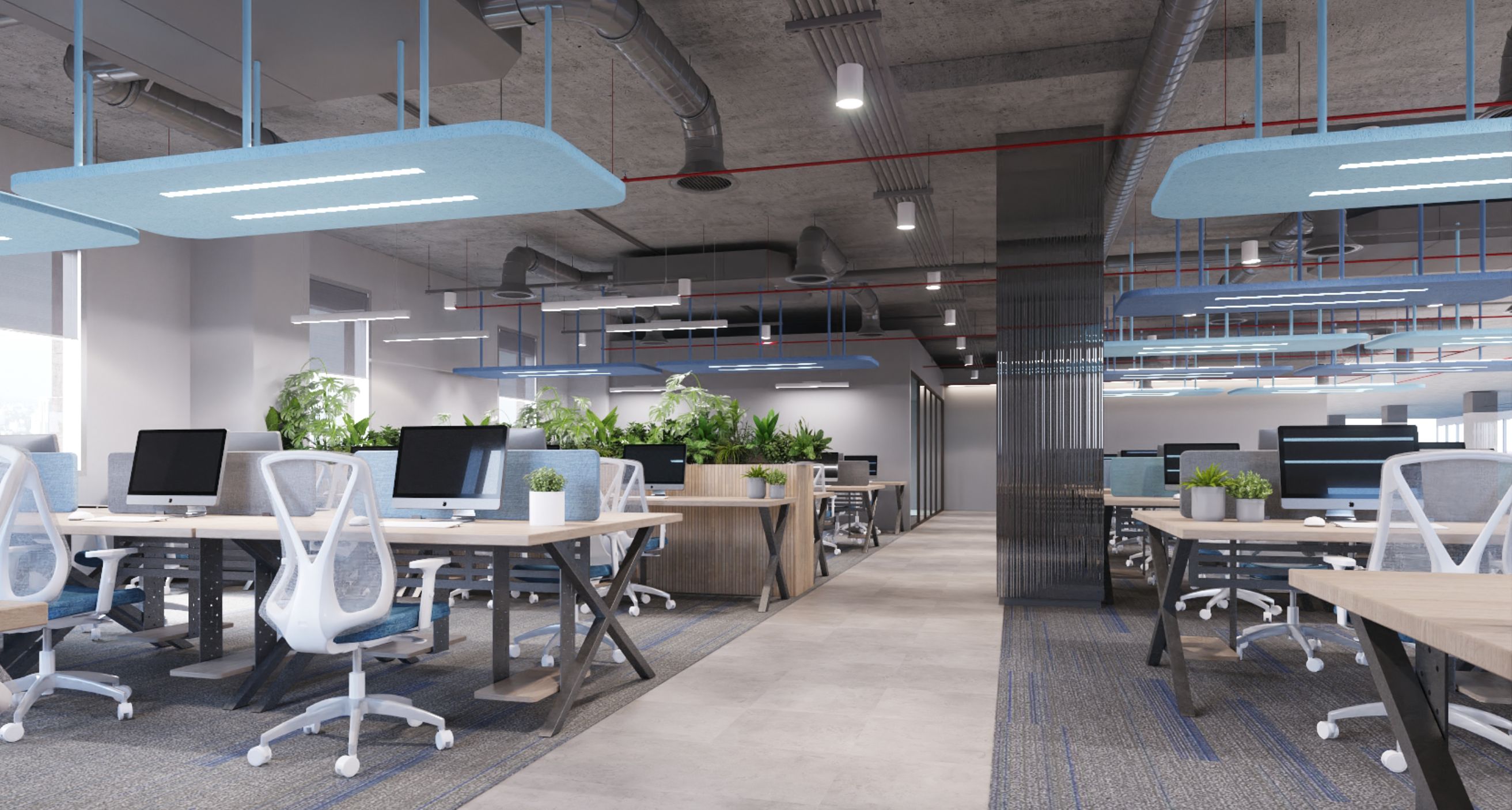
Proper lighting design is fundamental to a thriving workspace. We hope this guide from Co-IDB helps you illuminate your office more effectively. For expert design and installation, contact us today!
Explore more: Essential Checklist for Basic Office Furniture