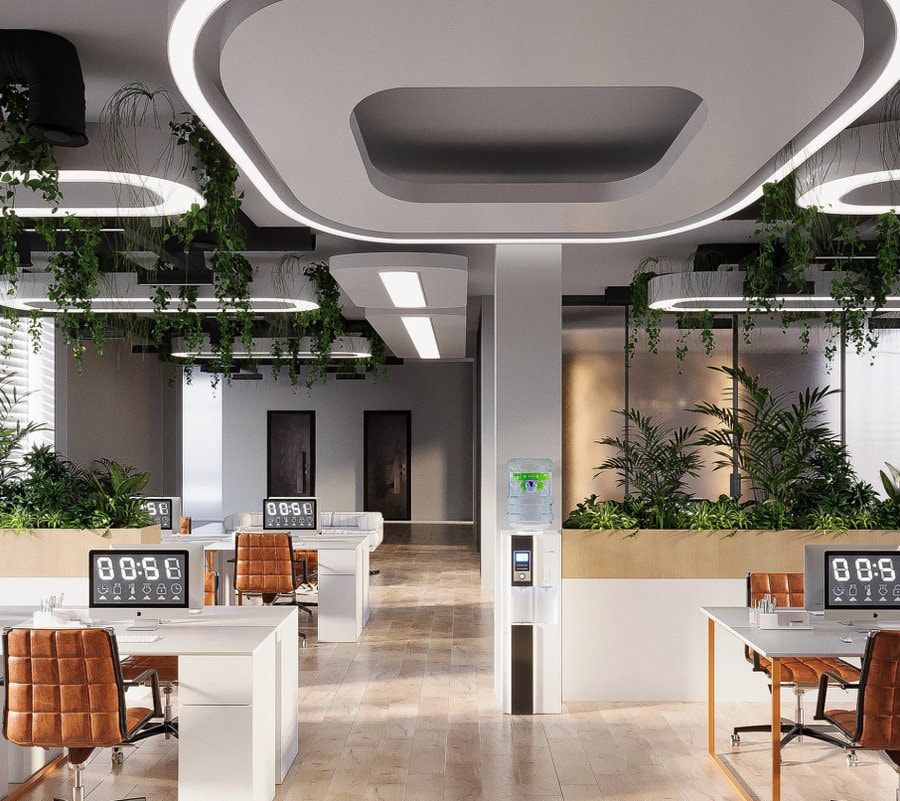
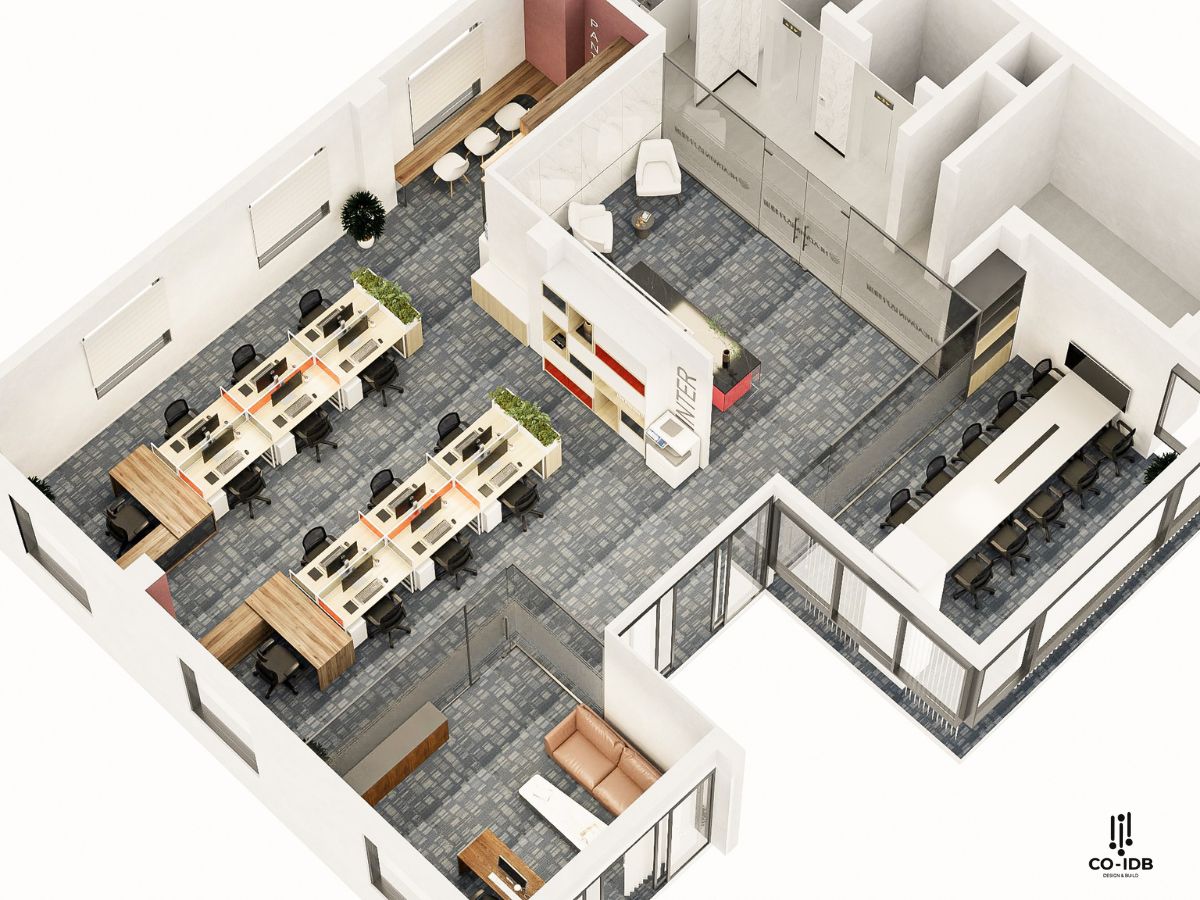
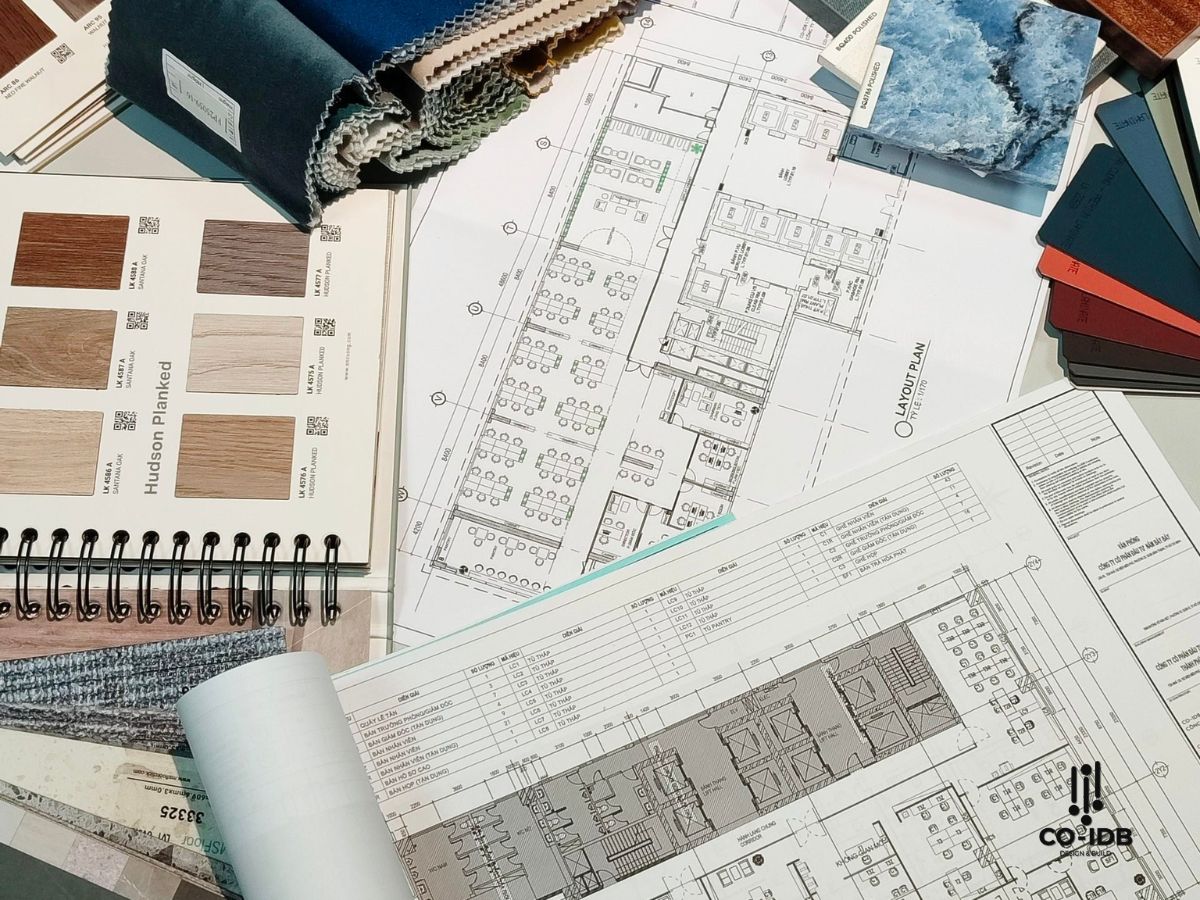
An area of **400m2** is an ideal number to freely arrange and realize any design idea, allowing you to create a professional, modern, and uniquely branded working environment. In this article, CO-IDB will take you on a journey to explore more than 35 mesmerizing 400m2 office design examples, imbued with a spirit of innovation, optimized functionality, and creating a dream workspace for every modern enterprise.

Beautiful, Trendy 400m2 Office Design Examples
The 400m2 office design examples below are not only beautiful but also keep up with the latest trends, ready to inspire you to create a standard, luxurious, and stylish workspace.
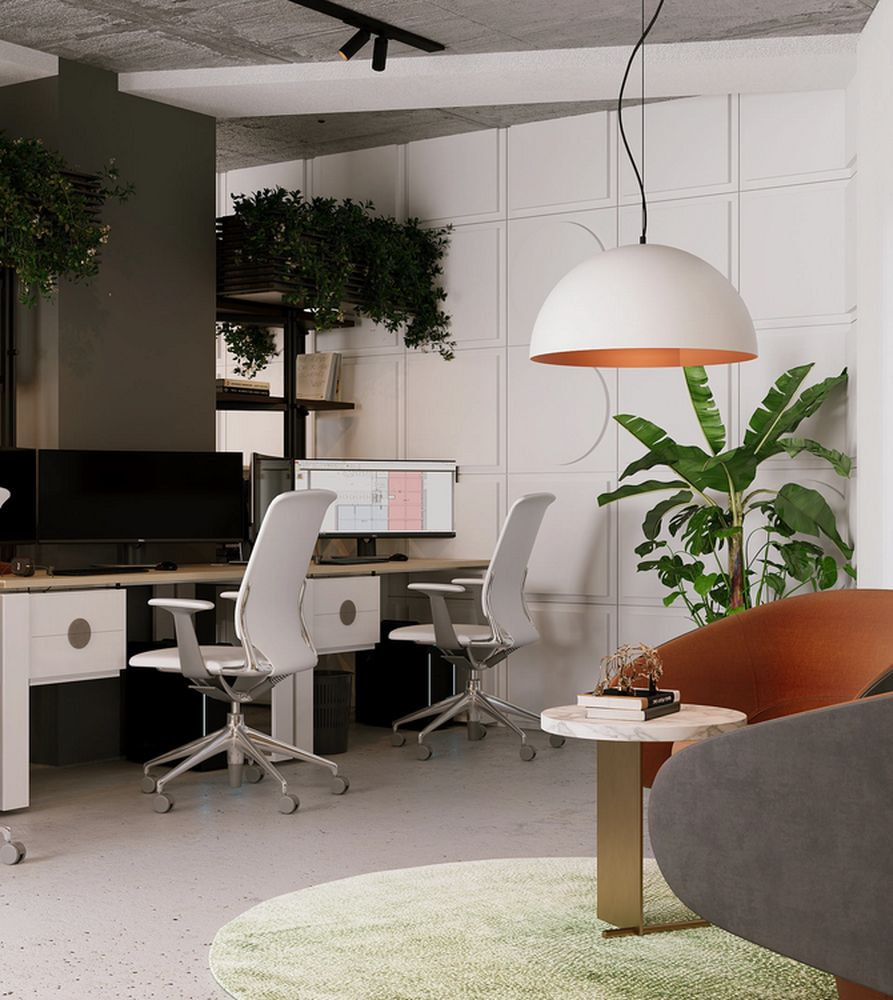
Modern Style 400m2 Office Model
For a 400m2 space, **modern office** designs often prioritize neutral tones like white, gray, and black, combined with high-end materials such as glass, metal, and industrial wood. In addition, **smart technology** is integrated, such as automatic lighting systems and touch screens for online meetings, helping the office become professional and leading the digitalization trend.


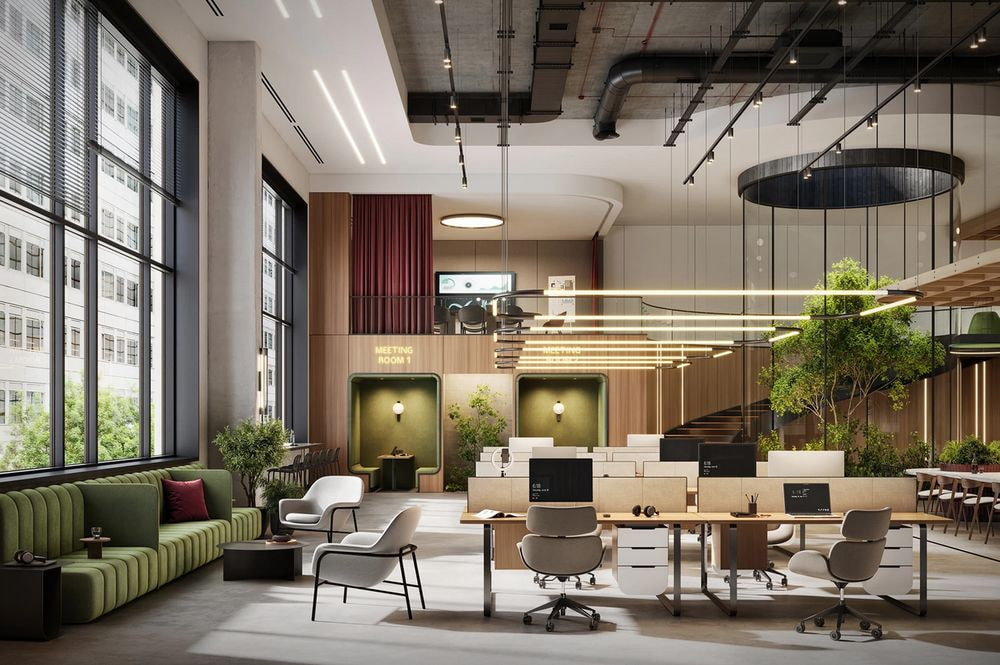
Minimalist Style Office Design
In **minimalist 400m2 office designs**, cluttered details should be omitted to make way for streamlining and airiness. The space becomes tidier by using **smart furniture** like built-in cabinets and hidden shelves, optimizing area while ensuring functionality. In terms of style, prioritize simple designs, basic geometric shapes, or choose gently curved furniture to create a soft, comfortable balance within the overall modern space.
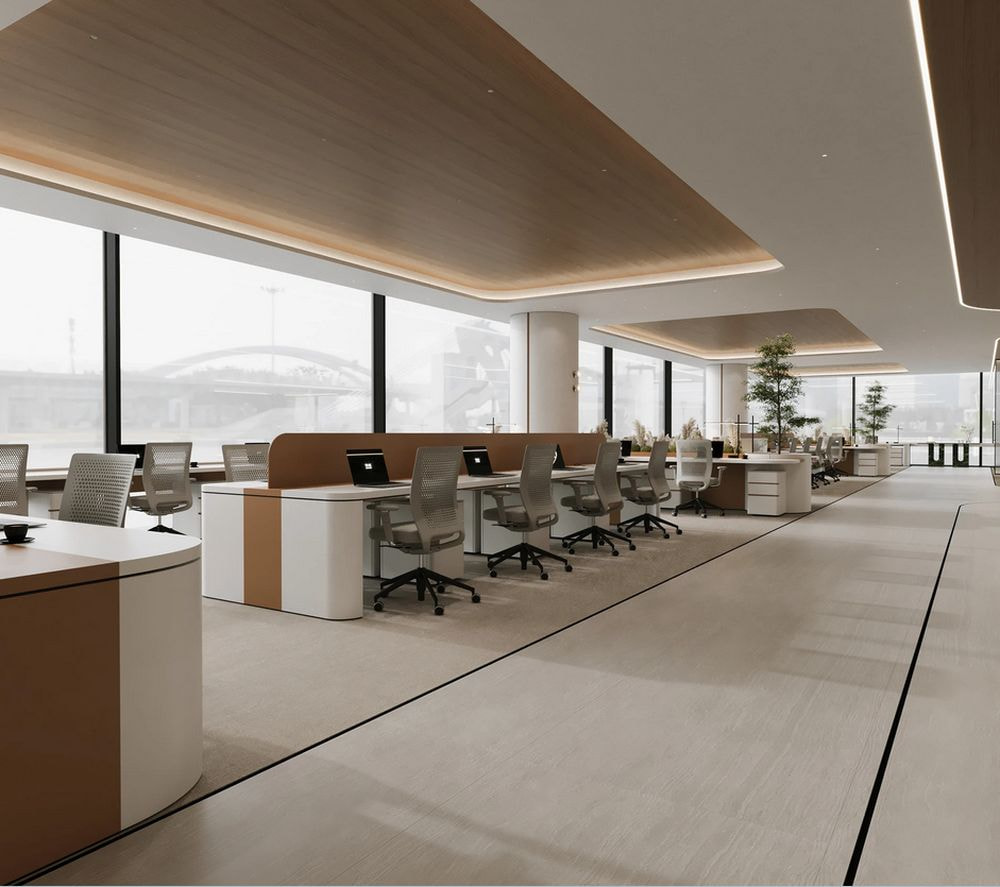


400m2 Office Model with Open Design
Unlike closed offices, **open-plan spaces** are increasingly favored due to their airiness and flexible connectivity. Instead of solid walls, glass partitions, open shelves, or light wooden slats can be used to divide areas while maintaining seamlessness. Furniture should prioritize smart, integrated types, such as desks with attached cabinets or modular filing cabinets. However, a common drawback of open designs is noise from the surrounding space, so businesses should incorporate carpets, acoustic ceilings, felt partitions, or greenery to create a quieter and more pleasant working environment.


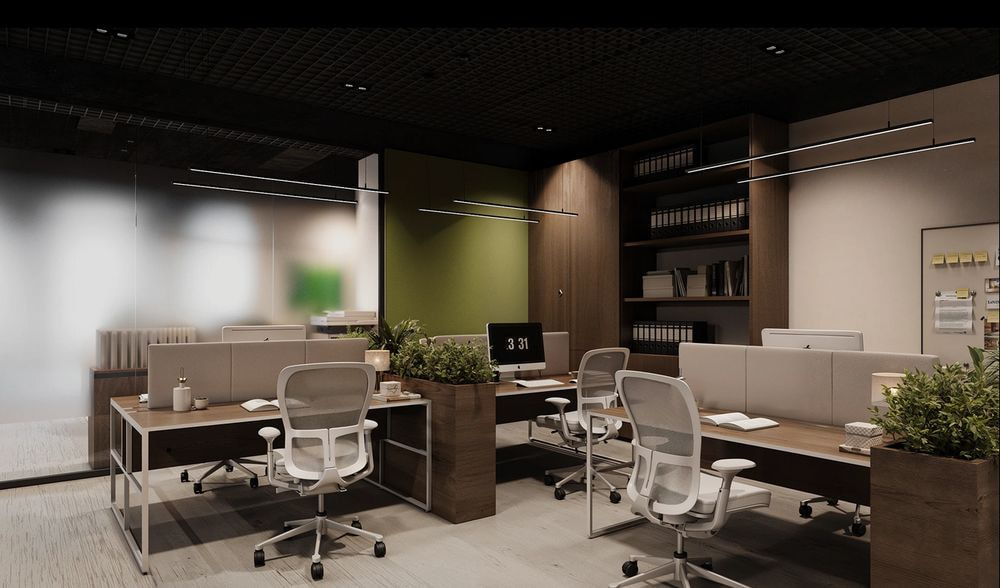
Creative Office Design with 400m2 Area
**Creative offices** are often designed with vibrant colors, flexible lighting arrangements, and multi-functional furniture, bringing a sense of excitement and energy to the workers. The distinctive feature of this space lies in the brainstorming area, which is meticulously cared for with prominent color schemes, unique decor items like cocoon chairs, uniquely shaped meeting tables, or artistic, unconventional wall decorations. This is the ideal choice for companies in the media, design, marketing, or any business that considers **creativity** the “heart” of its operations.
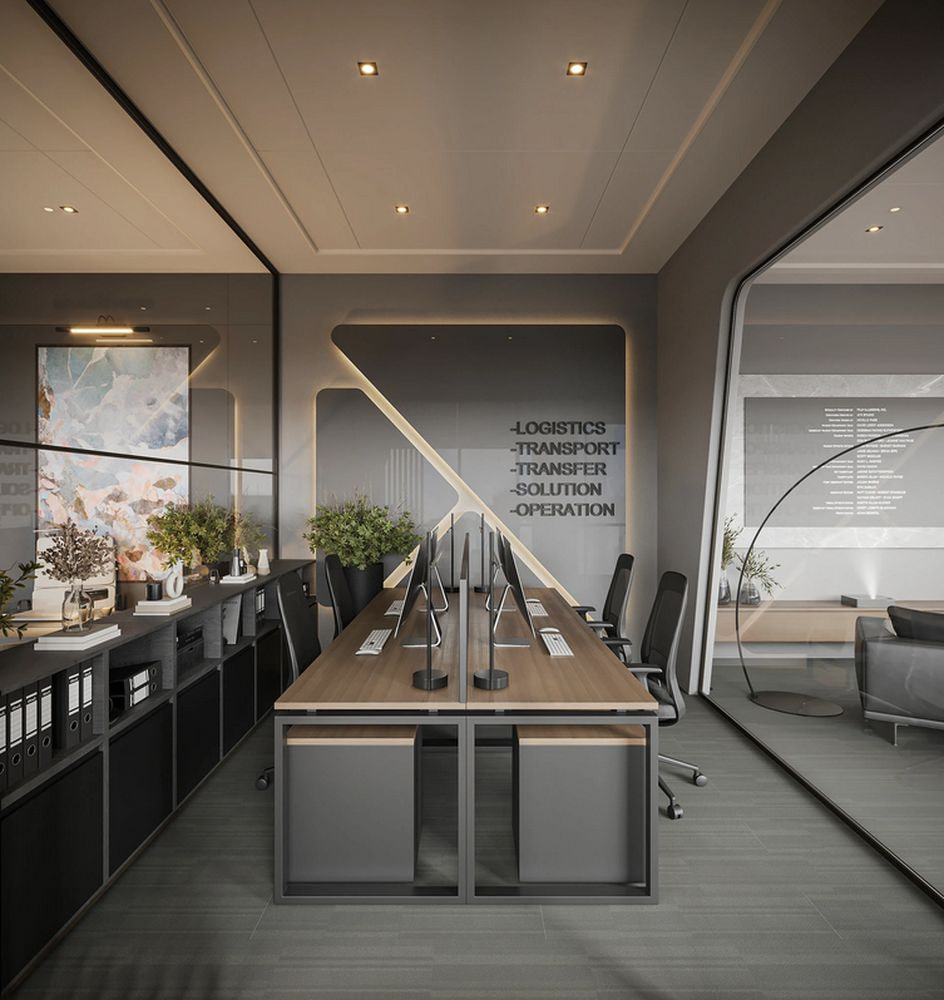
400m2 Office Design for the Banking Sector
Given the nature of the banking industry, which emphasizes professionalism and reliability, banking office interior design needs to be formal and meticulous, yet still create a friendly feeling. The space should be arranged scientifically, with transaction, reception, and internal working areas reasonably separated, ensuring convenient and seamless pathways.

The main colors should be synchronized with the brand identity, helping the office express the bank’s unique personality. In terms of materials, prioritize high-grade materials like veneer-coated industrial wood, laminate, melamine, etc., and tempered glass to enhance aesthetics and provide a sense of sustainability to the overall space.
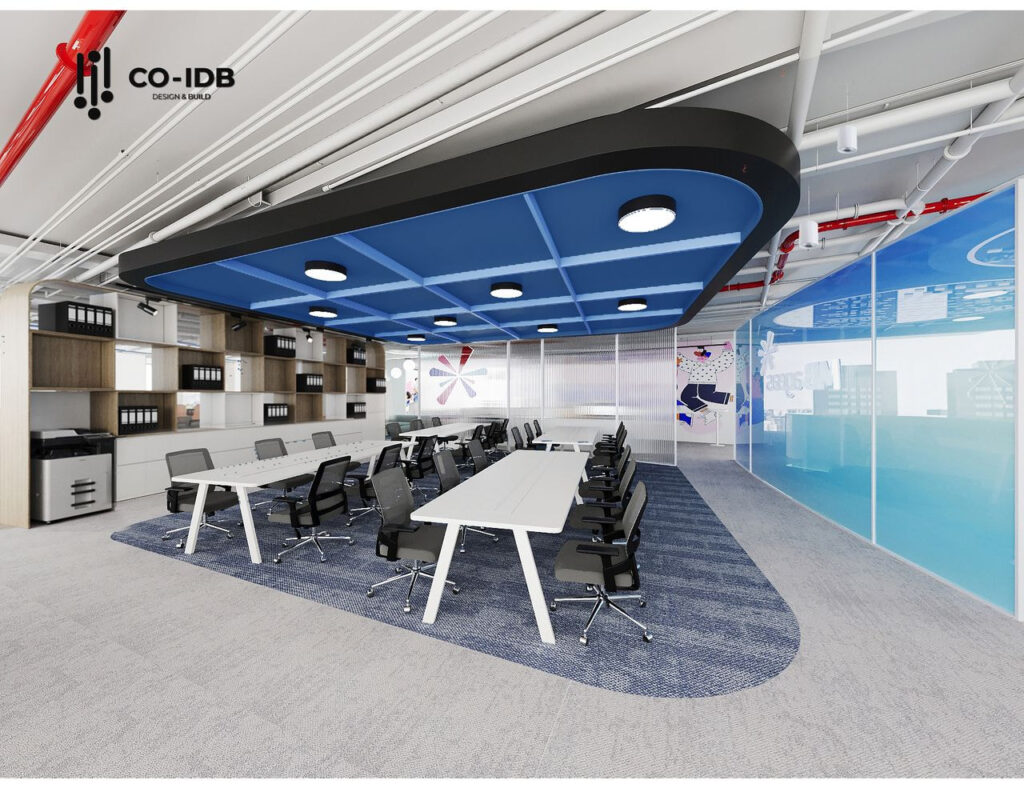
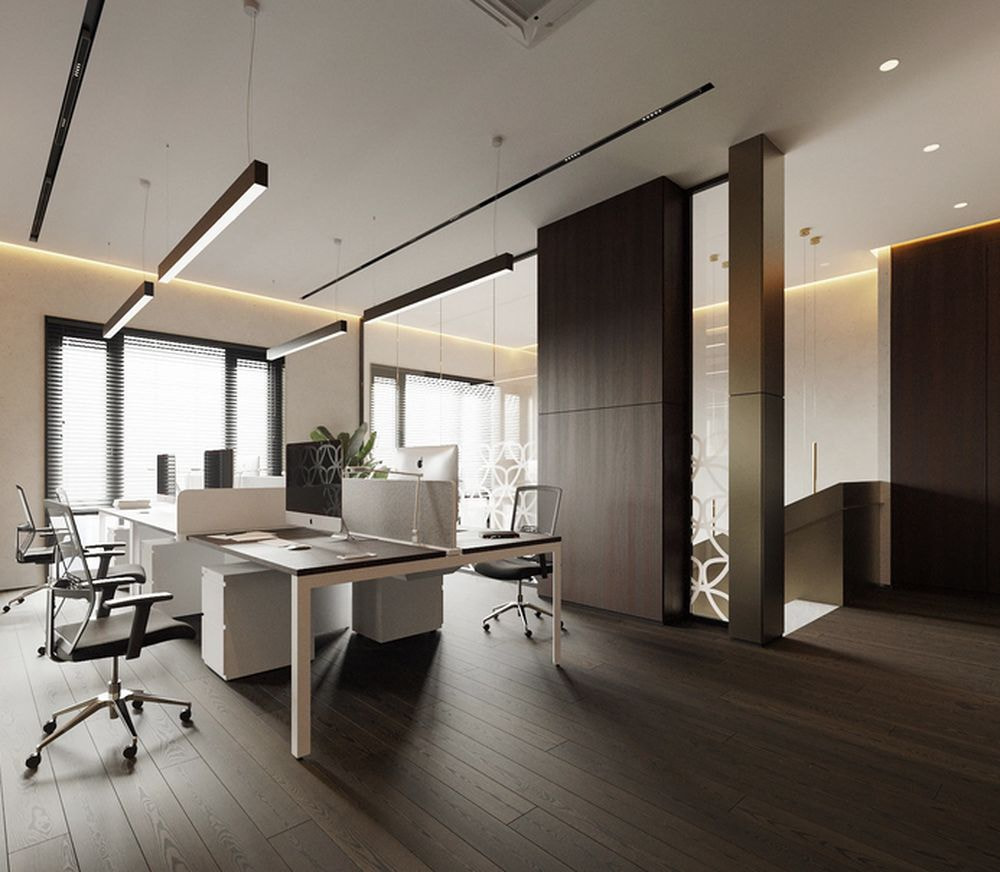
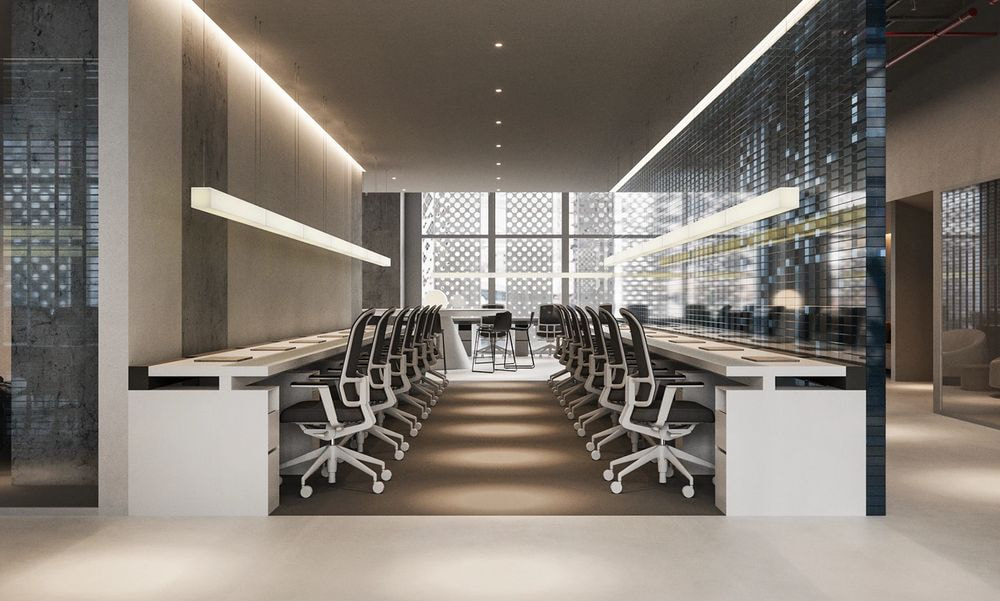
The common working area is arranged with parallel desks, creating wide walkways, making the space airier.
>>> See more: Professional financial office design examples
Typical 400m2 Office Interior Design for the Technology Industry
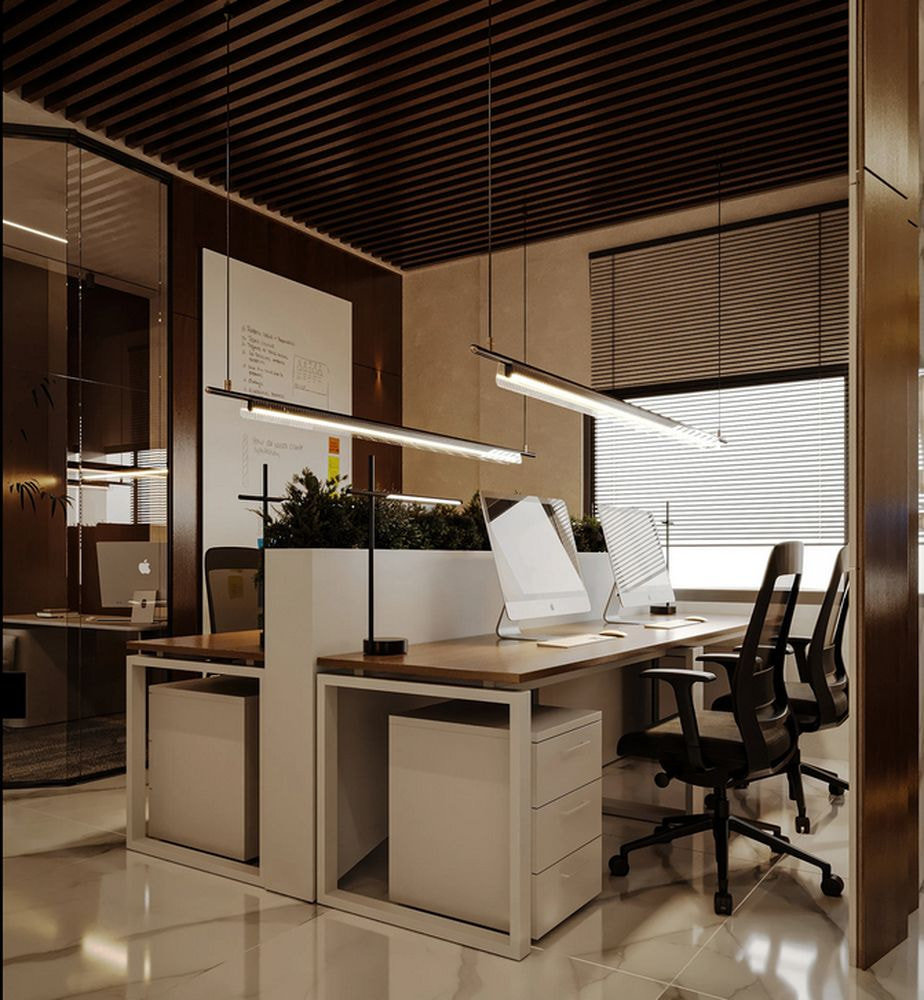
Technology offices are often designed with an open layout to create a comfortable feel, helping teams easily exchange ideas and work together. Given the nature of young personnel who prefer flexibility and creativity, the workspace also needs to integrate modern amenities such as smart meeting screens or voice-controlled devices.
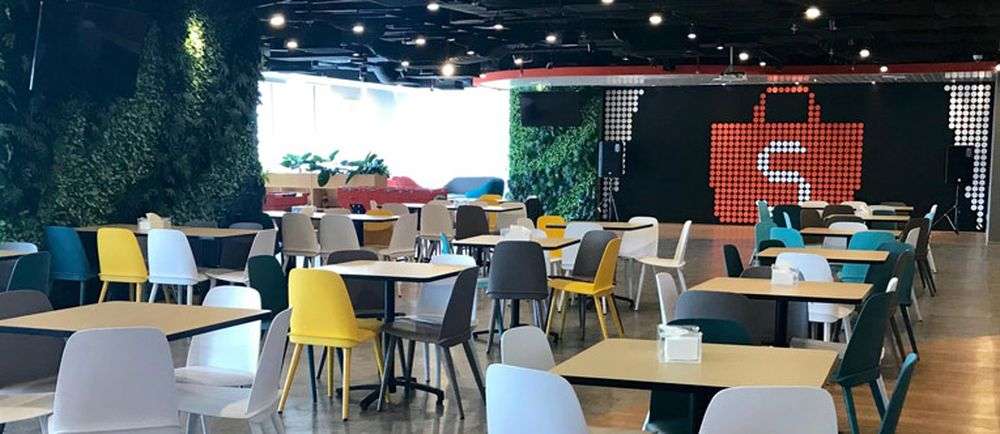

In particular, relaxation pantry areas like mini-bars, small game rooms, or chill-out corners are indispensable elements for everyone to recharge. A few wall murals or creative slogans also help the space become more lively and inspiring every day.
>>> See more: Creative office pantry examples
Eco Office Design
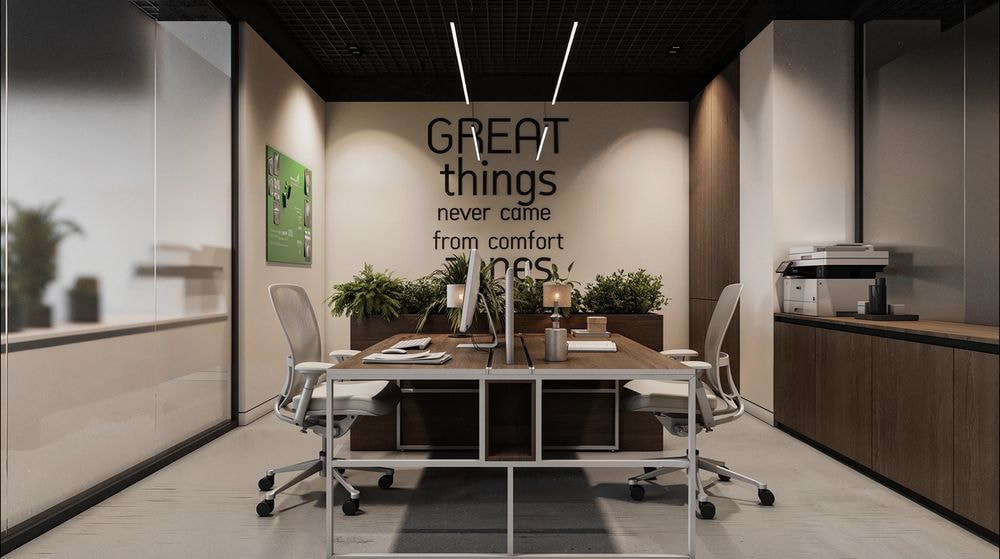
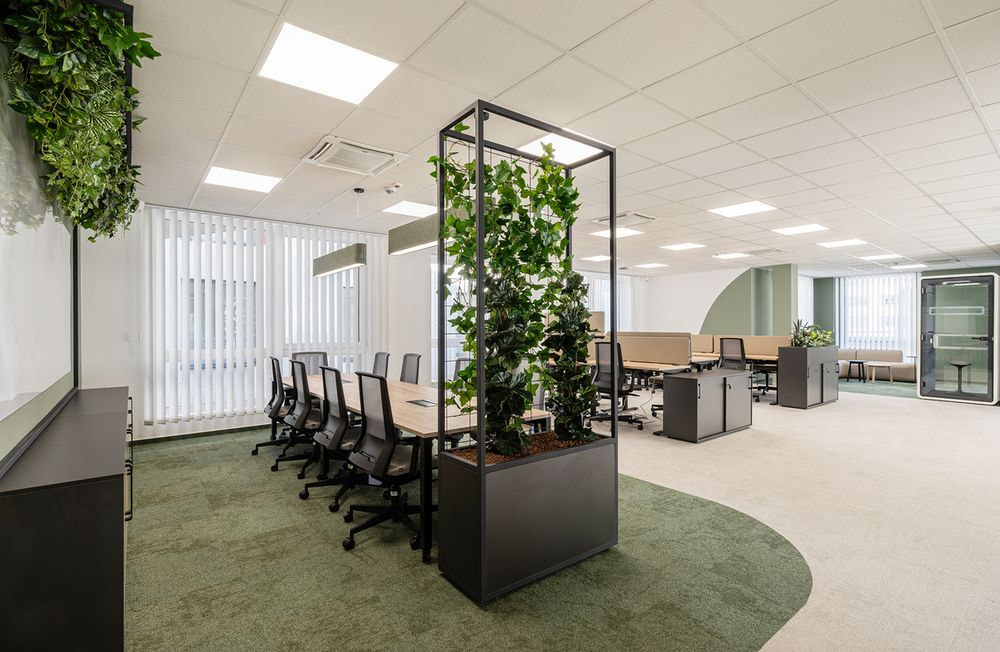
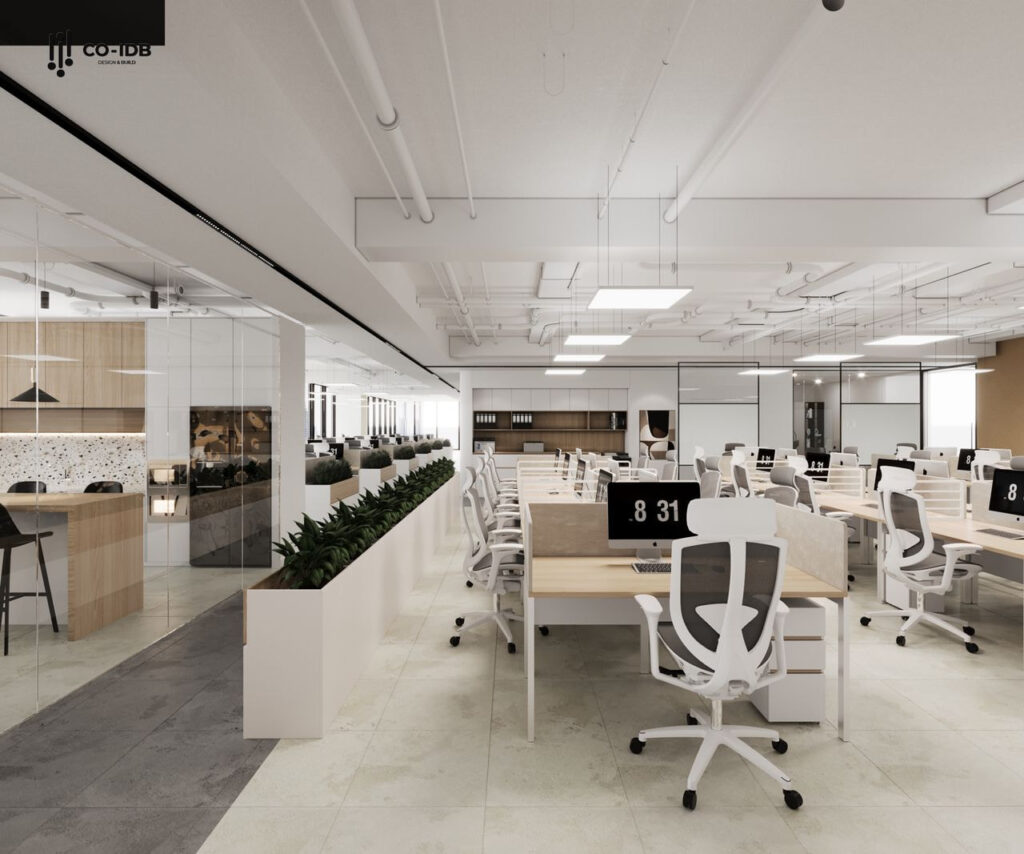
**Eco offices** often use materials including natural wood, industrial wood, or tempered glass to maximize natural light. The main color palette leans towards neutral tones like white, beige, and light gray, punctuated by the green hues of plants or green wall panels. In addition, decoration should be prioritized toward minimalism, avoiding elaborate details, and instead using small potted plants on desks or landscape paintings to create a gentle and relaxed atmosphere.


Functional Office Design
An efficient office starts with design based on the **function** of each area. The reception area needs to be friendly and professional, the working area must ensure concentration, the meeting room must focus on connectivity and exchange, and the leisure/rest area provides relaxation. When each space is designed for its “correct function and role,” the office will not only look beautiful but also operate smoothly and optimize productivity.
Executive Office Design
The room for the board of directors doesn’t need to be too large, but this space should be **separate** from the common working area to ensure quietness and privacy. It should also utilize a window position to capture natural light, creating an airy and luxurious feel. Furniture should include a director’s desk, filing cabinets, and a small guest sofa, using high-grade industrial wood or combining glass and marble to enhance the modern look and represent the enterprise’s status.
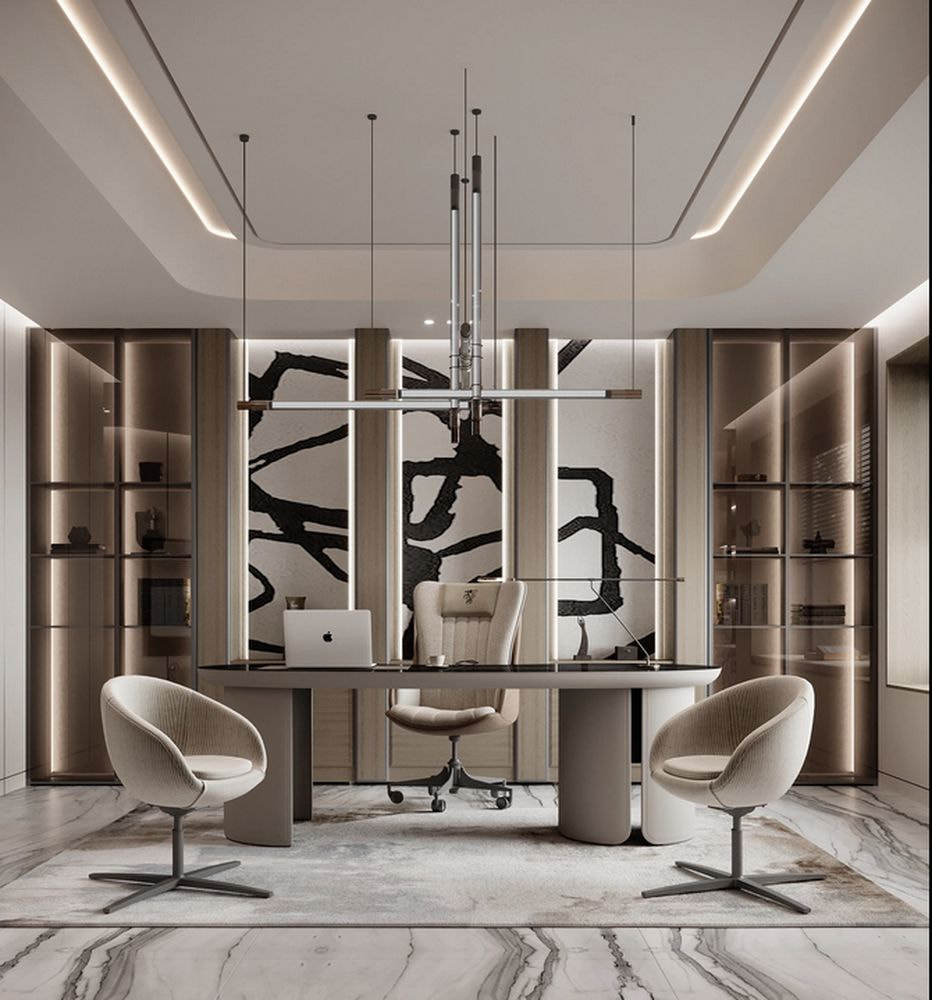


>>> See more: Extremely classy director’s room design
Working Area
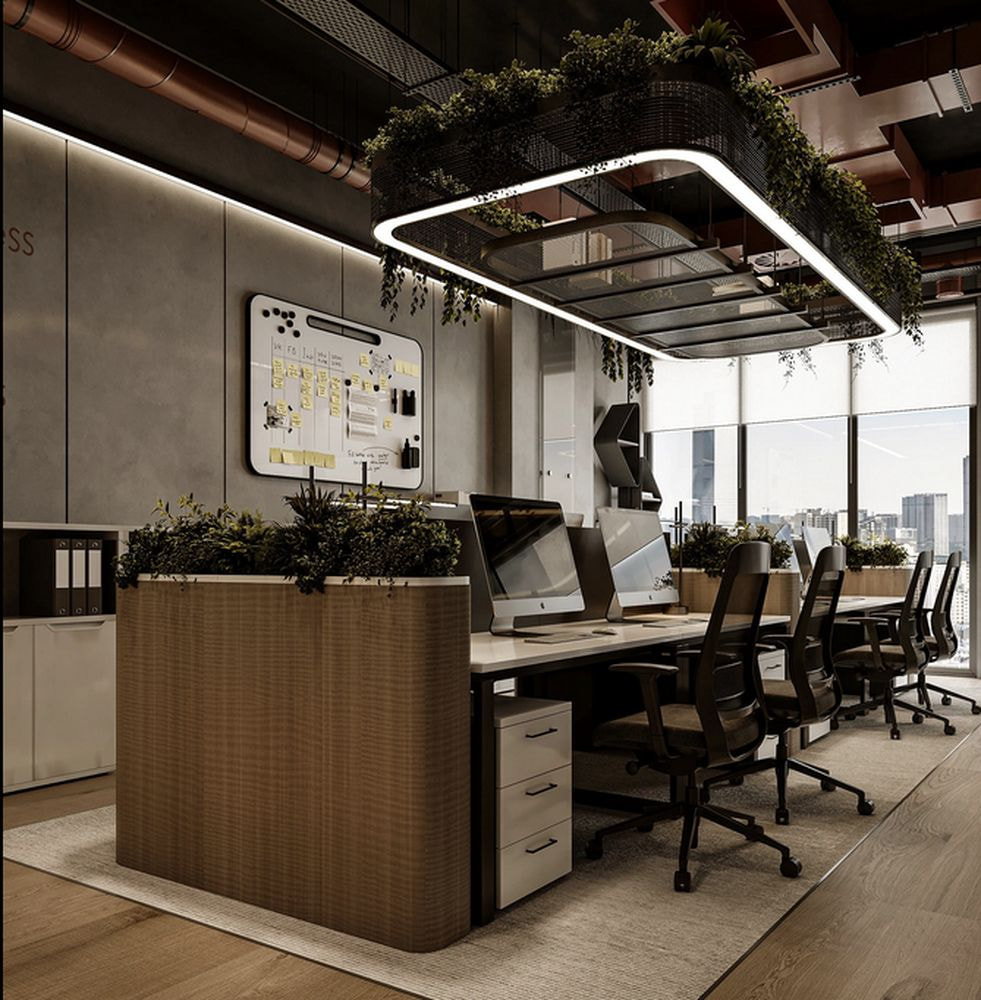
This is the most space-consuming area. With a 400m2 office area, you should choose **modular desks** to save space and create synchronization. The pathways between desk rows should be wide enough for convenient movement, and the lighting system should utilize both external light and LED lighting to ensure the workspace is always bright, enhancing concentration. In addition, a common mistake is designing without considering acoustics, so you should use carpets, acoustic ceilings, and felt partitions to reduce noise.



Pantry Counter Design
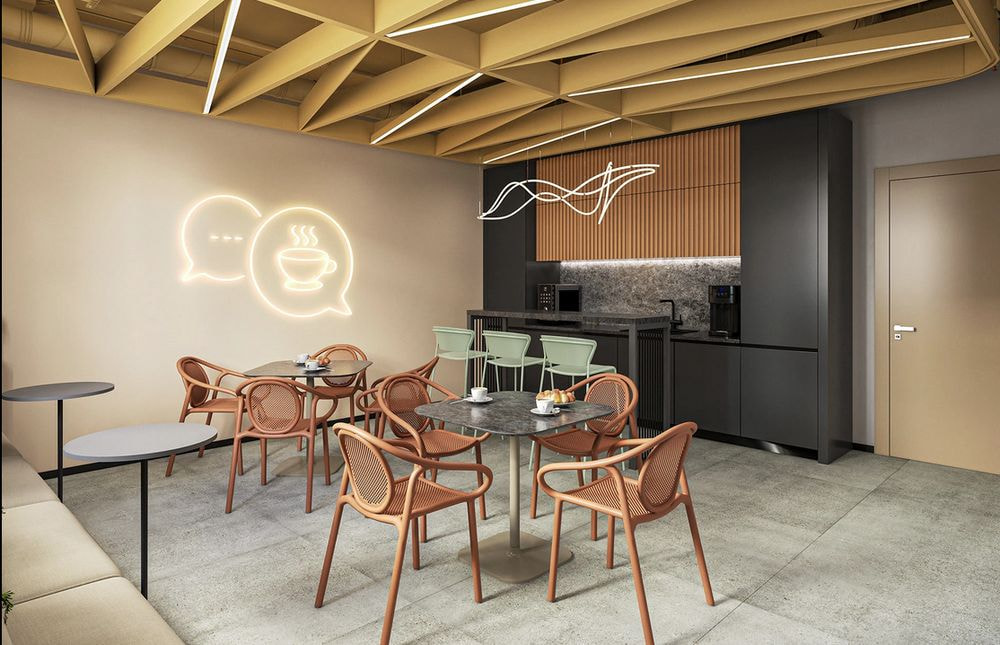
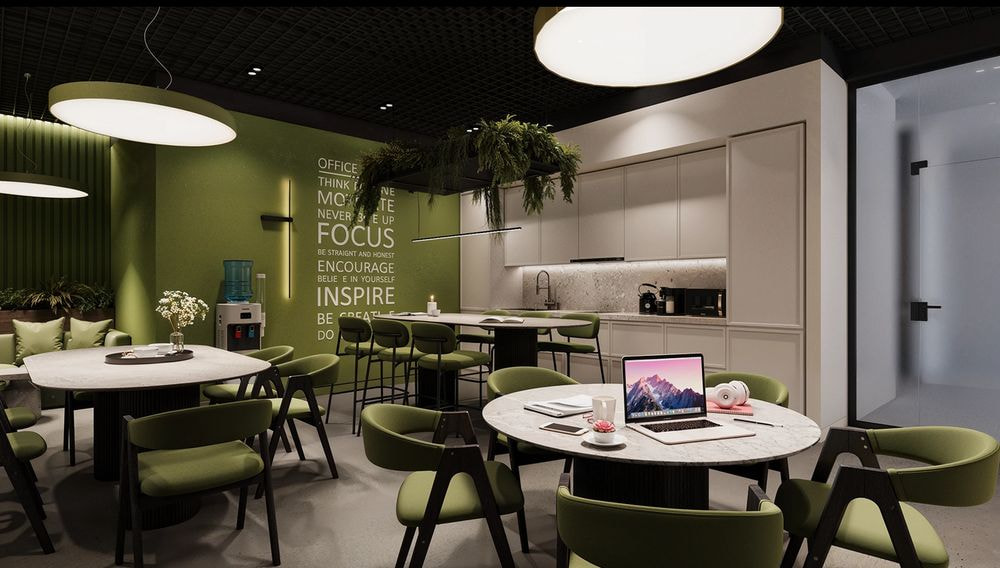
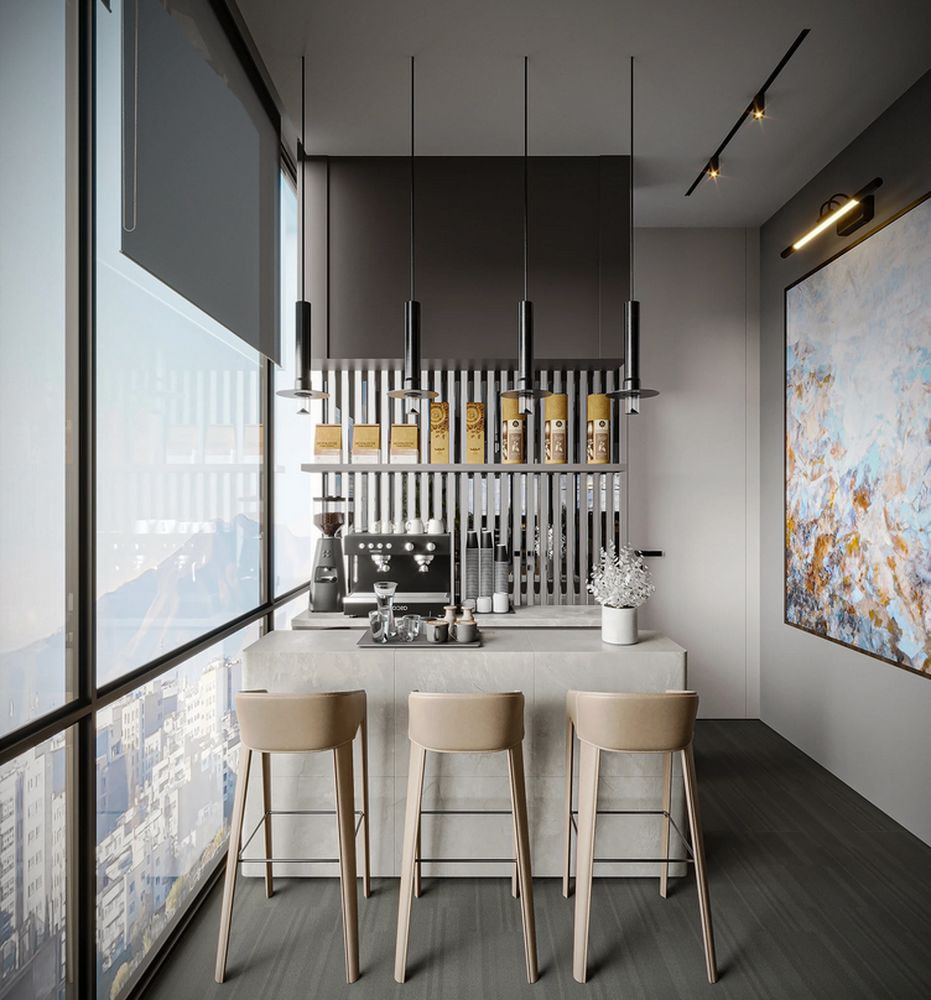
The pantry in a 400m2 office is usually about 20 to 30m2. Although not large, it plays a vital role in creating a resting space and fostering employee connection. When designing, you need to pay attention to **noise and odor issues**; a separate ventilation and odor extraction system must be installed to prevent spread to the working area. The pantry should be located near employee areas for convenience, but avoid placing it immediately next to the main pathway or near meeting rooms/executive offices to maintain professionalism. Aesthetically, use bright colors, warm lighting, and consider adding high tables and small sofas to create a relaxing feel and encourage interaction between departments.
Meeting Room Space
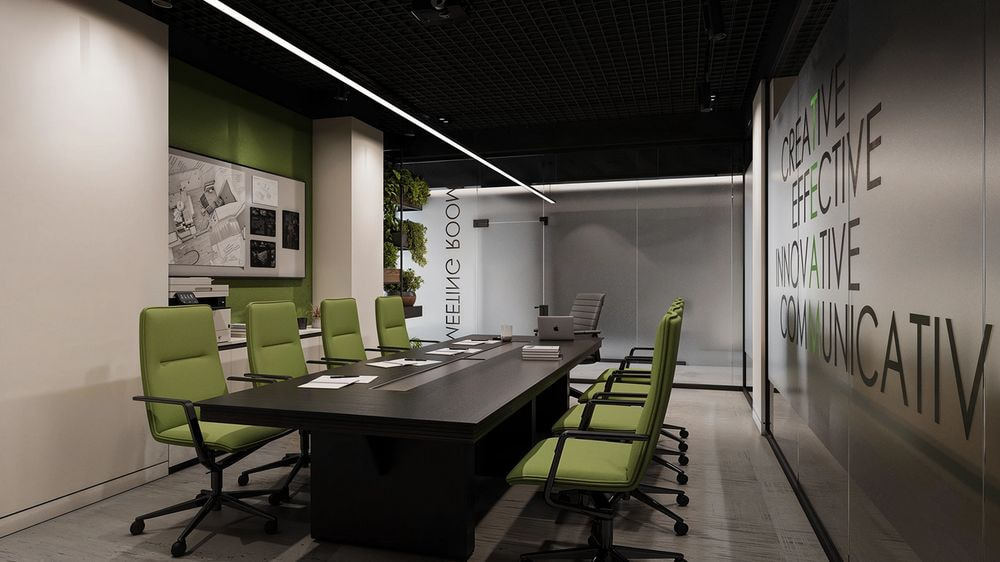
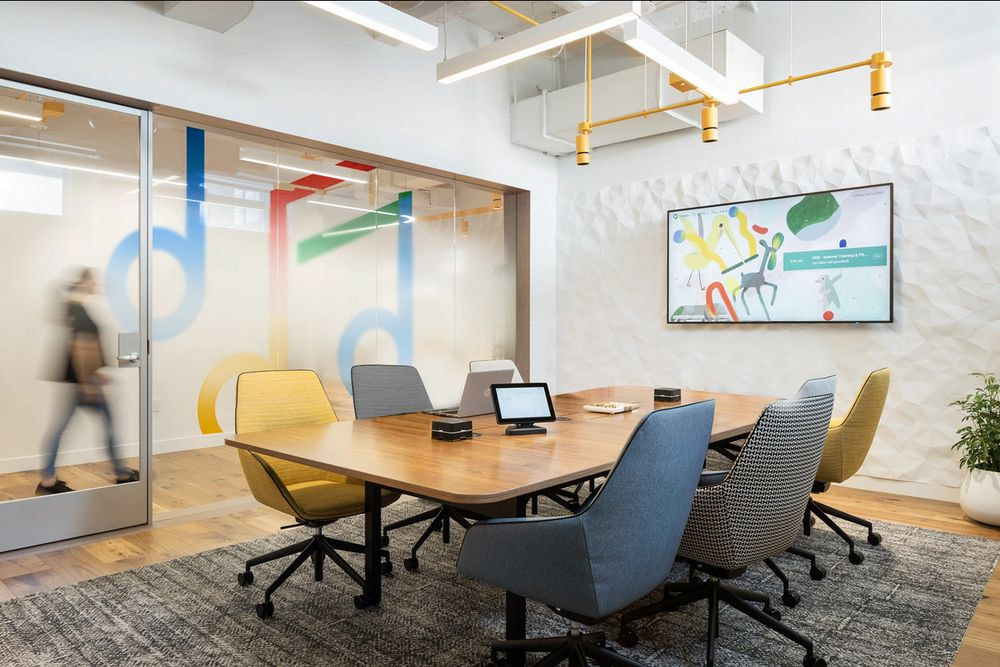
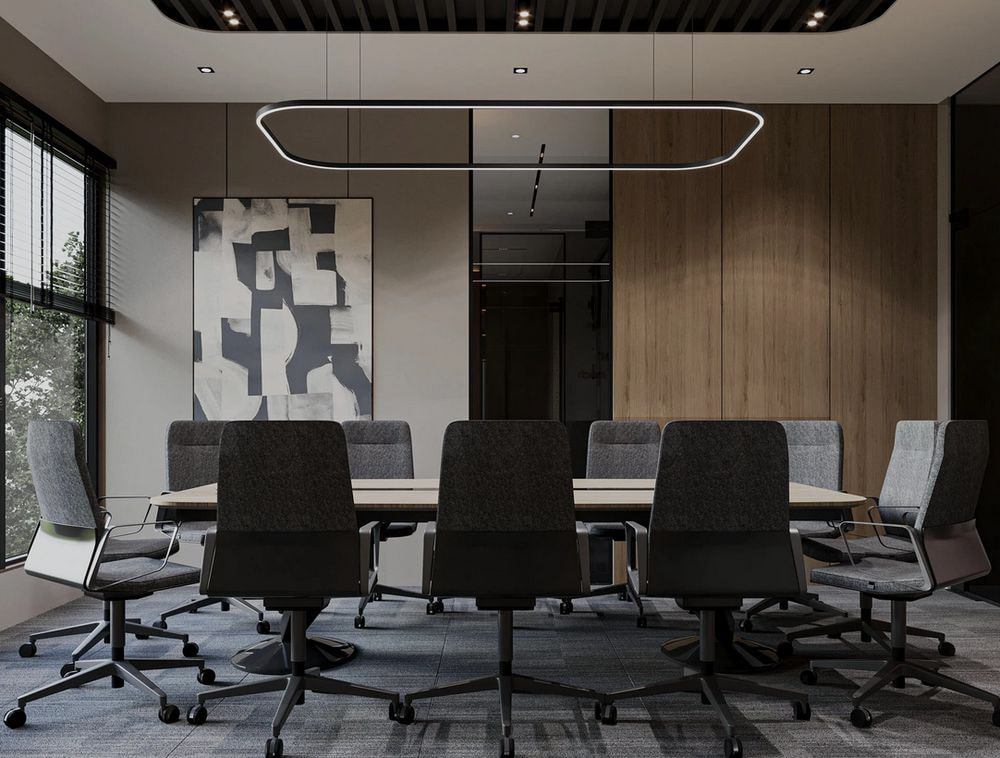
A common mistake in meeting room design is allocating too much area to large meeting rooms that are rarely used, while small meeting rooms are always overcrowded. Therefore, a practical assessment is needed for reasonable allocation. Meeting rooms also need good **soundproofing** and full equipment such as large screens, microphones, and cameras to facilitate online meetings. For lighting, businesses should choose **neutral white light** to help everyone focus, and arrange glass doors combined with curtains to both utilize natural light and allow flexibility when privacy is needed.

Reception Area
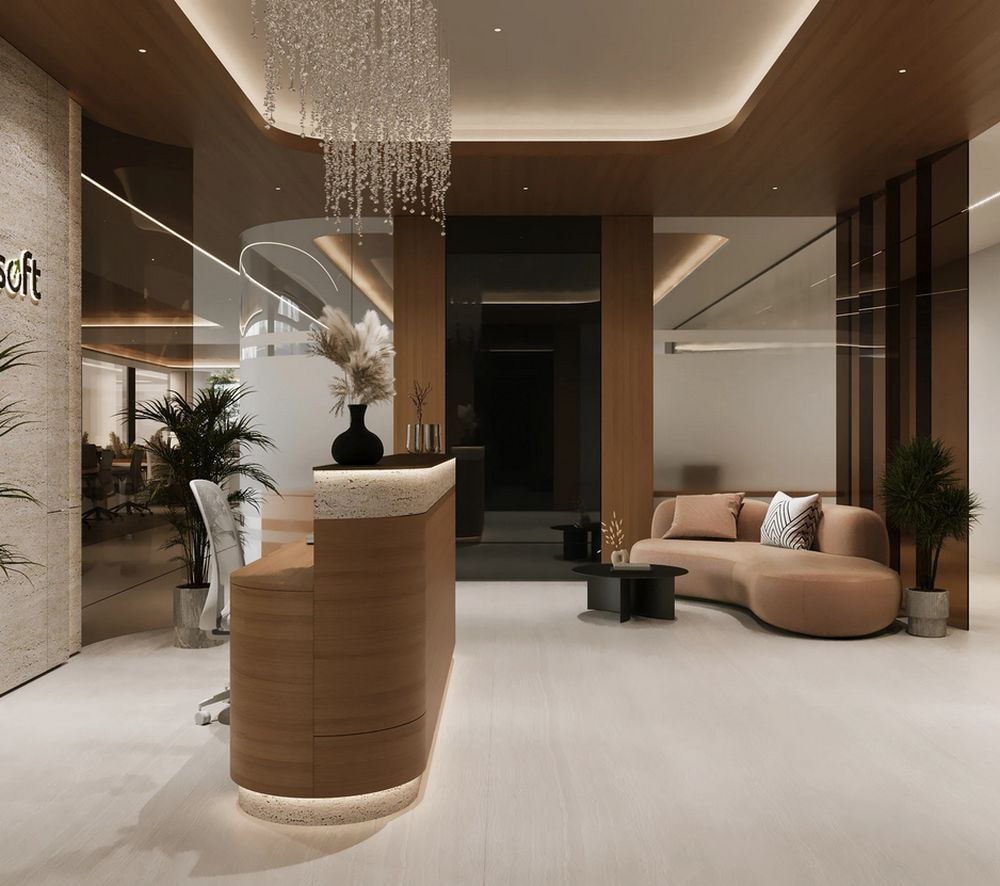
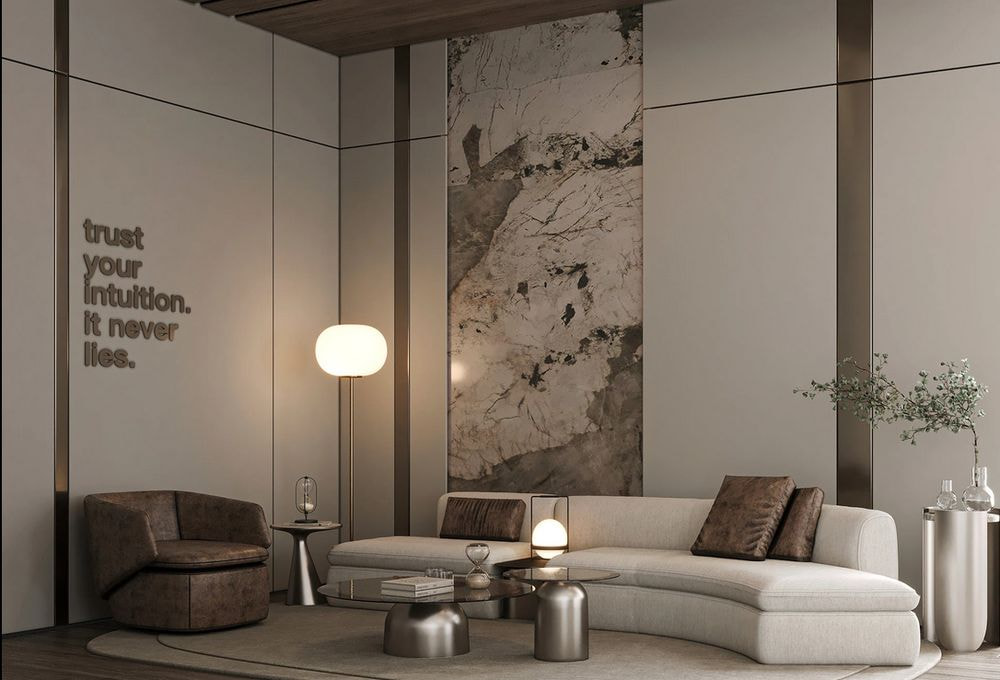
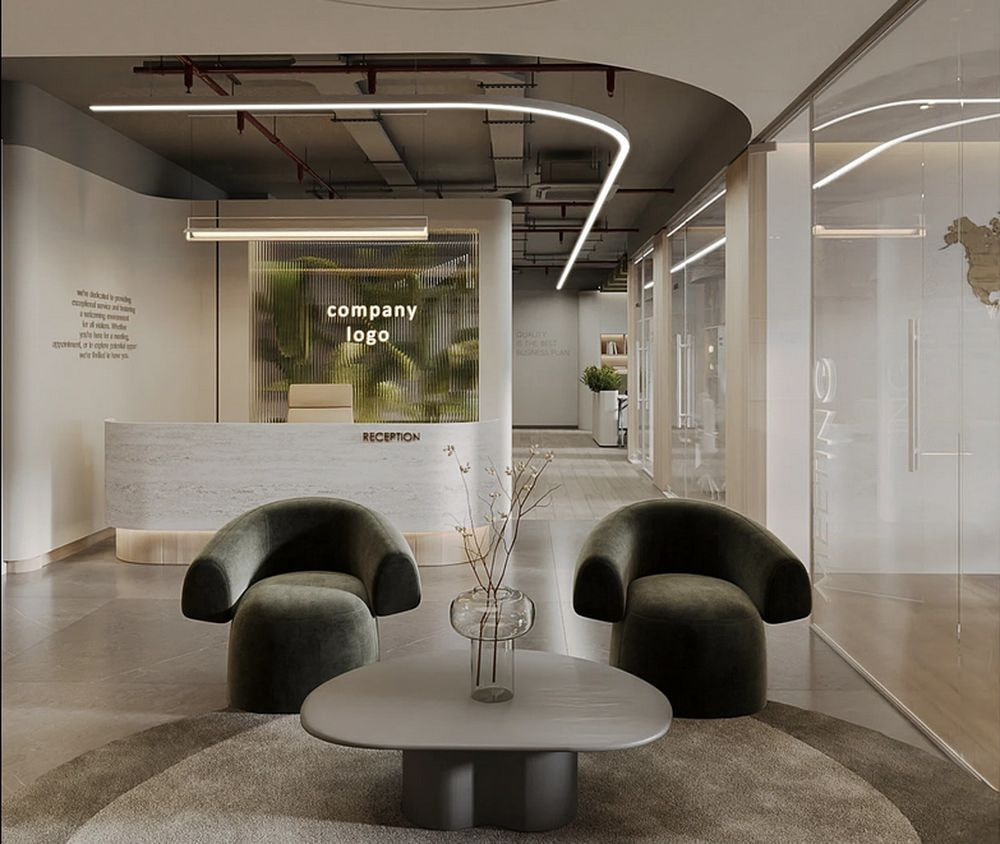
**Reception desk design** should harmonize with the overall office style, combining luxurious materials such as wood, stone, glass, or metal to enhance professionalism. The lighting system needs to be subtly arranged, potentially using recessed lights or decorative lighting to create a focal point. Behind the reception desk, the company logo or brand sign should be prominently featured, making it easily recognizable to customers. Additionally, greenery, a waiting area with comfortable seating, and small tables can be arranged to create a friendly and relaxed atmosphere for guests.
Things to Note When Starting a 400m2 Office Design
When designing an office with an area of 400m2, the first important step is to understand the intended use and the enterprise’s operating model. From there, the arrangement of space, the selection of furniture, and the layout of functional areas will be truly appropriate and effective. Let COIDB guide you through the important notes when designing a 400m2 office!
Optimize Functionality According to the Business Model
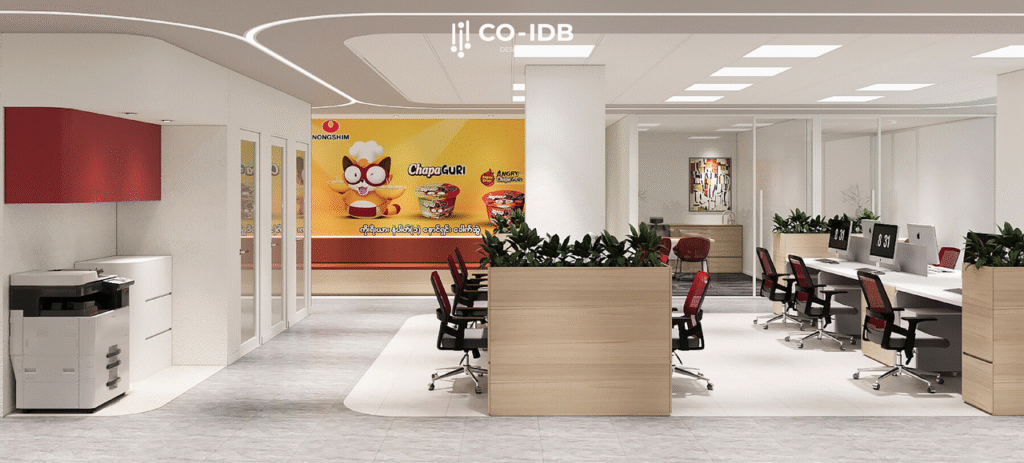
Each business will have a different structure and operational needs. For example, a business focused on internal operations will need space for teamwork and ample storage, while a company that frequently receives guests will prioritize a luxurious reception area and meeting rooms. **Functional optimization** involves arranging the space so that each department is closely linked, yet still ensures privacy and work efficiency. Furthermore, proper area allocation is necessary to avoid wastage or lack of space for each department.
Design Flexible Space
When designing a 400m2 office, **flexibility** is the factor that helps the office easily adapt to future changing needs. Therefore, businesses should prioritize using movable partitions, easily relocatable furniture, and multi-functional areas, such as a space that can be both a meeting room and a place for presentations or small workshops. These designs help businesses save restructuring costs when expanding personnel or changing the operating model. Additionally, flexibility allows the space to be constantly renewed, preventing boredom for employees.
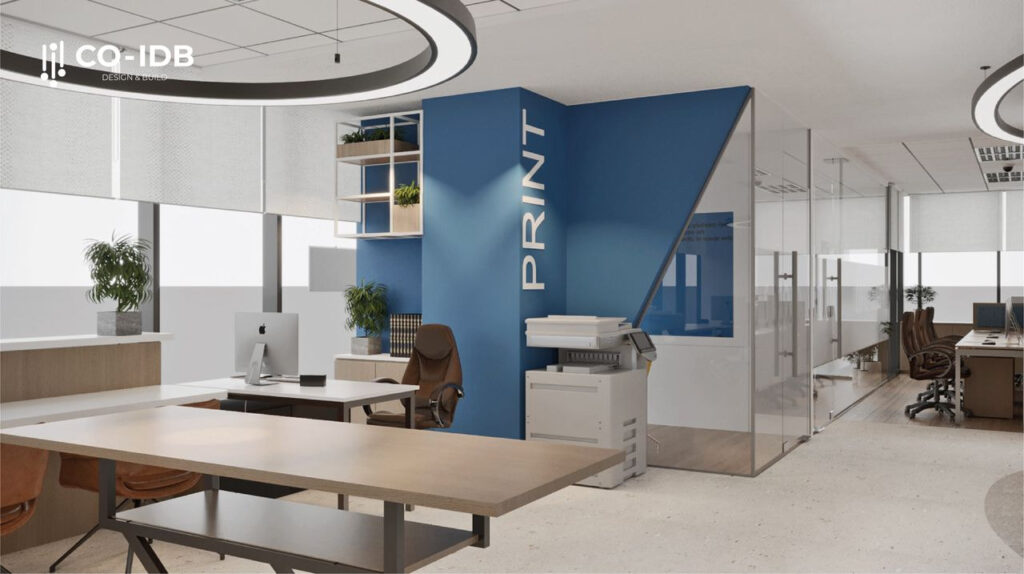
Storage System and Lighting Arrangement
Despite the large area, if there is no proper storage system, the office will quickly become cluttered and lack professionalism. Prioritize designs with **built-in cabinets, open shelves, or storage modules** attached to desks to save space while remaining tidy.

Furthermore, **lighting** is an indispensable factor, so it should be a harmonious combination of natural light and the lighting system. The main working area should use neutral white light, while the relaxation and reception areas can use warm yellow light to create a cozy atmosphere. Proper lighting arrangement not only helps reduce eye strain but also enhances the overall aesthetic of the space.
Feng Shui Elements
In 400m2 office design, **Feng Shui** plays an important role in creating harmony and bringing positive energy. Pathways should be clear and spacious, and desks should avoid facing the door or directly backing the door to limit negative airflow. The executive area should be positioned with the back to a solid wall and a view that encompasses the entire space, combined with natural light to generate vitality, helping employees work more efficiently.
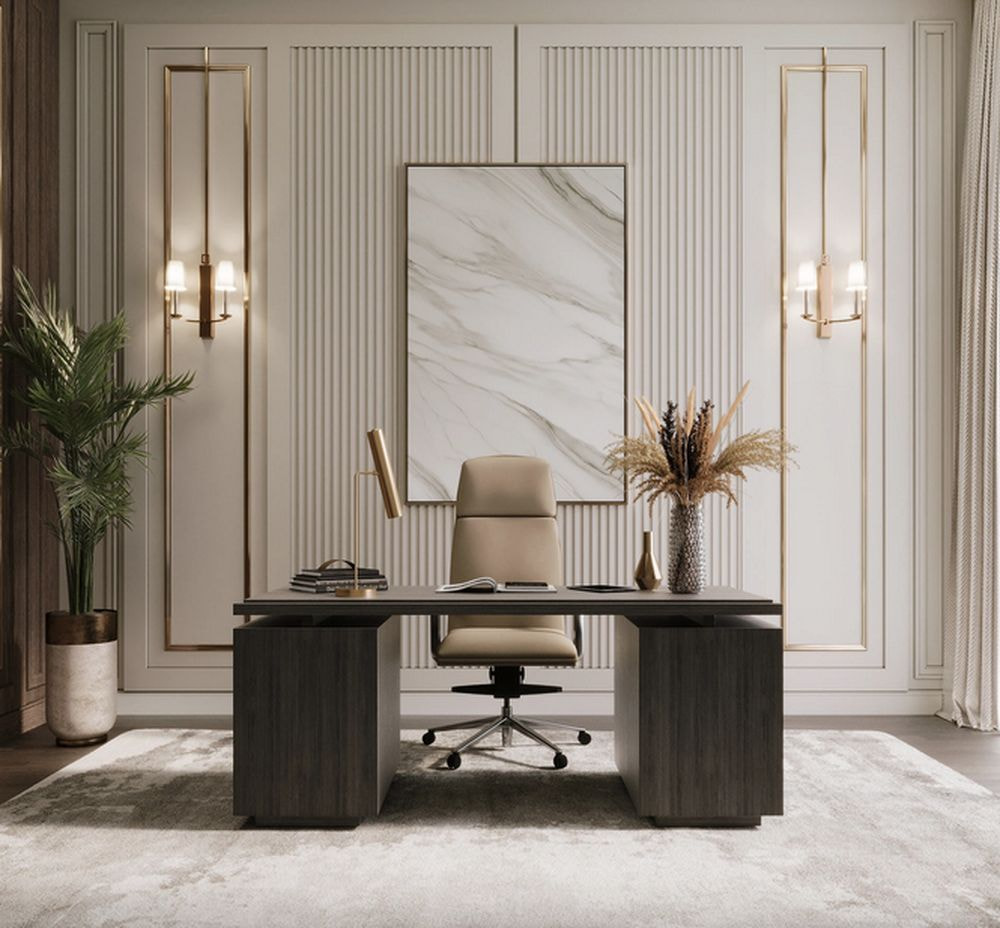
Expressing Brand Elements
Clearly expressing **brand identity** will create a strong impression on customers and partners. Therefore, the company logo should be placed in easily visible locations such as the reception area or the main wall of the meeting room. At the same time, the colors, materials, and styles of the office furniture need to be synchronized with the brand’s identity system.

The office is where a business can paint its own picture with brand colors, cultural lines, and creative accents. The more than 35 design examples introduced by COIDB in this article are not just suggestions, but the key to unlocking the door to an ideal workspace. And if you are looking for a reliable unit to design and construct a 400m2 office, please contact COIDB immediately for support and detailed consultation.
>>> See more: