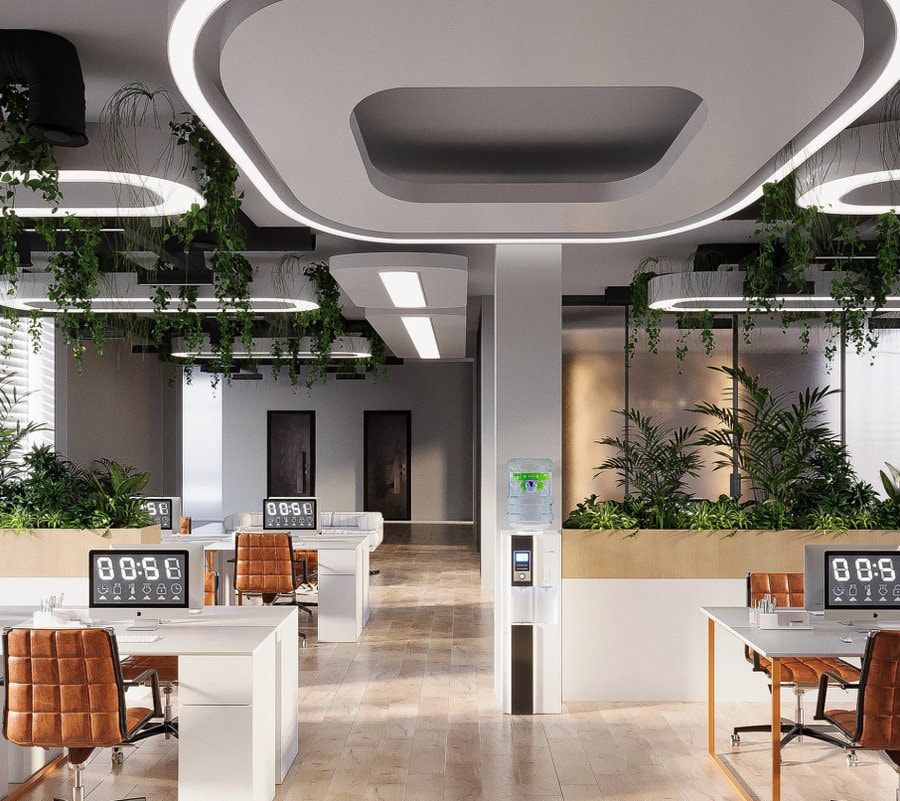
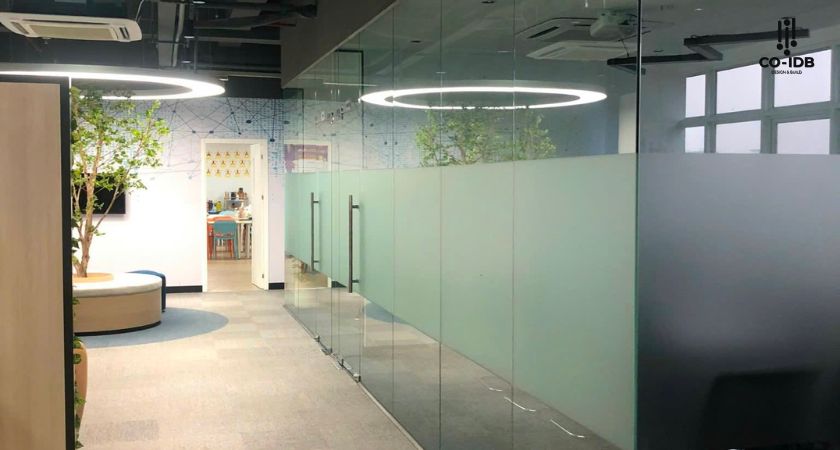
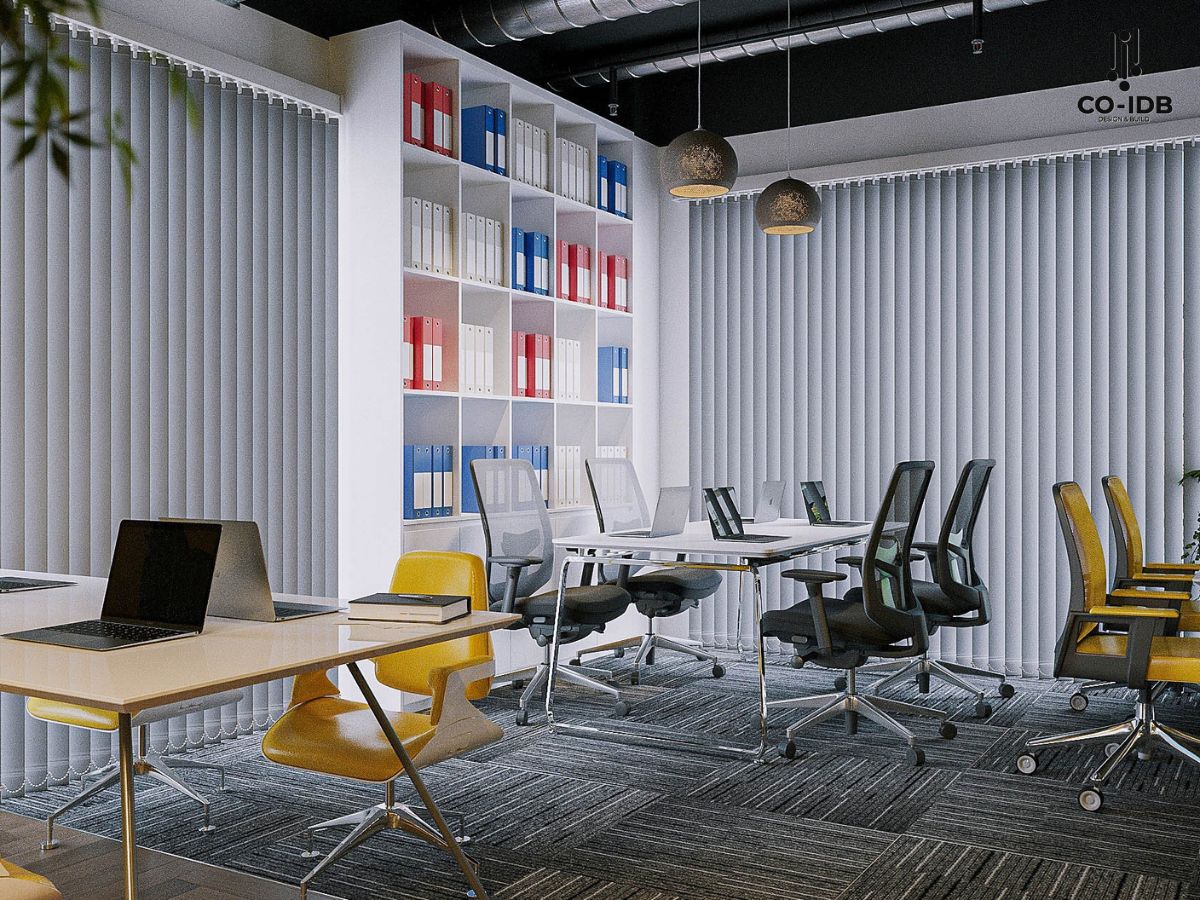
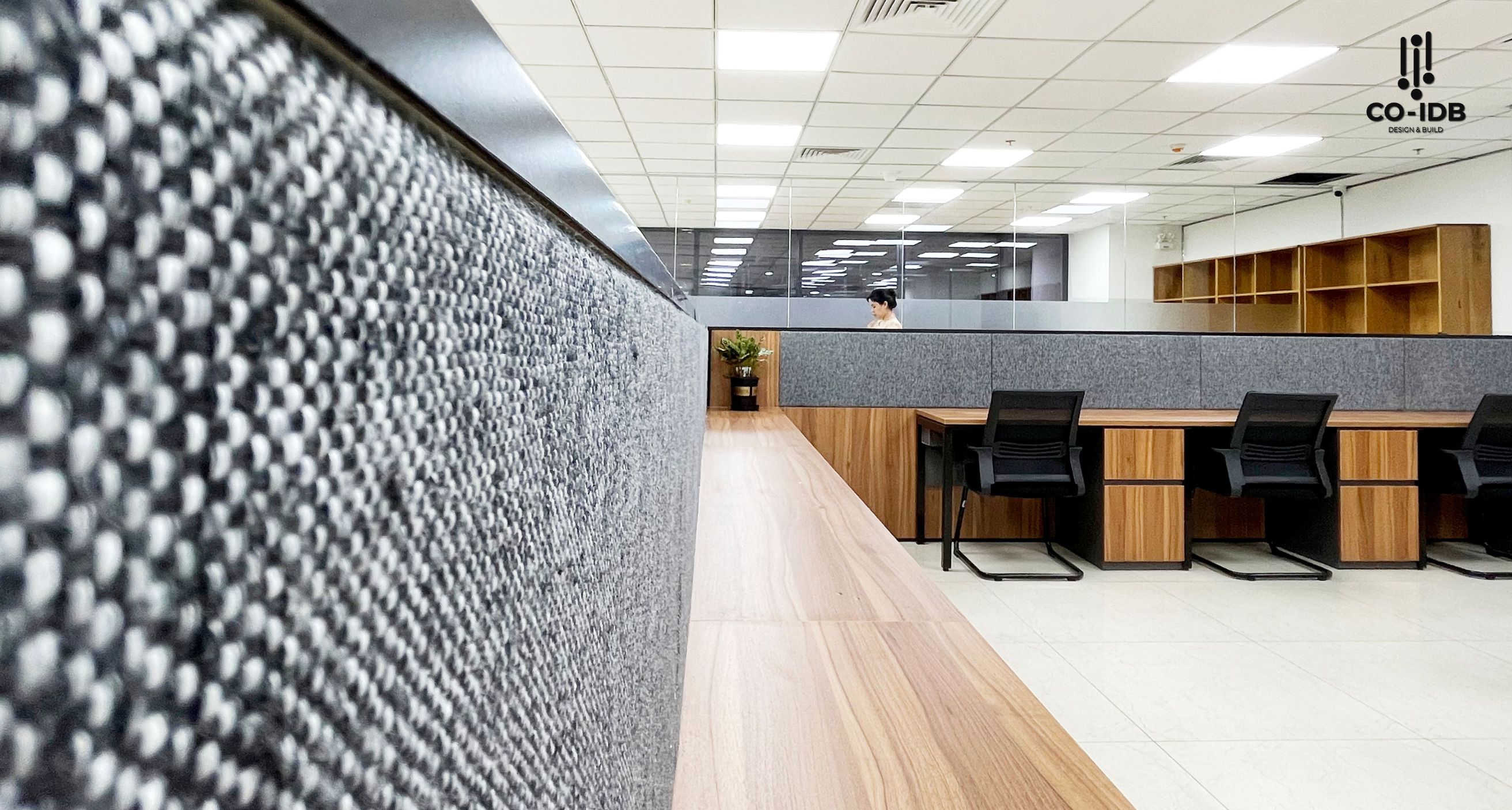
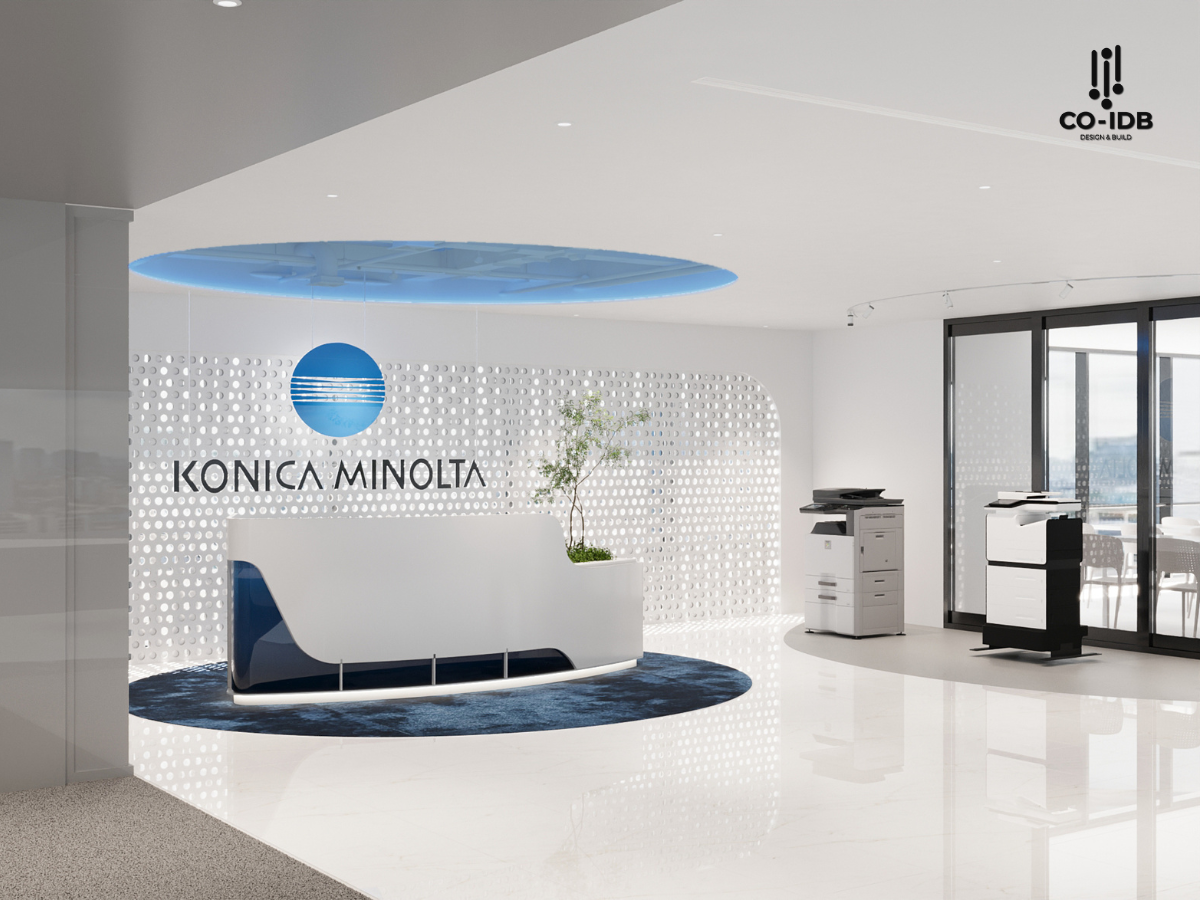
Office flooring directly impacts the sustainability, aesthetics, and lifespan of a workspace. Whether using high-quality floor tiles or standard types, the most important factor remains proper maintenance and cleaning. Join Co-IDB to discover surface cleaning tips that help keep your office space clean, beautiful, and professional.

Commonly Installed Flooring Types in Offices
Wood Flooring Installation
Wood flooring installation is a popular interior solution that brings natural beauty, luxury, and a cozy feeling to office spaces. This process requires precision and technique to ensure the floor surface remains flat, solid, and durable over time. Wood flooring creates an aesthetic highlight, improves the atmosphere, and helps regulate temperature in the workspace.
With various types of wood flooring—from natural to industrial—choosing the right fit and installing it correctly will provide a comfortable and professional work environment, for instance, combined with wooden wall cladding to create a high-class workspace.

Stone Flooring Installation Methods
Stone flooring installation is a high-end interior finishing method that brings sophisticated beauty to office spaces. Stones such as marble, granite, and quartz create aesthetic highlights, offer high durability, excellent load-bearing capacity, and wear resistance, making them suitable for high-traffic areas.
Stone floor construction also requires precise techniques to ensure a smooth, seamless, and sustainable surface. Choosing the right type of stone and following a professional installation process will yield a modern, prestigious workspace that is easy to maintain.
See more: Beautiful office wall painting: Choosing the right colors and paint types

Raised Access Floor Panel Installation
Raised floor panel installation is a flexible and modern solution that improves the functionality and aesthetics of office spaces. This method uses floor panels installed on a pedestal system, creating a void underneath for easy management of cables, electricity, and other utilities.
Not only providing convenience in installation and maintenance, raised flooring also enhances the modernity of the work environment while minimizing downtime during renovations or the finishing phase of office construction.
Choosing the Right Cleaning Agent for Each Floor Type
For Ceramic Tile Floors
Ceramic tiles are water-resistant and durable, but mild cleaning agents, such as ZEP Neutral pH Floor Cleaner, should be used to avoid affecting the tile’s inherent shine and color.

For Wood Floors
Wood floors require gentle cleaning agents that do not contain alcohol or ammonia and have moderate moisture, such as Bona Hardwood Floor Cleaner, to avoid damaging the surface coating and keep the wood shiny.
For Carpeted Floors
Carpeted floors require specialized cleaners to remove stains without damaging the fibers or losing the natural softness of the carpet, such as Resolve Carpet Cleaner.

For Natural Stone Floors
Natural stone floors require pH-neutral, acid-free cleaners safe for stones like marble and granite, protecting the surface from corrosion and maintaining natural brightness; businesses can refer to Black Diamond Stoneworks Marble & Tile Cleaner.
For Luxury Vinyl Plank (LVP) Floors
Wood-look vinyl flooring needs cleaners without alcohol or strong solvents to ensure the wood grain layer is preserved and avoid fading over time, such as Rejuvenate All Floors Restorer.

For Quarry Tile Floors
Quarry/Ceramic tiles have good load-bearing capacity, but it is still necessary to choose cleaners that aren’t too harsh to avoid wearing down the protective glaze and maintaining long-term beauty, such as Mr. Clean Multi-Surface Cleaner.
How to Clean Office Floors
Cleaning Wood Floors
For Newly Installed Wood Floors
For newly installed wood floors in an office, cleaning must be done carefully. First, use a soft broom or vacuum to completely remove dust and grit. Then, use a dry soft cloth to wipe it again to ensure no scratches occur.
If stubborn stains remain, use a specialized wood floor cleaning solution. Then, wipe with a damp cloth and finish by drying with a soft cloth to ensure the floor is perfectly shiny.

For Long-Term Used Wood Floors
For wood floors that have been used for a long time, maintenance needs to be more thorough. Stubborn stains, sticky residues, and scratches may appear. Follow these steps:
-
Daily Cleaning: For regular dust, use a soft broom or vacuum, especially at the joints between planks. Then, use a well-wrung mop or soft cloth to wipe along the length of the wood planks and diagonally across joints to ensure thorough dust removal.
-
Cleaning Tough Stains: For stubborn stains, using neutral cleaners is best. For oil spills, white spirit can be used. For ink or dry glue, handle with alcohol or cold water. Scratches can be hidden with shoe polish, while white rings from water cups can be cleaned with toothpaste or baking soda. If the floor is water-damaged and dull, a mixture of cigarette ash and cooking oil can help restore the shine.

Finally, wipe the floor with a soft damp cloth and dry it to keep the office space bright and professional.
Cleaning Tile, Stone, and Standard Floors
Step 1: Floor Preparation: First, completely remove dust and debris from the tile or stone surface by vacuuming or sweeping.
Step 2: Wetting the Floor: Use a damp mop to wet the entire surface. Wipe once to remove residual dust and ensure dirty water doesn’t settle in grout lines.
Step 3: Applying Cleaning Agent: Read the instructions for your chosen solution carefully. Dilute or use directly, then dip the mop and wipe the entire surface. For spray solutions, spray directly and wait about 5 minutes before wiping. Stubborn stains may require a soft brush for thorough cleaning.
Note: Always wear protective gloves when cleaning stone floors to avoid chemical contact.
Step 4: Cleaning Grout Lines (if needed): Use a specialized grout cleaner and scrub with a soft brush. Ensure even coverage and repeat until the grout returns to its original color.
Step 5: Rinsing: Wring the mop thoroughly and wipe the floor with clean water several times to remove all cleaner residue and remaining dirt.
Step 6: Drying: Dry the surface with a microfiber cloth or dry mop, or let it air dry before walking on it to prevent slipping.

Reference Price List for Office Flooring Services
|
Flooring Type |
Installation Price |
Material Cost |
Total Cost |
|
Wood Flooring |
250,000 – 450,000 VND/m² |
500,000 – 1,200,000 VND/m² |
750,000 – 1,650,000 VND/m² |
|
Vinyl Flooring |
150,000 – 250,000 VND/m² |
100,000 – 250,000 VND/m² |
250,000 – 500,000 VND/m² |
|
Ceramic Tile |
200,000 – 300,000 VND/m² |
100,000 – 250,000 VND/m² |
300,000 – 550,000 VND/m² |
|
Granite Flooring |
300,000 – 500,000 VND/m² |
400,000 – 800,000 VND/m² |
700,000 – 1,300,000 VND/m² |
|
Marble Flooring |
350,000 – 600,000 VND/m² |
500,000 – 1,200,000 VND/m² |
850,000 – 1,800,000 VND/m² |
|
Wood-look Vinyl |
200,000 – 300,000 VND/m² |
150,000 – 300,000 VND/m² |
350,000 – 600,000 VND/m² |
|
Carpet Flooring |
100,000 – 200,000 VND/m² |
80,000 – 150,000 VND/m² |
180,000 – 350,000 VND/m² |
|
Quarry Tile |
180,000 – 250,000 VND/m² |
120,000 – 250,000 VND/m² |
300,000 – 500,000 VND/m² |

The price list above is for reference only and may change depending on the service provider and specific project requirements. For an accurate quote and detailed advice on floor types suitable for your needs, please contact Co-IDB. We are ready to assist you in selecting and installing high-quality office flooring.
Office flooring is a crucial step in creating a professional workspace. To maintain beauty and durability, periodic cleaning and proper maintenance are necessary. Apply these shared tips to keep your office floor in top condition. If you need more information or construction support, contact Co-IDB immediately for detailed advice.
>> See more: