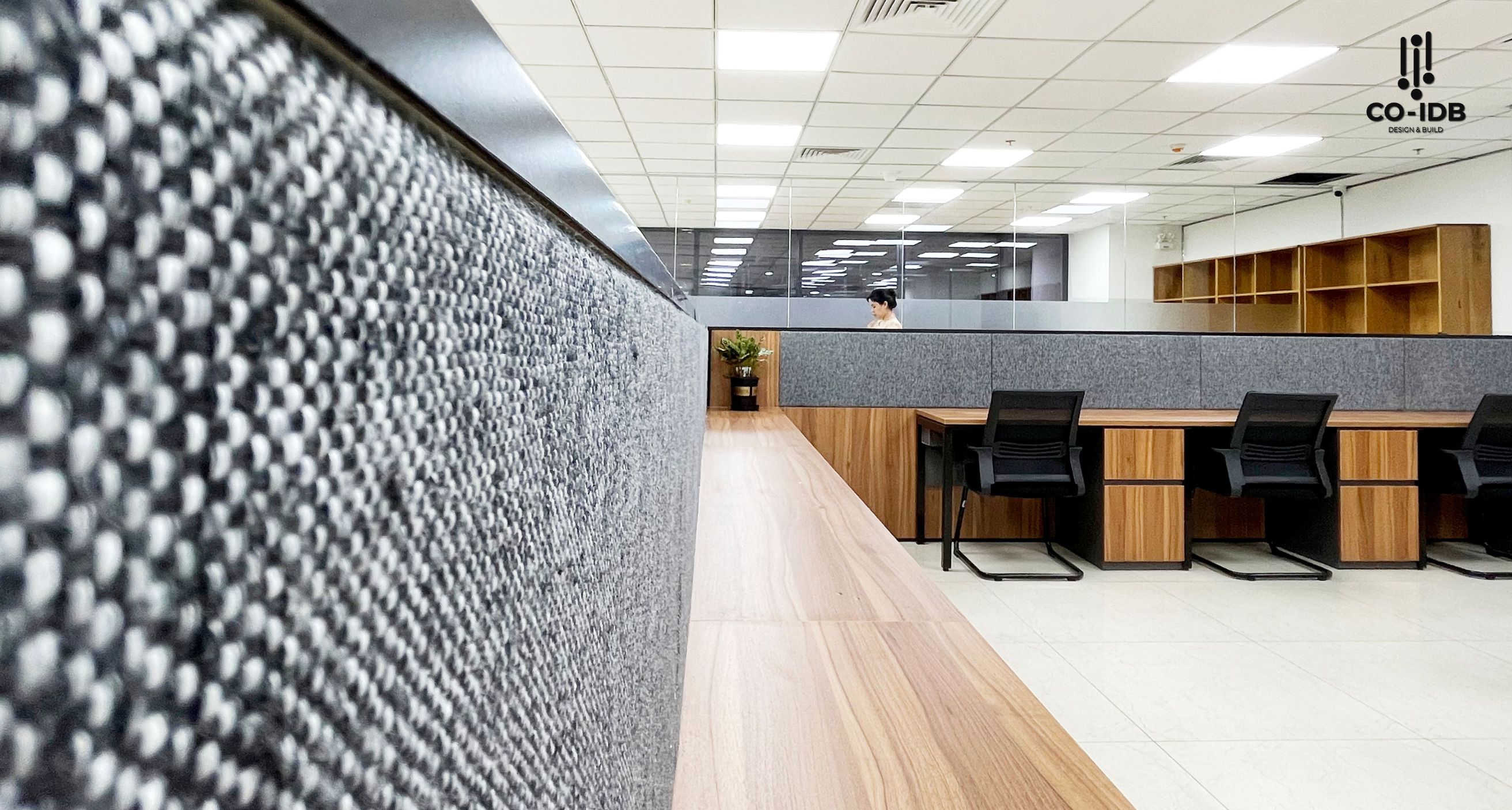
Cleaning and handover inspection are two indispensable steps in the office construction process, ensuring that the completed project meets quality standards and is ready for use. To ensure everything proceeds smoothly, a thorough understanding of each step in the cleaning and handover inspection procedure is essential. Let’s explore this with Co-IDB in the article below!

Steps in the Cleaning and Handover Inspection Process for Office Construction
Office Cleaning
Floor Surface Cleaning
Depending on the type of flooring (tiles, wood, carpet, etc.), the cleaning process may vary. For tile and wood floors, specialized detergents and large automatic floor scrubbers are used to remove dirt. Carpeted floors are vacuumed and deep-cleaned using high-tech carpet cleaners combined with appropriate detergents to ensure the total removal of dirt and residual bacteria.

Wall and Ceiling Cleaning
For wall cleaning, cleaning solutions suitable for the specific paint and wall material must be used. Stubborn stains from the demolition and site preparation process can be treated with low-pressure washers. For decorated walls such as wallpaper, soft cloths and special cleaning solutions are required to avoid damaging the surface.
Ceiling cleaning typically involves removing dust and cobwebs. Using vacuum cleaners with soft brush heads or specialized ceiling cleaners provides superior efficiency, especially for high and hard-to-reach ceilings.
Windows, Glass, and Partition Cleaning
Glass cleaning solutions and microfiber cloths are commonly used to ensure sparkling glass surfaces. For large windows or those at certain heights, automatic window cleaners or industrial glass washers are utilized to clean effectively while ensuring worker safety.
For partitions, the cleaning agent is chosen based on the material. Glass partitions are cleaned similarly to glass windows, while other partitions may require specialized cleaning solutions to keep the surface clean and damage-free.

Furniture Cleaning
For wood and leather furniture, contractors often use specialized cleaning solutions to sanitize and protect the surfaces. Vacuum cleaners are also used to remove dust from removable parts.
Chairs and sofas can be cleaned with fabric washers or vacuums with specialized brush heads. For stubborn stains, professional dry cleaning services may be required to ensure a completely clean surface without damaging the material.
Project Quality Inspection
Structural Inspection
First, the contractor conducts a full structural inspection to ensure that key components like columns, beams, and floors meet design standards and can withstand the intended loads. Modern measuring equipment and inspection technology are used to detect issues regarding structural strength and stability.
If structural defects are found, an assessment of cracks or deformations that could affect the project’s durability is conducted, followed by appropriate adjustments. Finally, walls, floors, and other structures are checked for signs of degradation or damage.

Plumbing System Inspection
The contractor evaluates the water supply and drainage piping system to ensure there are no leaks or clogs. Devices including valves, faucets, pipes, pump systems, water heaters, and other related equipment are inspected to ensure they operate efficiently and do not cause water quality issues.
Electrical and Lighting System Inspection
A full inspection of the electrical system is performed, including panels, wiring, outlets, and switches, to ensure all devices are positioned and operating correctly and safely. It is verified that after office electrical and network installation, the system meets safety standards and poses no risk of incidents.
Following the general electrical inspection, the contractor evaluates the lighting system to ensure all lights function normally, light is distributed evenly, and usage needs are met. Light bulbs, fixtures, and control systems are checked for optimal performance and energy efficiency.

>> See more: Electronic equipment installation
Safety and Fire Protection System Inspection
The next step in the quality inspection process is checking safety devices such as smoke sensors, alarm systems, and fire protection equipment including fire extinguishers, hoses, and sprinkler systems to ensure they operate effectively and are properly maintained. Emergency exits and emergency response plans are checked for readiness and effectiveness in case of a fire.
Project Documentation Handover
Design Dossier
Detailed design documents include architectural, structural, electrical, plumbing, and other system drawings. Drawings must be completed with full technical specifications, scales, and clear annotations.
Approval documents include certificates confirming the design has been approved by competent authorities, ensuring the design meets regulatory requirements and construction standards.

Construction Records
The contractor must provide detailed information about the construction process, including the finishing construction methods used, materials and equipment applied, as well as any problems encountered and their resolutions.
Inspection and Handover Records
The inspection and handover process includes the results of quality assessments for the project, systems, and equipment. These minutes confirm that the project meets quality requirements and safety standards. Additionally, they provide certification that the project has been accepted as complete and fully meets technical and quality requirements before being put into use.

Maintenance Dossier and User Manuals
Regarding maintenance records, the contractor provides detailed information on periodic maintenance procedures for systems and equipment. This includes requirements for inspection, replacement, and repair to maintain the performance and lifespan of the project.
Furthermore, the unit is responsible for providing detailed instructions on how to use the equipment and systems, including operational steps, features, and basic troubleshooting.
Project Handover Minutes
This records the handover of the project from the contractor or investor to the owner or management unit. The minutes should include information on the project’s status at the time of handover, accompanying documents, and any additional requirements. Stakeholders must sign the handover minutes to acknowledge that the project has been completed and fully handed over.

Co-IDB – Reputable Interior Design and Construction Unit in HCMC
Co-IDB is a leading interior design and construction unit in Ho Chi Minh City, distinguished by a professional, dynamic, creative, and highly specialized team. We are committed to providing world-class interior design solutions and high-quality construction that meet every client’s needs and expectations.
With a team of seasoned architects and engineers, Co-IDB not only creates beautiful workspaces but also optimizes functionality and amenities, contributing to the value and efficiency of every project. We are proud to be a trusted partner in realizing design ideas, from corporate offices to modern and sustainable living spaces.

Cleaning and handover inspection are not just the final steps of office construction but are decisive factors in ensuring the completed work meets standards and is operation-ready. To achieve optimal results, performing all cleaning and inspection steps is vital. Contact Co-IDB now to ensure your office project is handled professionally and effectively.
>>> See more: