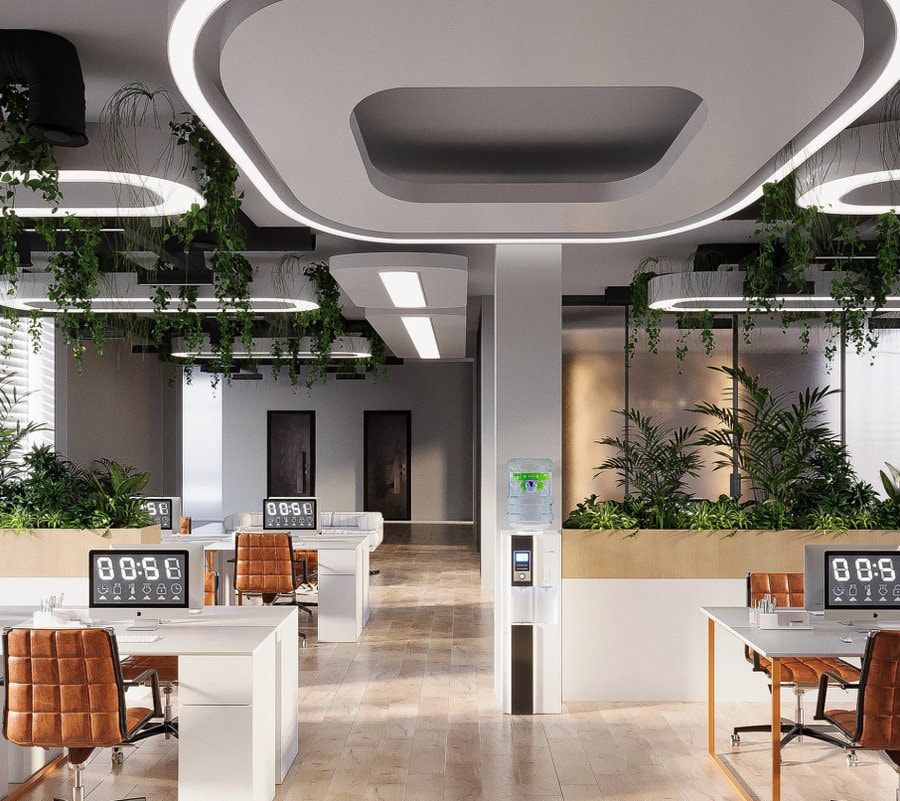
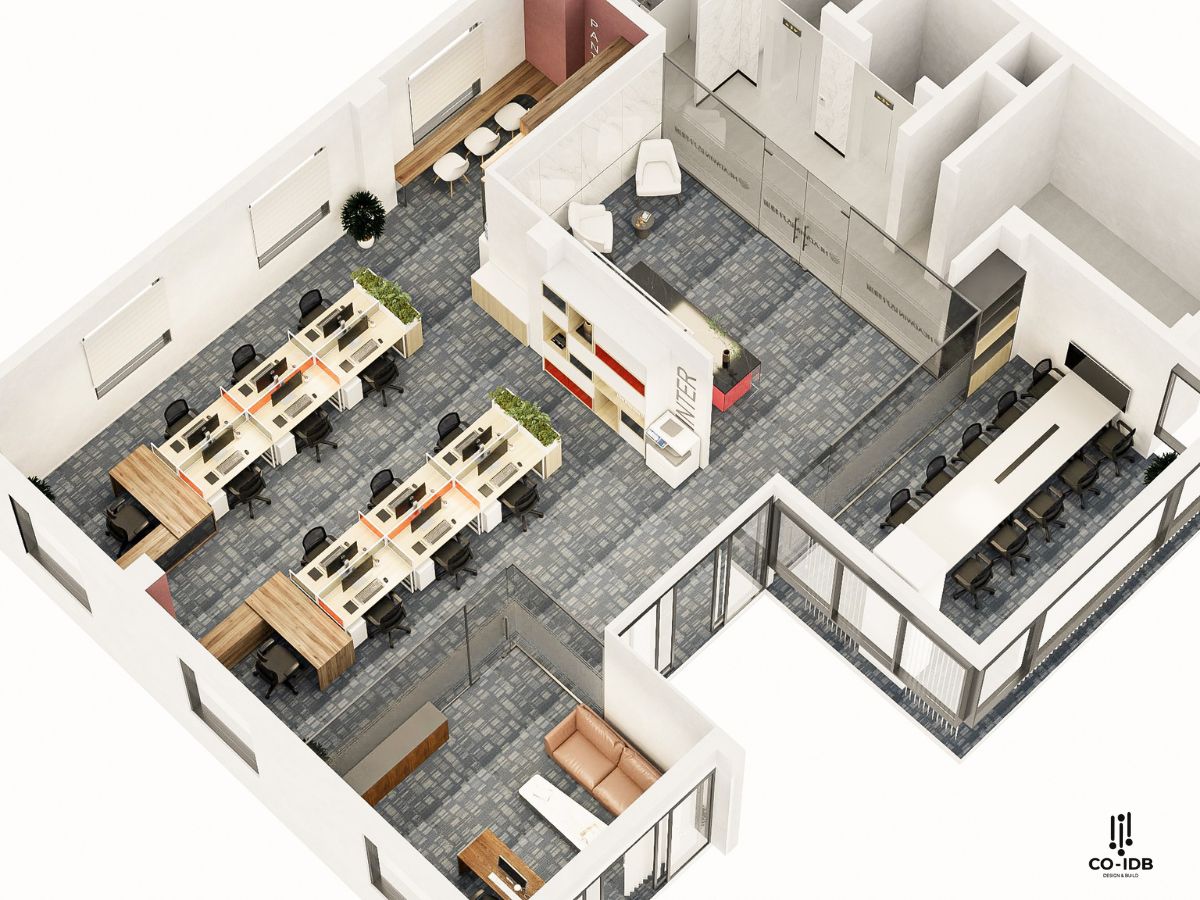
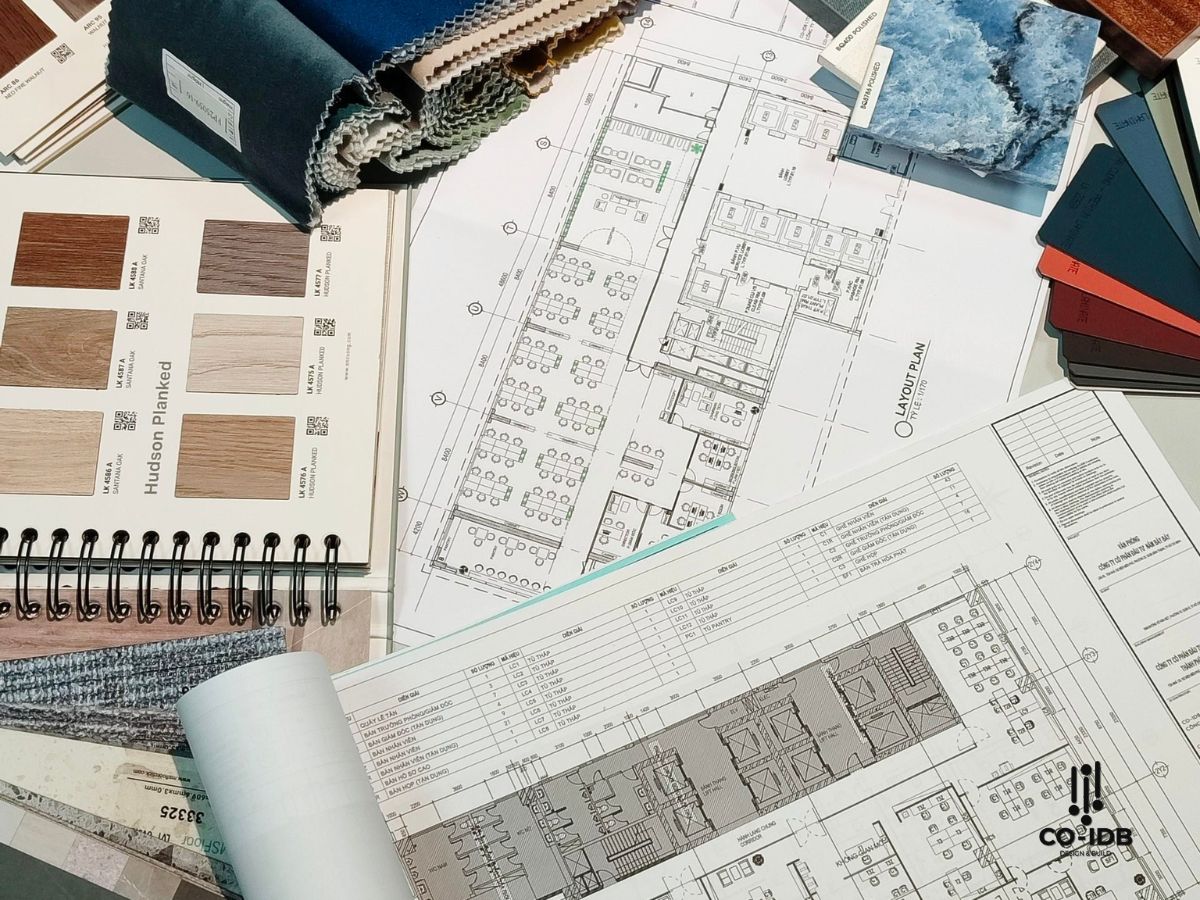
The ceiling lighting layout plays a vital role in optimizing the lighting system, creating a harmonious and efficient workspace. A well-thought-out design not only ensures adequate brightness but also enhances the overall aesthetic of the room. How do you choose and arrange ceiling lights with precision? Join Co-IDB as we explore the essential considerations in the article below!
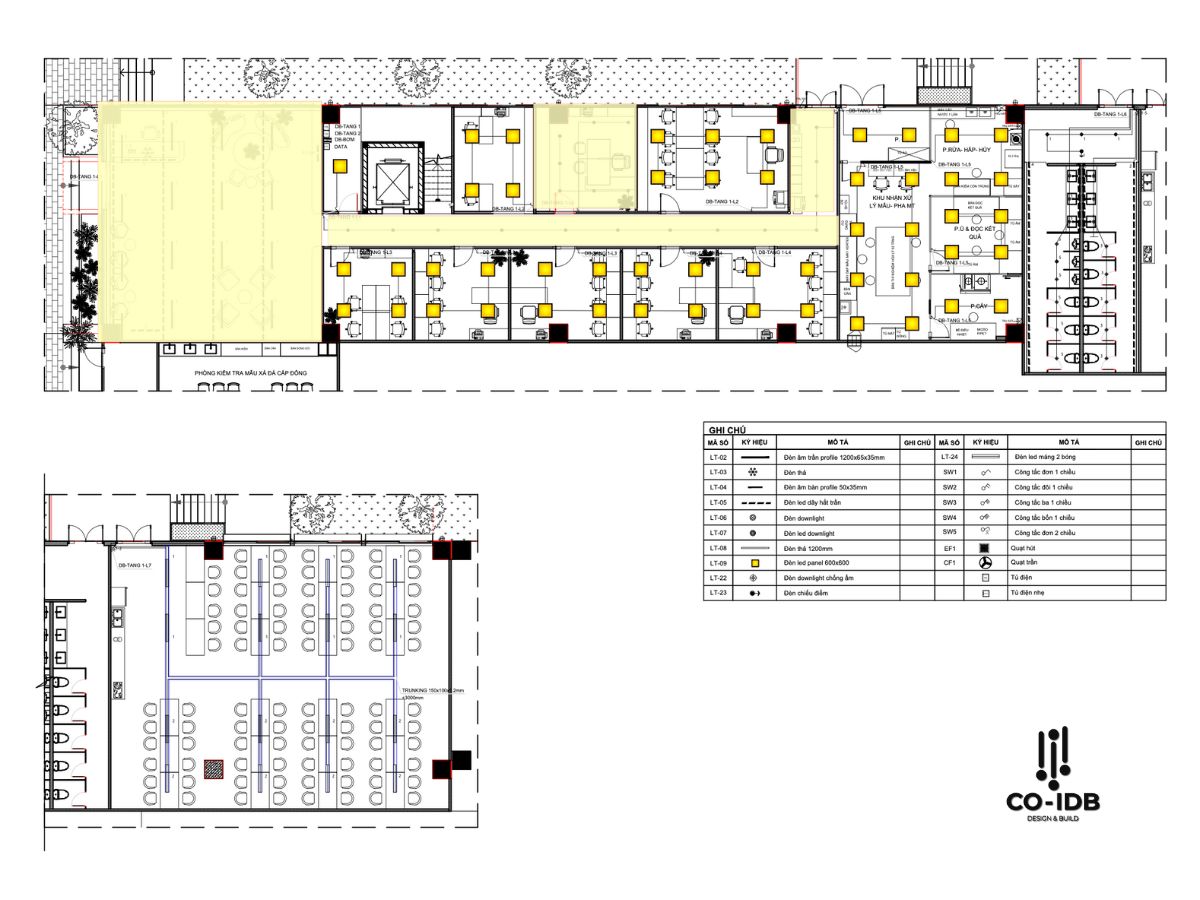
Most Popular Types of Ceiling Lighting Layouts Today
Gypsum Ceiling Lighting Layout
In modern office design, gypsum ceilings are a top choice due to their ease of construction, flexible shaping, and high aesthetic appeal. Installing lighting on this surface is straightforward, helping to optimize light distribution for a professional feel. Whether using drop ceilings, recessed, flat, or multi-level ceilings, each requires a specific arrangement to achieve uniform brightness.
>> See more: Consultation for 1000m2 Office Floor Plans
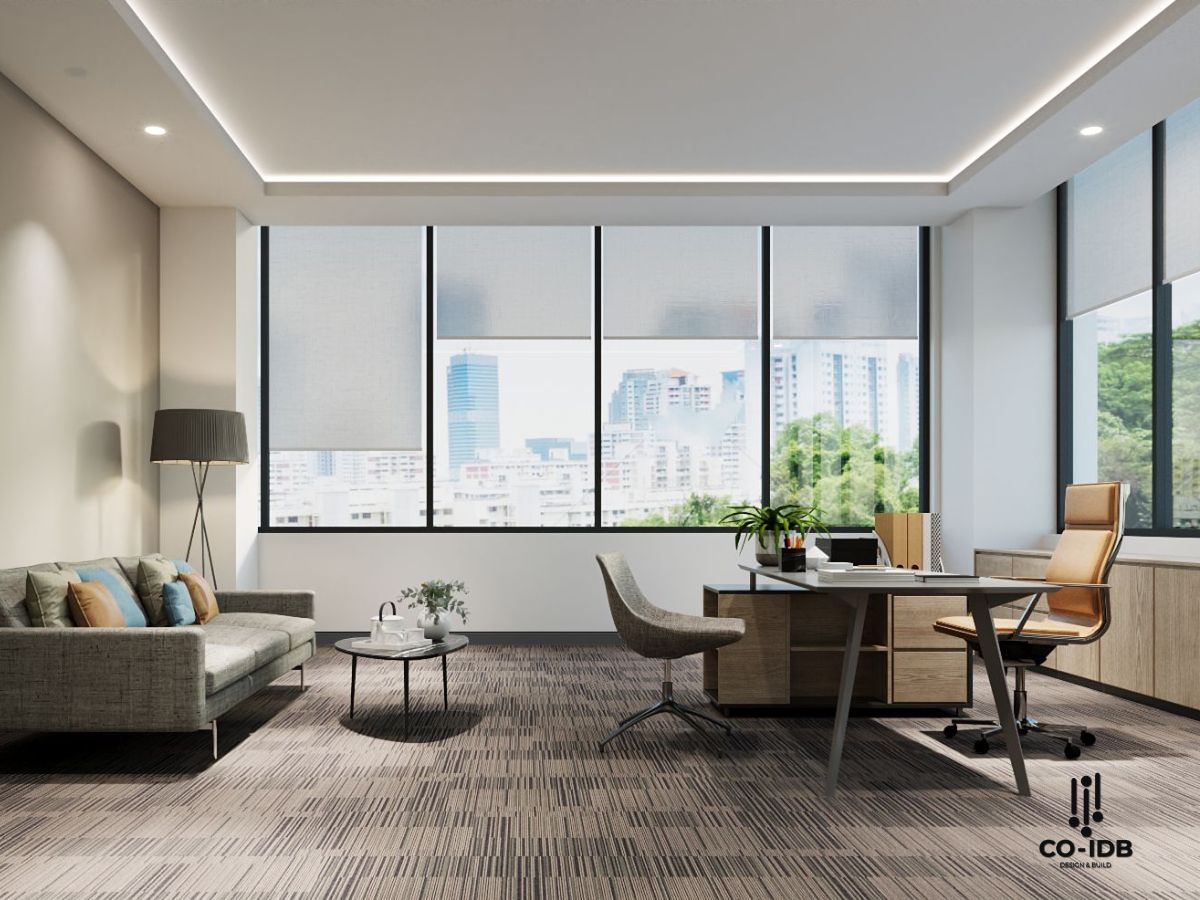
Wooden Ceiling Lighting Layout
Wooden ceilings create a warm, luxurious focal point. Arranging lights on wood requires careful consideration to ensure the illumination highlights the natural grain without overpowering the material’s beauty. Recessed lights, cove lighting, or pendant lights are popular choices for an impressive visual effect.
PVC Ceiling Lighting Layout
Lightweight and moisture-resistant, PVC ceilings are increasingly favored. When designing for PVC surfaces, selecting appropriate fixtures like downlights or strip lights is crucial to maintaining a sophisticated and contemporary atmosphere while ensuring structural integrity.
Concrete Ceiling Lighting Layout
Common in industrial-style offices, concrete ceilings offer high durability. However, since concrete is difficult to drill for recessed wiring, surface-mounted ceiling lights or track lighting are optimal solutions to provide even light without affecting the building’s core structure.
Key Standards for Office Lighting Layouts
Lighting Design Principles
- Choose light temperatures that complement wall colors for a harmonious visual effect.
- Each lighting zone should have an independent switch for flexible usage.
- Incorporate “accent lighting” to create professional focal points and vitalize the space.
- Follow core lighting principles to balance functionality with interior beauty.
Strategic Positioning
LED desk lamps provide task lighting that protects eyes and boosts performance. In small offices with low ceilings or limited natural light, combining desk lamps with recessed LED downlights creates a layered system for maximum comfort.
Switch and Outlet Placement
- Wiring for outlets and switches should follow a horizontal path using high-capacity cables to prevent overloading.
- Maintain a minimum distance of 10cm from windows for safety and environmental protection.
Mitigating Flicker
To prevent the “strobing” effect caused by wall fans, install fans at a height of 2.5m along the walls. Use high-quality LED chips to ensure continuous, flicker-free light, reducing eye strain and fatigue.
Calculating Spacing in Ceiling Lighting Layouts
Spacing by LED Wattage
- 3W – 4W: Suitable for small private offices or relaxation zones; 1m spacing.
- 6W – 9W: Standard for meeting rooms or general work areas; 1.2m spacing.
- 12W – 18W: Ideal for large lobbies or major conference halls; 2m – 2.5m spacing.
- 24W – 30W: Designed for vast public spaces or industrial-style offices; 2.5m – 3m spacing.
Spacing by Functional Area
- Private Offices: Distribute lights evenly above the desk at 0.9m – 1m intervals for soft, glare-free light.
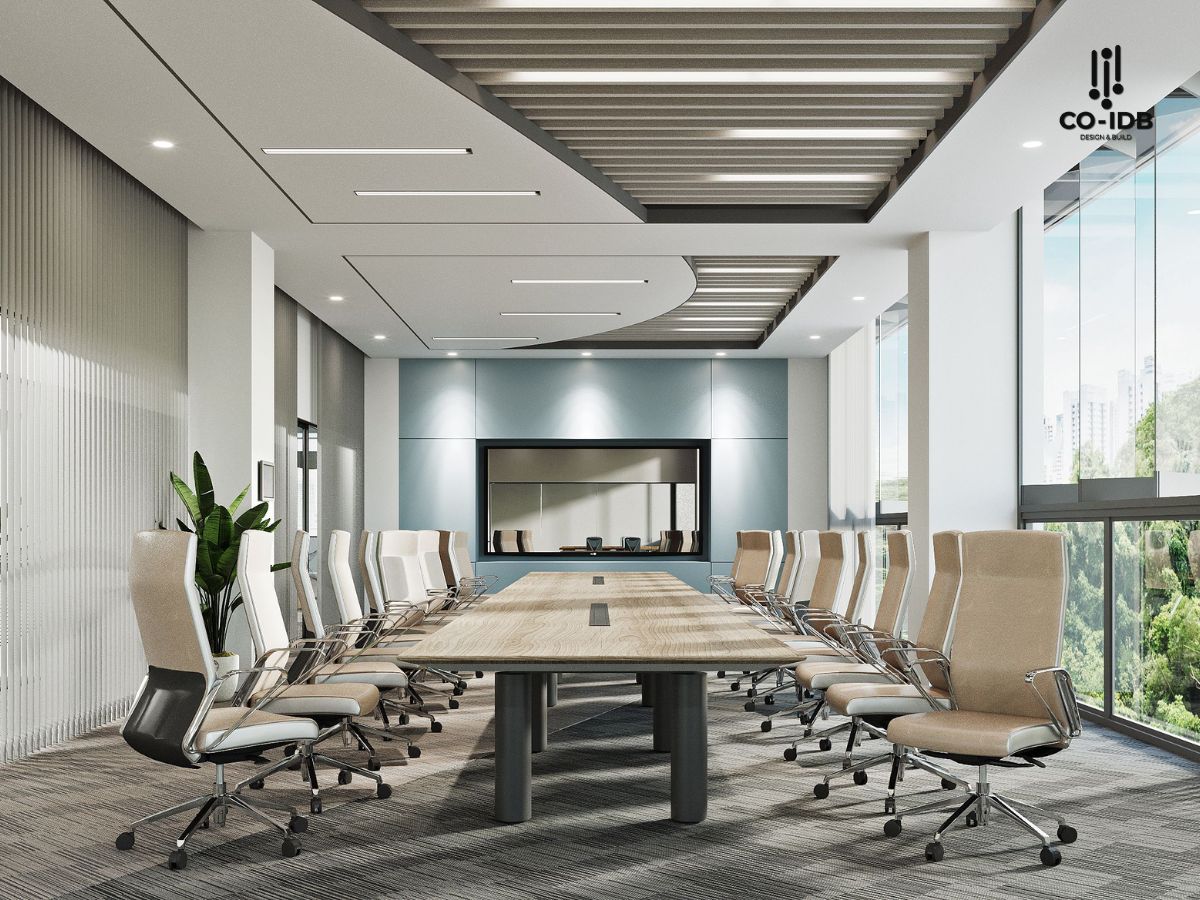
- Meeting Rooms: Space lights at 1m – 1.2m for wide, uniform coverage.
- Open Workspaces: Use wide-angle downlights spaced 1.5m – 2m apart to maintain efficiency and comfort.
Distance from Walls
The distance between the first light and the wall should be roughly half the distance between the lights, or at least 1m. Note: Avoid placing lights too close to walls to prevent “dark spots” and narrow light cones.
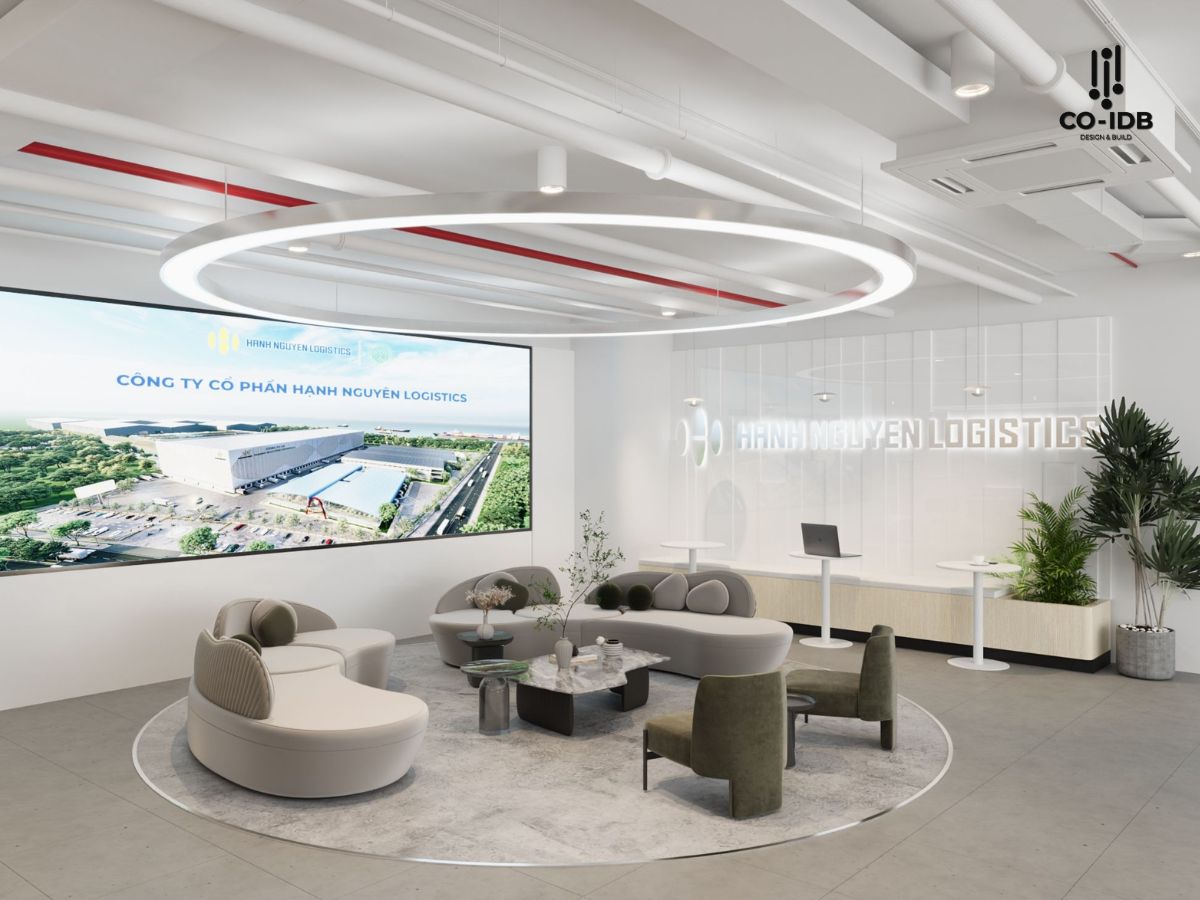
A professional ceiling lighting layout is the key to a productive and comfortable workspace. For a tailor-made lighting system that balances energy efficiency and design, contact Co-IDB for expert consultation today!
>> See more: