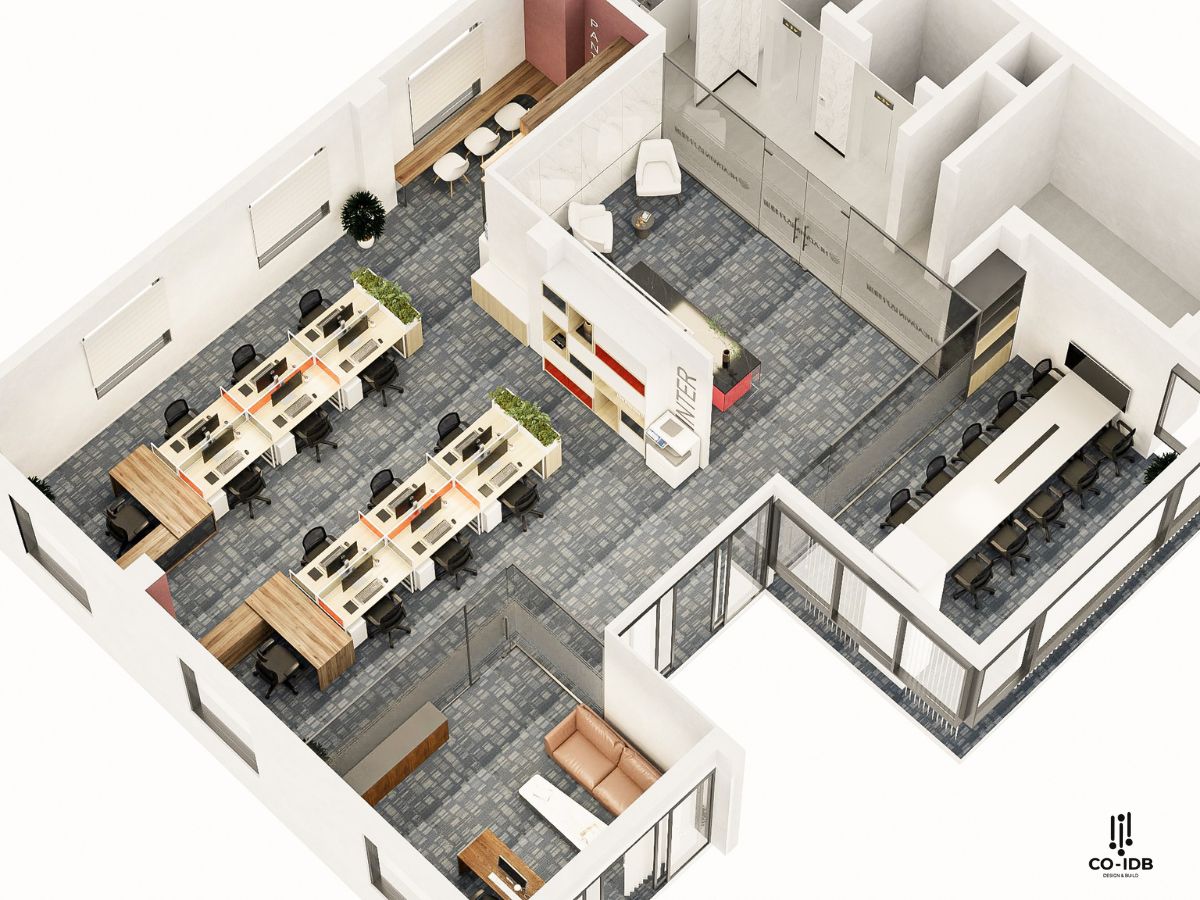
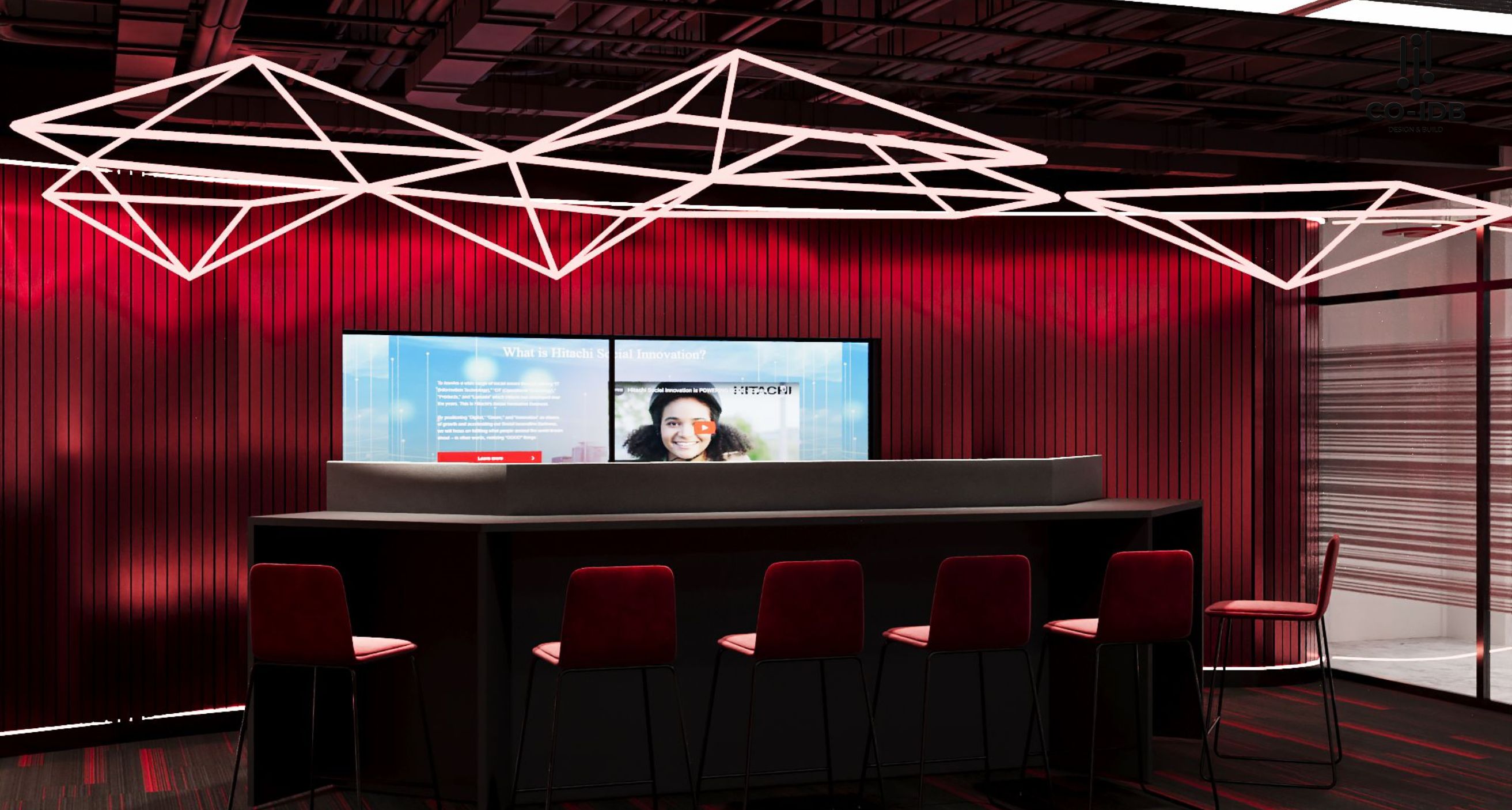
Office buildings are increasingly becoming the choice for modern businesses due to the high-end amenities they offer. Therefore, building owners and management boards need to invest heavily in design quality to attract tenants. Join Co-IDB as we explore the key aspects of office building design, from standards and principles to modern and future trends in this article!

What is an Office Building?
An office building is a multi-story structure primarily used for commercial and administrative purposes. Key characteristics include its height and the ability to maximize urban space utilization. These buildings often feature modern architecture integrated with advanced technical systems such as high-speed elevators, HVAC systems, and complex telecommunications networks.
Office buildings represent the evolution of modern urban architecture. They are typically designed with a blend of function and aesthetics to create an ideal working environment for businesses. With technological advancements and shifting work styles, office buildings are becoming increasingly diverse.

The Importance of Office Buildings for Businesses
Office buildings play a crucial role in shaping corporate culture. Well-designed amenities contribute to enhanced productivity and employee satisfaction. Additionally, an impressive office building helps strengthen brand image and attract potential clients.

Modern Office Building Design Standards
Today, office building design must meet specific standards to ensure safety and provide basic amenities before leasing to businesses. Here are some important standards:
Standards for Height and Floor Area:
-
Ceiling Height: Modern office buildings are usually designed with a ceiling height ranging from 2.7 to 3.2 meters to ensure an airy space.
-
Floor Area: The area of each floor must be reasonably calculated to optimize workspace and other functional zones such as meeting rooms, pantries, and reception areas.

Fire Safety Standards:
-
Automatic Fire Alarm System: Currently, any office building must have an automatic fire alarm and suppression system, with smoke and heat sensors installed in every area.
-
Emergency Exits: Exits must have clear signage, remain unobstructed, and feature sensor-based lighting systems to guide evacuation during emergencies.
-
Fire-resistant Materials: Use fire-resistant materials in the structure and interior to minimize fire risks, particularly in evacuation zones.
Requirements for Ventilation and Air Conditioning Systems
-
HVAC System (Heating, Ventilation, and Air Conditioning): Ensure the supply of fresh air and humidity control throughout the building, meeting indoor air quality standards.
-
Natural Ventilation: Design windows and vents to optimize natural air circulation when necessary.

Regulations on Natural and Artificial Lighting:
-
Natural Light: Office buildings should maximize natural light by using large glass panels and open-space designs. This not only saves energy but also creates a comfortable work environment.
-
Artificial Light: Internal artificial lighting must be uniform and glare-free, utilizing energy-efficient LED lights with adjustable brightness.

Standards for Elevators and Emergency Exits:
-
Elevators: Elevators must have a capacity suitable for the number of users, equipped with modern safety features like anti-jam doors, overload sensors, and warning systems.
-
Emergency Exits: Exits must be easily accessible, clearly marked, and free of obstacles. Exit doors must open outward and have control systems to prevent jamming.
>> See more: Office Space Design Standards

Basic Principles in Office Building Design
Design principles in office buildings are vital because they ensure an effective workspace for businesses alongside aesthetic appeal. Some basic principles include:
-
Incorporating flexibility and adaptability to meet the changing needs of businesses.
-
Design must be easily adjustable to accommodate business growth and expansion.
-
Applying multi-functional office furniture and open spaces to optimize flexibility.
-
Using modern design solutions such as smart systems to save time and increase tenant productivity.

Frequently Asked Questions About Office Building Design
What functions does a BMS (Building Management System) include in an office building?
A BMS in an office building includes energy management, HVAC control, security monitoring, and lighting control. It can also integrate elevator management and fire safety systems.
What is the minimum ceiling height for a Grade A office building?
The minimum ceiling height for a Grade A office is typically 2.7m. Some premium buildings may have ceiling heights of 3m or more to create a sense of spaciousness and luxury.
What does the LEED standard require for green office buildings?
LEED (Leadership in Energy and Environmental Design) evaluates office buildings based on criteria like energy efficiency, water usage, materials, and resources. To achieve certification, a building needs at least 40 points on the 100-point LEED scale.
What is the minimum green space ratio in an office building according to international standards?
The minimum green space ratio in an office building per international standards is usually 20% of the total usable area. This includes both indoor and outdoor green spaces, contributing to a healthy work environment.

What is the average cost for office interior design in HCMC?
The construction cost per square meter for an office building in HCMC ranges from 20 to 35 million VND. This figure varies depending on location, material quality, and the technology used.
However, for a detailed and optimized price quote for your office building, you can contact Co-IDB for immediate support.

In conclusion, this article has explained what an office building is and analyzed the information surrounding interior design. We hope these insights provide building owners with basic knowledge when beginning their office building design and construction journey.
>> See more: