Project planning is an indispensable step whenever a business intends to design, construct, or renovate its office space. This process encompasses multiple stages, from conceptual design and construction to final handover. By following this comprehensive guide, enterprises can optimize their workspace creation process, ensuring the final result meets both functional and aesthetic requirements.

Classification of Office Projects
Corporate Offices (Companies & Organizations)
- Features: Large scale, professional design focused on departmental functionality to maximize operational efficiency.
- Spatial Structure: Diverse areas including private offices, meeting rooms, communal zones, and breakout spaces.
- Requirements: High-tech integration and robust networking infrastructure.
- Focus: Strong emphasis on corporate branding and identity.

Commercial Offices (Sales & Services)
- Features: Open-plan layouts that create a welcoming atmosphere for clients.
- Flexibility: Versatile designs that can adapt to various business needs.
- Focus: High aesthetic appeal to leave a lasting impression on customers.
- Hybrid Spaces: Often combines workspaces with product showrooms.
Service Offices (Medical, Education, Entertainment)
- Features: Specialized designs tailored to specific service types, ensuring maximum comfort and convenience for users.
- Priority: High standards of hygiene and safety.
- Examples: Hospitals, international schools, fitness centers, and luxury hotels.
Step-by-Step Guide to Office Project Planning
1. Defining Objectives and Project Scope
Defining objectives is the foundation of planning. Whether the goal is to boost productivity, improve communication, or create a modern brand image, a clear vision directs the entire design and construction process. Scope definition includes the exact square footage, headcount, and specific technological requirements, helping to control costs and timelines from day one.

2. Analyzing Business Needs and Requirements
This stage involves surveying employee feedback, analyzing workflows, and evaluating core cultural requirements. By understanding the soul of the business, the design team can create a workspace that is truly effective and inspiring.
3. Detailed Budgeting and Financial Planning
Establishing a budget before seeking contractors is crucial. This includes estimating costs for design, materials, labor, and contingencies. A 10-15% financial reserve is recommended for unforeseen expenses, ensuring the interior construction process remains flexible and stress-free.
4. Project Scheduling and Time Management
A typical office project timeline often includes:
- Planning Phase: 4-6 weeks
- Drawing Preparation & Permitting: 1-2 weeks
- Site Demolition/Reinstatement: 1 week
- Interior Construction: 4-5 weeks (depending on scale)
- Finishing & Deep Cleaning: 1-2 weeks
- Handover & Commissioning: 1 week
5. Preliminary Design and Layout Planning
Space Analysis and Sketching
- Accurate measurement of dimensions and identifying structural fixed points (columns, windows).
- Defining functional requirements for each zone (Work, Meet, Greet, Relax).
- Creating Moodboards to capture the desired aesthetic, colors, and materials.
Technical Drawing Preparation
To ensure precision, businesses must secure a full set of technical drawings:
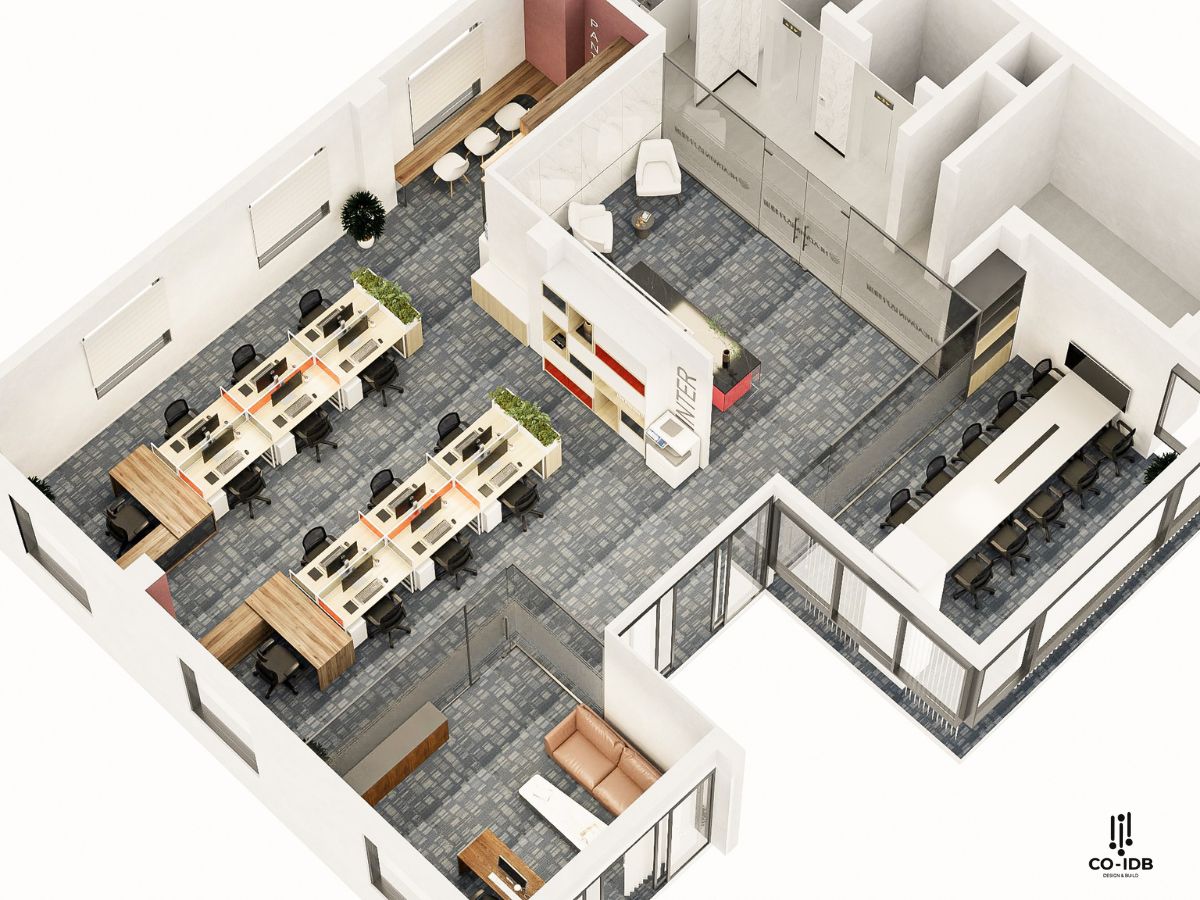
- 2D Floor Plans: Detailed dimensions and furniture placement.
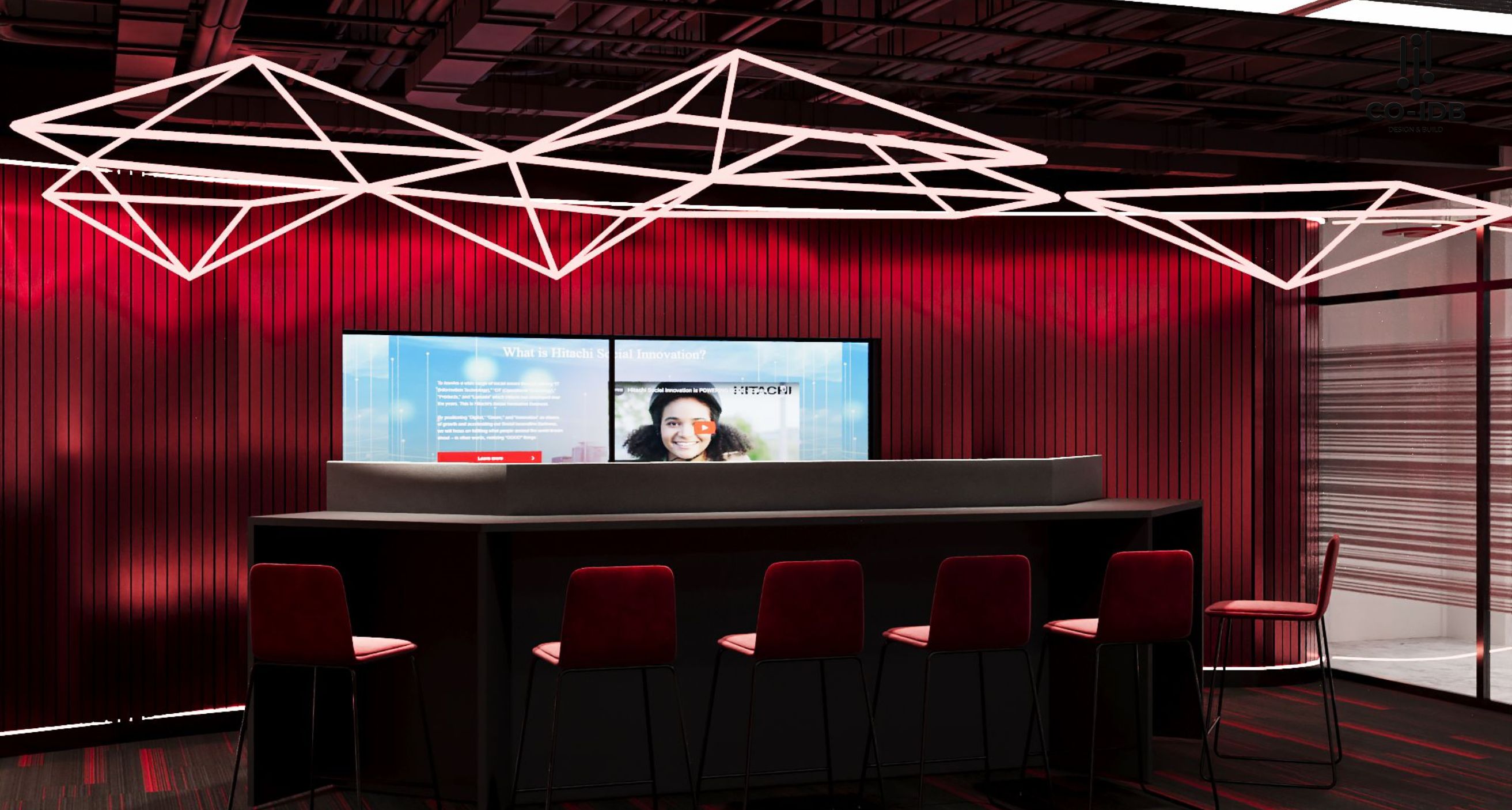
- 3D Perspectives: Visualizing the final look from multiple angles.
- Mechanical, Electrical, and Plumbing (MEP) Drawings: Systems for power, water, and ventilation.
6. Contractor Selection and Project Management
Choosing a contractor is a pivotal decision. Businesses should evaluate candidates based on their portfolio, experience, and detailed quotations. Once signed, project management involves tracking progress, approving material samples based on the Bill of Quantities (BOQ), and rigorous quality control. Co-IDB prides itself on meeting the highest standards for corporate investors.

7. Acceptance and Handover
Post-construction, the contractor performs deep cleaning and final inspection. The client participates in commissioning to ensure the result matches the initial design and technical specs. It is essential to have a checklist based on the project plan for objective evaluation.
CO-IDB – Your Trusted Partner in Office Planning & Execution
An effective office project plan saves time, optimizes budgets, and ensures superior quality. With extensive experience delivering Grade A projects for major corporations, CO-IDB supports you from detailed planning to turnkey design and construction. We provide professional interior design solutions that align perfectly with your business goals.
>>> Read more: Minimalist Interior Design for Modern Offices