Open-plan office design is a dominant trend for modern businesses, from agile startups to large enterprises. This style meets core needs for modernity, flexibility, and cost-efficiency while directly benefiting employee health and productivity. But how can you optimize these benefits while mitigating the drawbacks? Let’s explore with Co-IDB.

What is an Open-Plan Office?
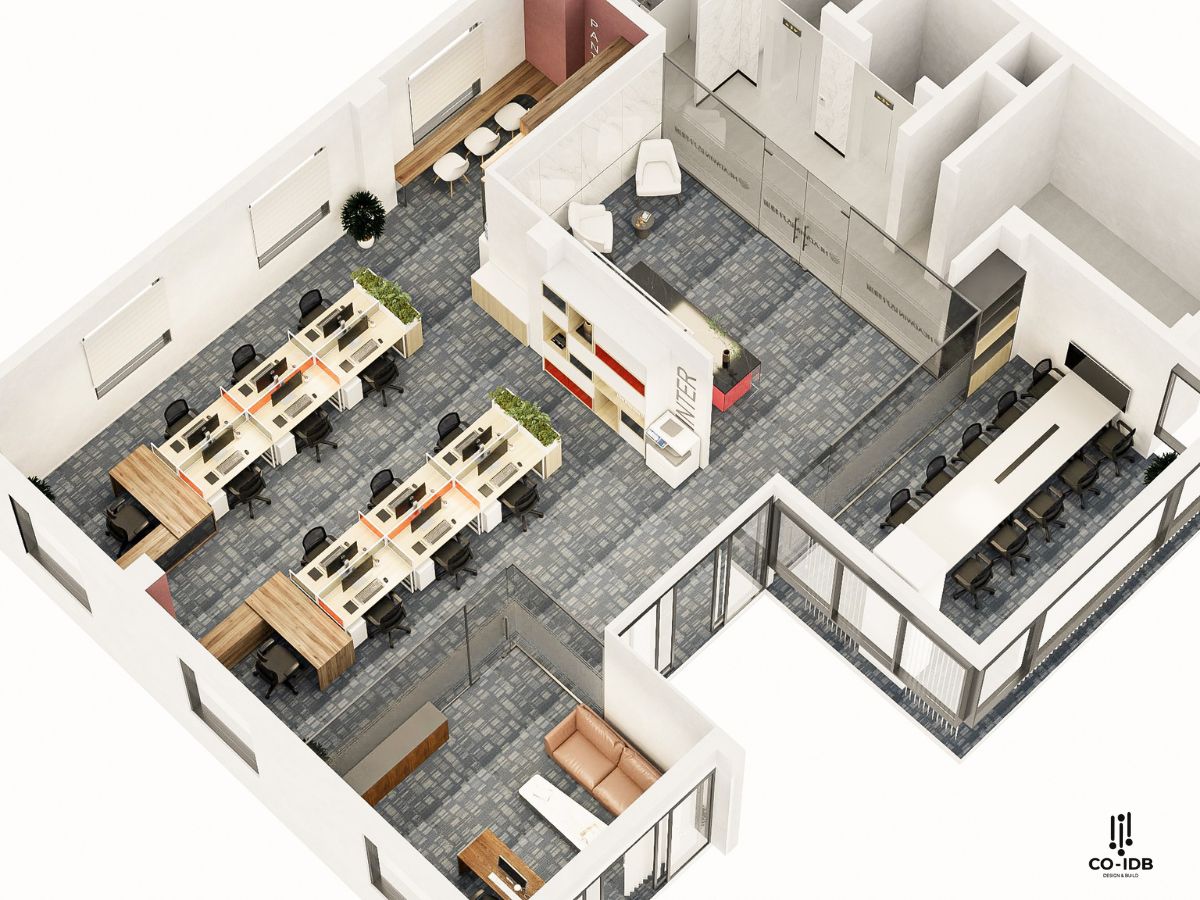
An open-plan office is a collaborative workspace where barriers and walls are minimized or removed. This layout fosters seamless interaction between departments, accelerating workflows and enhancing collective problem-solving.
Pros and Cons of Open-Plan Workspaces
The Advantages
For the Organization:
- Cost Efficiency: Maximizes floor area usage and reduces construction costs by eliminating permanent partitions.
- Shared Resources: Centralizes office equipment, reducing capital expenditure on hardware.
- Energy Savings: Enhances the distribution of natural light and airflow, lowering electricity consumption.
- Streamlined Management: Simplifies oversight and real-time coordination.
For the Employees:
- Enhanced Collaboration: Breaks down silos, allowing for instant communication and idea sharing.
- Reduced Mobility Friction: Saves time when moving between departments for cross-functional tasks.
- Improved Well-being: Access to natural light and biophilic elements reduces stress and office-related health issues.
The Challenges
- Noise Pollution: Constant interaction can lead to high ambient noise, potentially disrupting deep focus.
- Lack of Privacy: Employees may feel “on display,” leading to increased stress or performance anxiety.
- Information Security: Greater risk of visual or acoustic data leakage compared to traditional cellular offices.

Key Considerations for a Successful Open-Plan Design
Balancing Interaction and Privacy
Modern design focuses on “flexible zoning” to adapt to different tasks:
- Glass Partitions: Maintain visual transparency while providing necessary acoustic barriers.
- Low Dividers & Acoustic Panels: Define individual workstations without closing off the environment.
Biophilic Integration & Natural Elements
Regardless of the design style, integrating green spaces is crucial. Biophilic design not only enhances aesthetics but also boosts cognitive performance. Floor-to-ceiling windows and indoor plants create a more dynamic and inviting atmosphere.
Strategic Secondary Spaces (The Pantry)
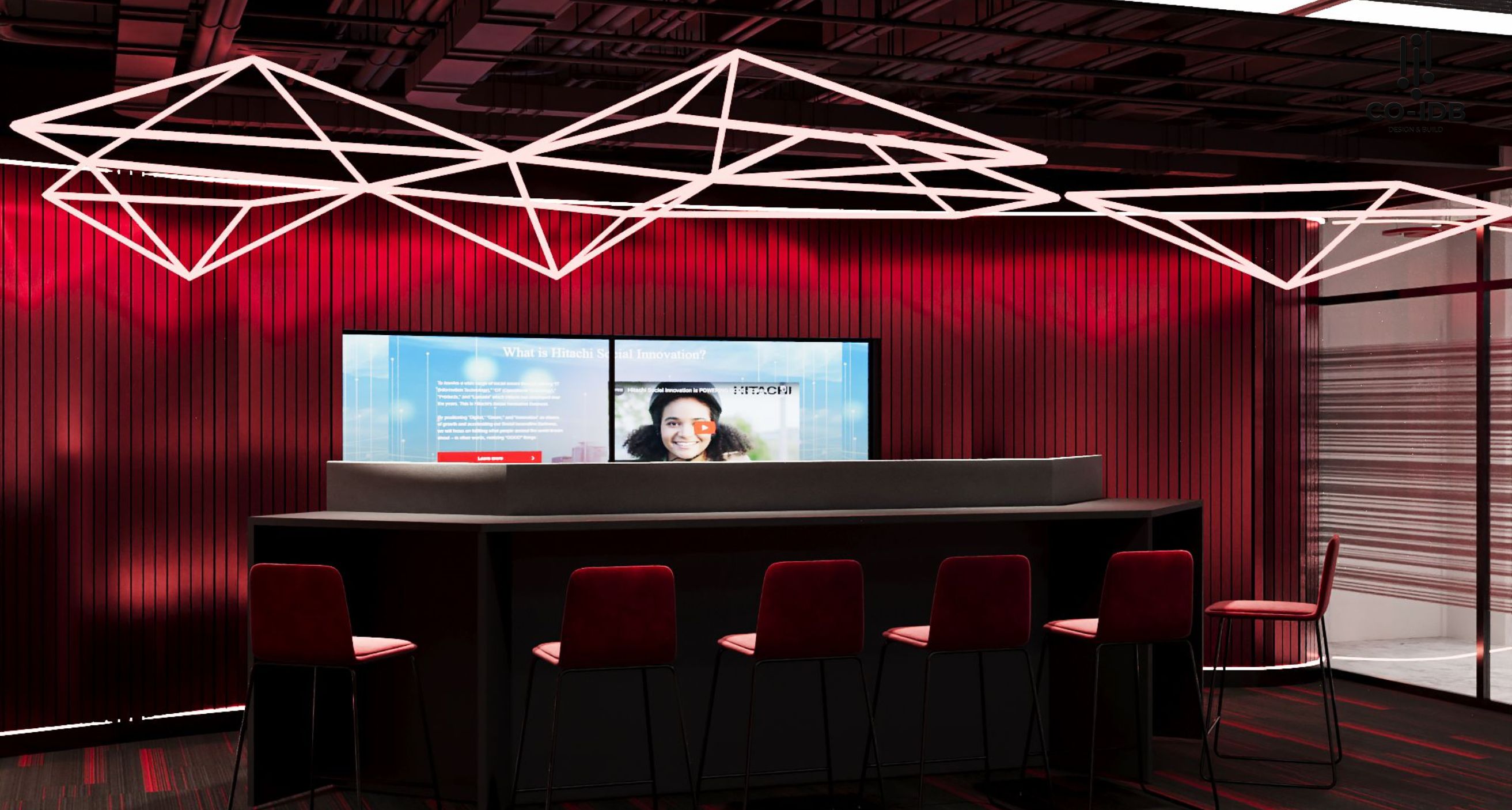
Modern offices must include auxiliary zones like the Pantry or Breakout Area. These “third spaces” allow employees to recharge, fostering social bonding and spontaneous innovation.
Smart & Multipurpose Furniture
To keep the office airy, prioritize modular furniture. Functional pieces—like height-adjustable desks or mobile acoustic pods—save space and offer versatility, maximizing the ROI of your office fit-out.

Design Solutions: Creating a Balanced Hybrid Office
The “Closed-within-Open” Concept
To solve privacy issues, businesses are adopting the hybrid layout:
- Using long modular desk rows instead of cubicles.
- Deploying plants, bookshelves, or rugs as “soft boundaries” to define zones.
- Separating sensitive departments (HR, Finance, Legal) using acoustic glass to ensure confidentiality while staying connected.
Executive Zones in an Open Layout
Executive offices can still feel modern and open. By placing leadership areas in peripheral zones with transparent boundaries, managers remain accessible while maintaining the authority of their position.
Acoustically Optimized Meeting Rooms
Open-style meeting rooms should use acoustic ceilings and glass walls to minimize echo and maintain acoustic privacy during brainstorms.
Co-IDB specializes in transforming traditional offices into high-performance open workspaces. If you are looking for a tailored design that balances collaboration with comfort, contact us today for a professional consultation