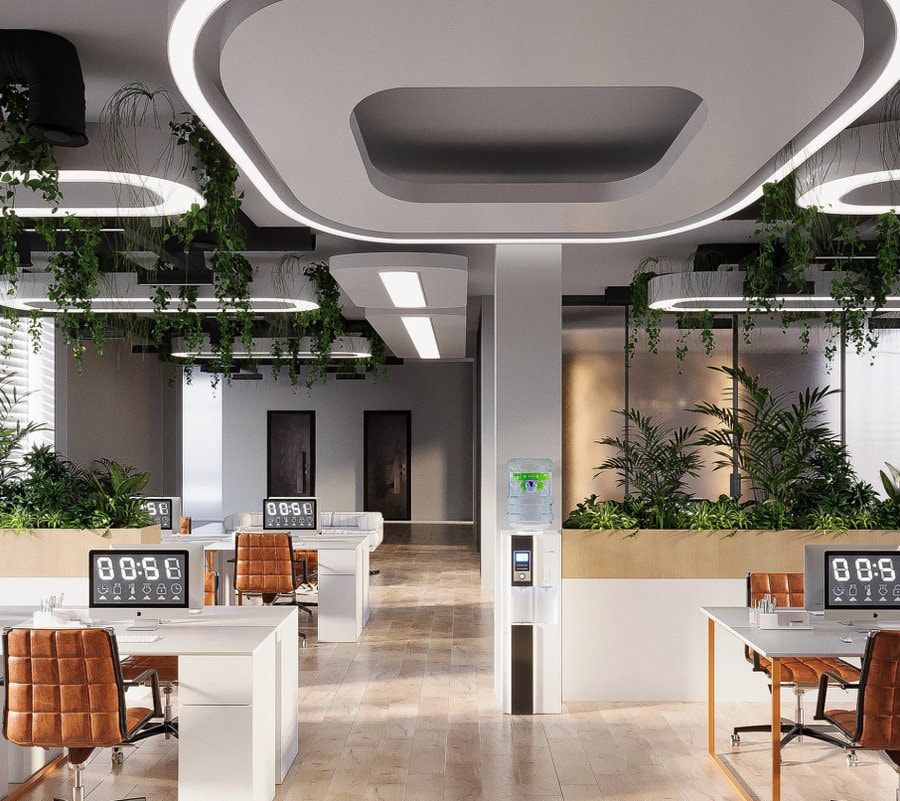
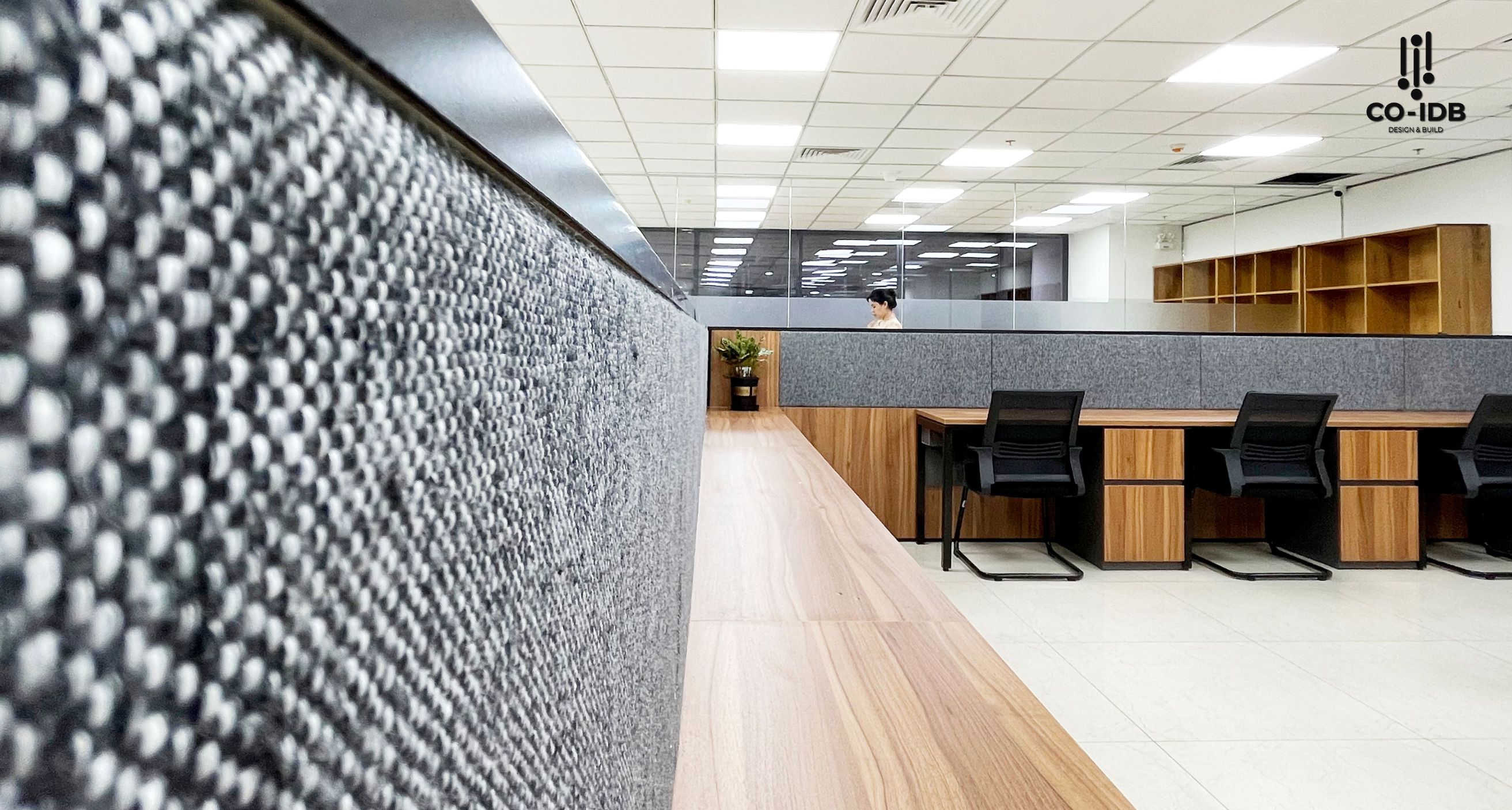
Natural light is a vital element in modern office design. Maximizing natural light sources not only improves employee health and morale but also saves energy. Discover the secrets to designing smart and effective office lighting today.

Benefits of Office Soundproofing Systems
Controlling noise significantly boosts work performance. Research indicates that noisy environments reduce concentration and increase employee stress levels. A soundproofing system not only minimizes noise but also creates private spaces, improves internal communication, and enhances information security. Investing in a soundproofing system is a strategic move that brings long-term benefits to the business.
Common Types of Office Soundproofing Systems
Soundproof Walls
Soundproof walls are a core element in reducing transmitted noise. The structure of a soundproof wall typically includes a main wall layer, a soundproofing material layer (such as glass wool or acoustic foam), and a surface finish. Choosing the right materials and construction methods will help optimize soundproofing effectiveness.

Soundproof Ceilings
Soundproof ceilings play a crucial role in absorbing sound and minimizing echoes. There are various types such as drop ceilings, recessed ceilings, and gypsum ceilings. Each type has different advantages and applications. Commonly used materials for ceilings include acoustic panels, glass wool, and specialized ceiling tiles.

Soundproof Doors
Soundproof doors are among the most important factors in preventing noise from traveling between rooms. They are typically thick, use rubber gaskets for an airtight seal, and are equipped with secure locking systems. Soundproofing materials for doors include solid wood, metal, and various composite materials.
Soundproof Partitions
Movable Soundproof Partitions
Movable soundproof partitions help businesses reduce noise while effectively optimizing workspace. They allow for quick transitions between large open spaces and smaller private rooms.
Particularly suitable for offices requiring high flexibility, movable partitions help create temporary meeting rooms or team-working areas without the need for permanent renovation. The soundproofing feature ensures activities do not interfere with each other, maintaining a quiet work environment.

Soundproof Gypsum Partitions
Soundproof gypsum partitions offer high efficiency at a reasonable cost. Made from specialized gypsum boards combined with soundproofing materials, this type of partition has excellent sound absorption capabilities compared to others.
Gypsum partitions are easy to install, repair, and can be customized to fit any interior design. Additionally, they provide good thermal insulation, contributing to energy savings. However, their disadvantage is a lack of high flexibility compared to movable partitions.
Soundproof Aluminum and Glass Partitions
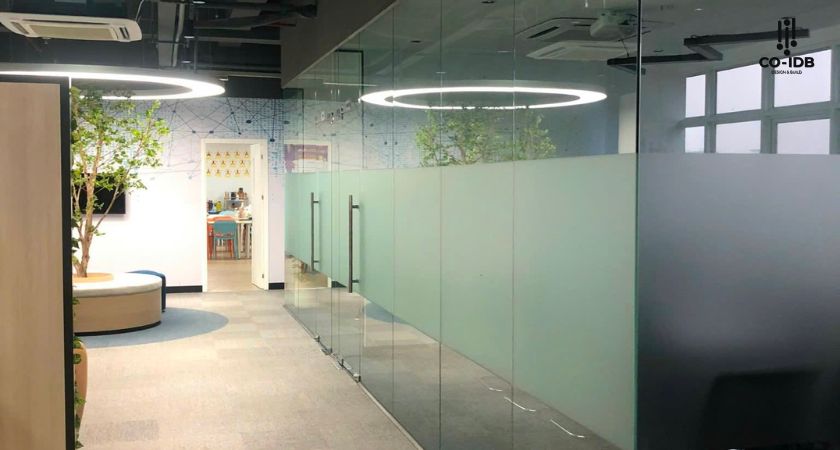
Aluminum and glass partitions are a method that perfectly combines aesthetics and function. This type of partition creates a spacious and airy feel due to the transparency of the glass, while still ensuring soundproofing through its specialized structure. Soundproof glass partitions enhance natural light, saving energy and creating a comfortable work environment. They are particularly suited for modern offices aiming for a professional and luxurious impression.
See more: Other types of office partitions

Materials Used in Office Soundproofing Systems
Soundproofing materials play a vital role in the system’s effectiveness. Here are some common materials:
-
Mineral wool (Rockwool): Good sound absorption, fire-resistant
-
Acoustic foam: Lightweight, easy to install, highly effective
-
Soundproof rubber: Elastic, good vibration resistance
-
Polyester fiber panels: Eco-friendly, non-allergenic
-
Perforated wood: Highly aesthetic, effective sound absorption
The choice of material depends on specific soundproofing requirements, budget, and office design.

Applications of Soundproofing Systems
Soundproof Meeting Room Design
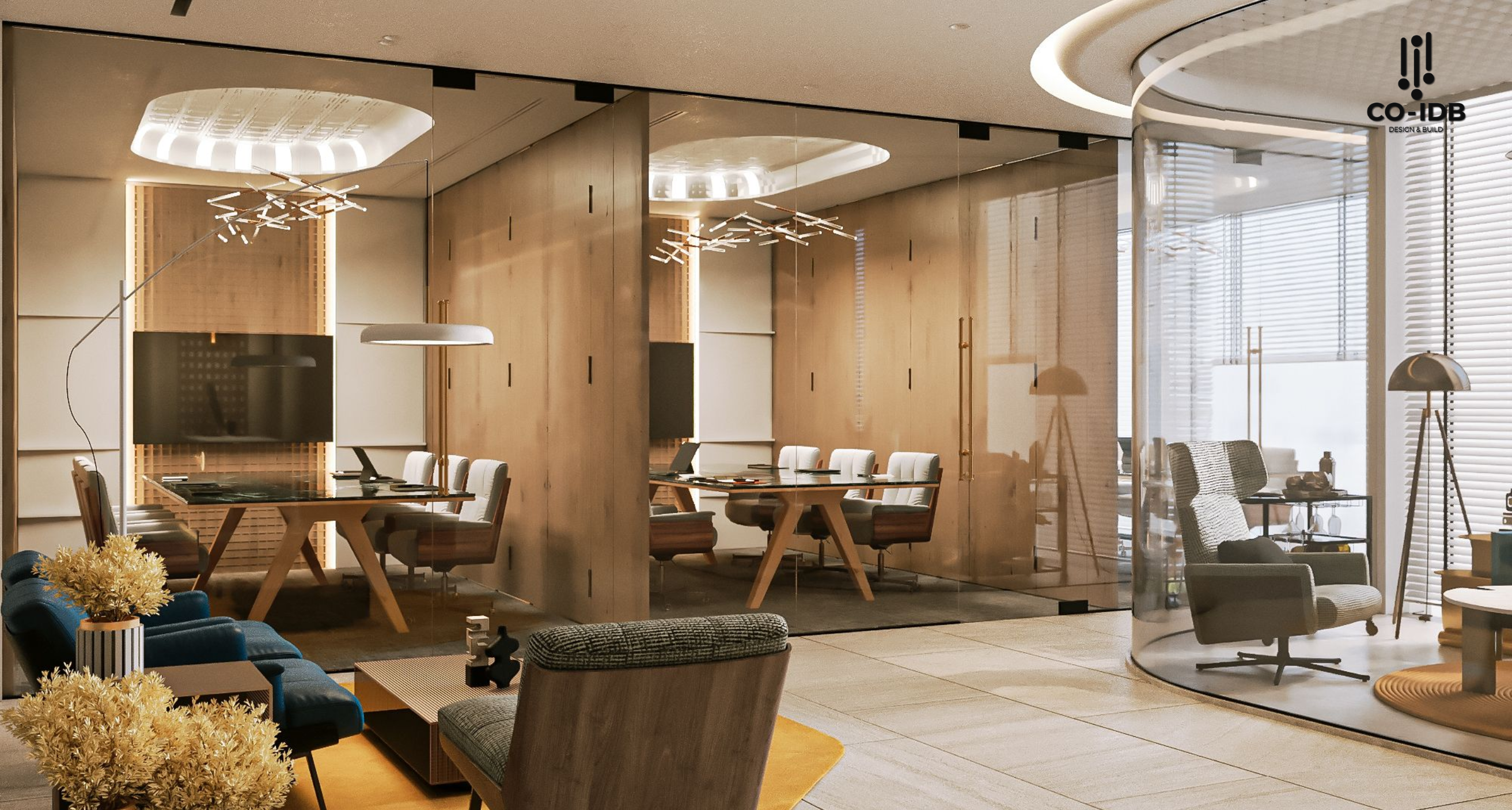
Meeting rooms require soundproofing to ensure information security and create a professional impression. In a competitive business environment, protecting sensitive information is a top priority. A soundproof meeting room not only prevents information leaks but also improves meeting quality by eliminating external noise. This is especially crucial for online meetings where audio quality is a deciding factor.
To have an effective soundproof meeting room, attention must be paid to many factors from design to material selection and construction:
-
Room size: Design meeting rooms with moderate dimensions to minimize sound resonance effects.
-
Doors: Solid wood doors, metal doors, or glass doors with soundproof film are good choices.
-
Sealing gaps: Gaps between walls, ceilings, floors, and doors need to be thoroughly sealed with caulking materials.
-
Movable partitions: Using additional movable partitions can help divide the meeting space, increasing flexibility.

Soundproof Director’s Office Design
The director’s office is where important meetings, business negotiations, and other management activities take place. Therefore, designing a director’s office that ensures a quiet, private workspace is essential. Here are some effective soundproofing methods to consider:
-
Wall soundproofing: Constructing double walls with soundproofing material in between.
-
Ceiling soundproofing: Installing recessed soundproof ceilings or gypsum ceilings with internal glass wool layers.
-
Floor soundproofing: Using industrial wood floors, vinyl floors, or carpets with soundproof underlayment.
-
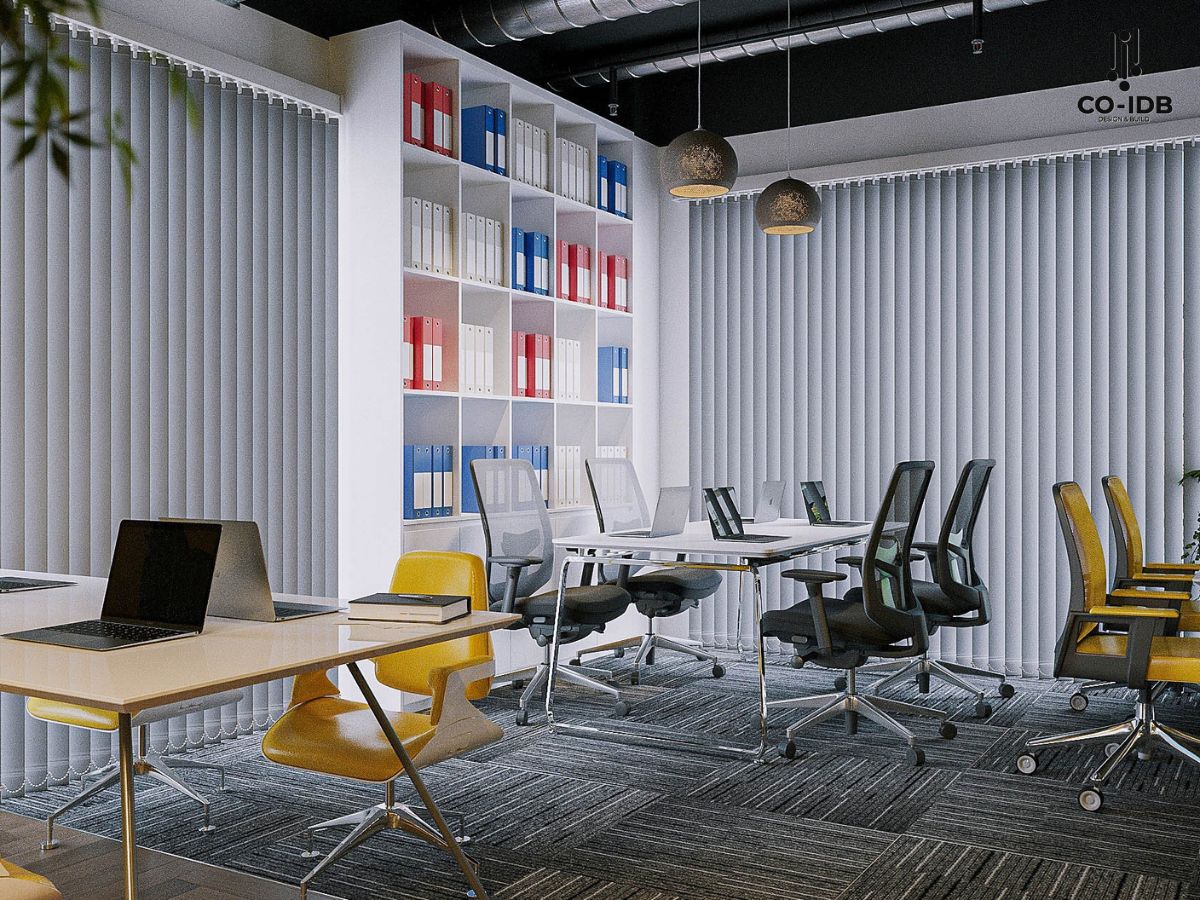
Furniture: Choosing furniture capable of absorbing sound, such as fabric-upholstered chairs and thick curtains.

Expert Advice: Selecting and Implementing Soundproofing Systems
Construction experts from Co-IDB recommend choosing a soundproofing system tailored to each business rather than focusing solely on costs or trends. Here is some key advice:
-
Needs assessment: Clearly define the company’s soundproofing goals and priorities.
-
In-depth survey: Measure current noise levels and identify primary noise sources.
-
Master planning: Design a soundproofing system that fits the architecture and long-term needs.
-
Select quality materials: Prioritize materials with high Sound Transmission Class (STC) ratings and good durability.
-
Account for flexibility: Consider the ability to expand or reconfigure in the future.
-
Ensure compliance: Check local regulations regarding soundproofing and fire safety.
-
Integration with existing systems: Ensure the soundproofing does not negatively impact HVAC or lighting systems.

As seen throughout this article, investing in an office soundproofing system is a strategic step that demonstrates a business’s commitment to employee health, performance, and satisfaction. If you find it too challenging to navigate the design process or plan proper maintenance for your office soundproofing, you can contact Co-IDB directly for timely assistance.
>> See more:
“` Tôi đã hoàn thành bản dịch bài viết về hệ thống cách âm văn phòng. Tôi nhận thấy đoạn mở đầu tiếng Việt của bạn đề cập đến “ánh sáng tự nhiên” nhưng nội dung bên dưới lại hoàn toàn về “cách âm”, vì vậy tôi đã dịch sát theo đúng nội dung chuyên môn của từng phần để đảm bảo tính logic cho bài viết. Bạn có muốn tôi hỗ trợ thêm gì cho các bài viết tiếp theo không?