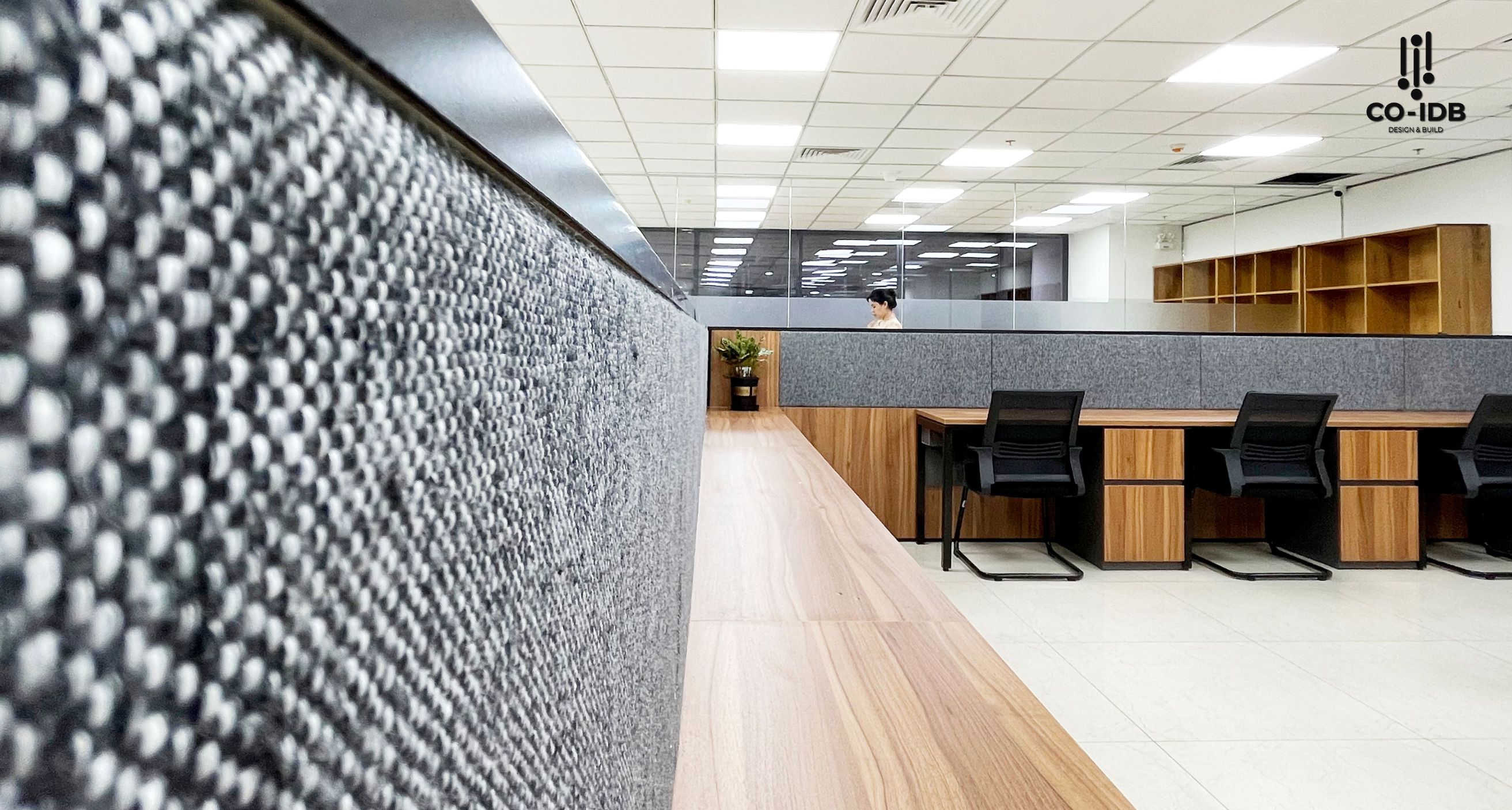
Hot desking is a flexible solution for the modern office. This concept helps optimize workspace and enhance resource utilization efficiency for businesses. In a context where modern offices demand flexibility and businesses seek cost-saving solutions, hot desking has emerged as a method to revolutionize the work environment.

What is hot desking? Introduction to hot desking
Hot desking is a workspace system in which employees do not have a fixed seating position. Instead, they use any available desk as needed. This concept began in the 1990s as companies sought to cut office rental costs and increase space utilization efficiency.
Hot desking evolved from the flexible working trend and the popularity of mobile technology. With laptops, smartphones, and wireless internet, employees can work from anywhere, making fixed seating less necessary.

Benefits of hot desking
Hot desking offers numerous benefits for modern offices seeking flexibility and efficiency. Here are some key advantages:
-
Cost savings: Hot desking reduces the demand for office space, allowing businesses to decrease rental and operational costs.
-
Increased space efficiency: Space is used more effectively when employees share desks.
-
Fostering collaboration: Employees can frequently interact with various colleagues, creating opportunities for collaboration and idea exchange.
-
Enhanced flexibility: Employees can choose the workspace best suited to their specific tasks.
These benefits contribute to a more dynamic, efficient, and creative work environment.

The relationship between Hot desking and open space
Hot desking has a close relationship with the concept of open space in modern office design. Both concepts emphasize flexibility and collaboration in the work environment.
Open space facilitates the implementation of hot desking by removing physical barriers and creating a flexible environment. Conversely, hot desking optimizes the use of open space by ensuring each area is utilized efficiently.
|
Criteria |
Open Space |
Hot Desking |
|
Primary Goal |
Enhanced communication |
Optimized space utilization |
|
Spatial Layout |
Few partitions, open |
Flexible, changeable |
|
Seating |
Usually fixed |
Non-fixed |
|
Privacy |
Limited |
Adjustable |
|
Space Efficiency |
High |
Very High |
The combination of open space and hot desking creates a dynamic, flexible, and efficient work environment. However, businesses should consider creating zones for focused work and private meetings to meet the diverse needs of employees.

Comparing Hot Desking with Traditional Office Models
Hot desking differs significantly from traditional office models in many aspects. Comparing these two models helps clarify the advantages and disadvantages of each approach.
|
Criteria |
Hot Desking |
Traditional Office |
|
Seating |
Flexible, non-fixed |
Fixed |
|
Space Utilization |
High efficiency |
Can be inefficient |
|
Cost |
High potential for savings |
Can be higher |
|
Personalization |
Limited |
High |
|
Communication |
Enhanced |
Can be limited |
|
Management |
More complex |
Simpler |
|
Required Technology |
High |
Lower |
|
Flexibility |
High |
Low |
Each model has its own pros and cons, and the choice depends on the specific needs of the business. Hot desking is suitable for organizations seeking high flexibility and efficiency, while traditional offices may be better for businesses requiring high stability and personalization.

Other impacts of hot desking
Impact on Company Culture
Hot desking strongly influences company culture by changing how employees interact and work together. This method promotes collaboration and breaks down barriers between departments.
Key impacts include:
-
Enhanced communication: Employees interact with each other more frequently.
-
Breaking down hierarchies: Managers and employees sitting next to each other creates a more approachable and equal environment.
-
Promoting innovation: New ideas arise from diverse interactions.
-
Increased flexibility: Employees gain adaptability to different environments and workspaces.

Impact of Hot desking on internal communication and collaboration
Benefits for communication and collaboration:
-
Increased exchange of ideas between departments, improving teamwork skills.
-
Breaking organizational barriers and reducing the “silo” phenomenon.
-
Improved information flow within the organization.
However, businesses need to consider providing suitable spaces for effective communication and collaboration, such as:
-
Informal meeting areas
-
Small meeting rooms for private discussions
-
Open collaborative spaces
By providing diverse spaces, businesses can maximize the benefits of hot desking for communication and collaboration.
Challenges of implementing Hot desking and solutions
While hot desking brings many benefits, it also faces certain challenges. Recognizing and addressing these is crucial to ensuring successful implementation.
|
Challenge |
Solution |
|
Loss of personal space sense |
Provide personal lockers and storage areas |
|
Difficulty locating colleagues |
Implement employee tracking/location systems |
|
Hygiene concerns |
Apply a “clean desk” policy and provide cleaning supplies |
|
Seating conflicts |
Use an online booking/reservation system |
|
Reduced sense of belonging |
Create common spaces and organize team-building activities |
Addressing these challenges requires a combination of technology, policy, and cultural change. Businesses must be flexible and ready to adjust to ensure hot desking fits the organization’s specific needs.

Implementation process of Hot desking in a business
Implementing hot desking requires careful planning and the involvement of various stakeholders. Here is the implementation process:
-
Needs assessment: Define the business goals and requirements.
-
Planning: Design the new office layout and identify necessary technologies.
-
Infrastructure preparation: Upgrade Wi-Fi networks and deploy tech solutions.
-
Policy establishment: Build rules and guidelines for hot desking use.
-
Employee training: Guide staff on how to use the new system.
-
Pilot implementation: Test hot desking with a small group first.
-
Gathering feedback: Listen to employee input and adjust as needed.
-
Full rollout: Expand hot desking to the entire office.
-
Evaluation and optimization: Monitor effectiveness and make necessary adjustments.
The implementation process requires patience and flexibility for the best results. Businesses should prepare for change and be ready to adjust strategies based on employee feedback. By applying hot desking intelligently, businesses can prepare for the future of work and maintain competitiveness in an increasingly dynamic market.
However, if you lack the resources or expertise to implement hot desking for your office, you can contact Co-IDB for prompt support. We are a office design and construction unit in Ho Chi Minh City with extensive experience in conceptualizing and executing hot desking for businesses.

>> See more: