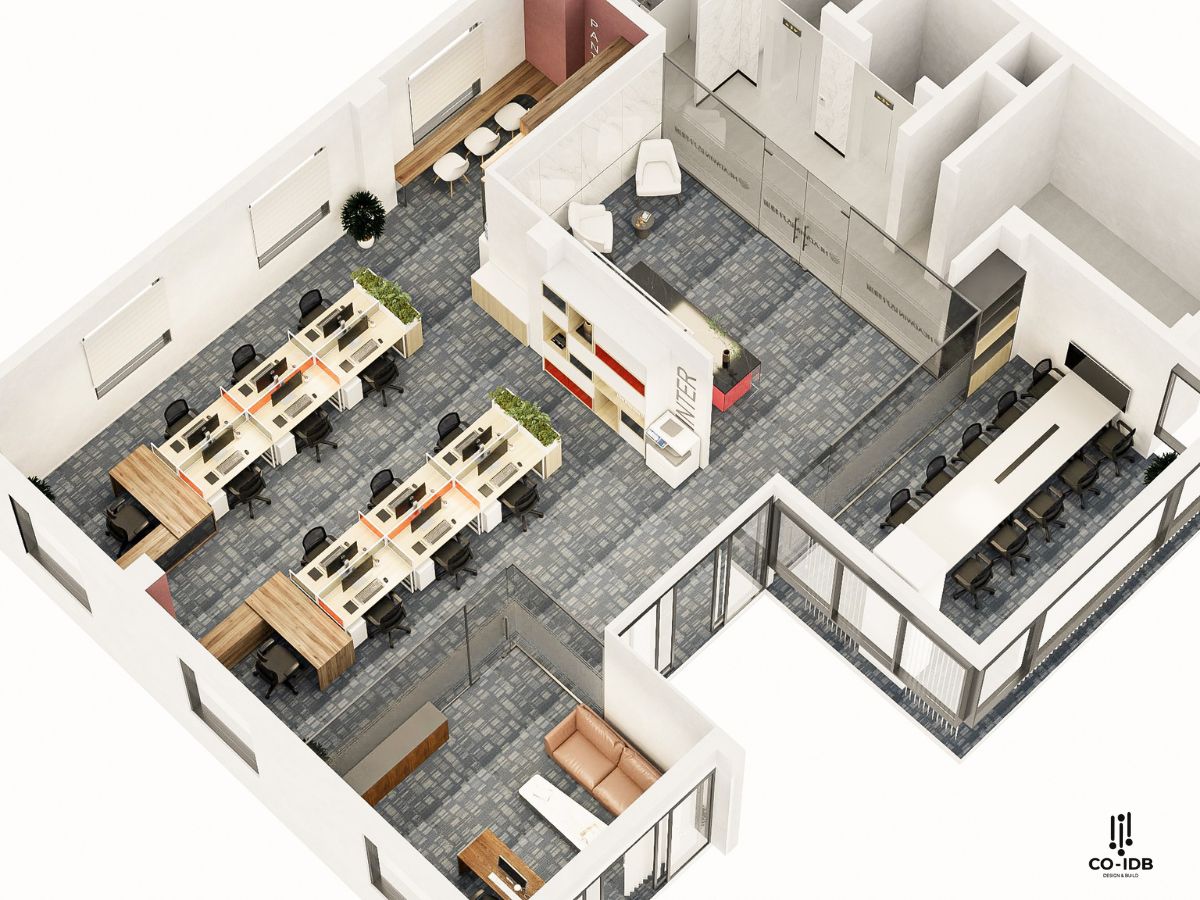
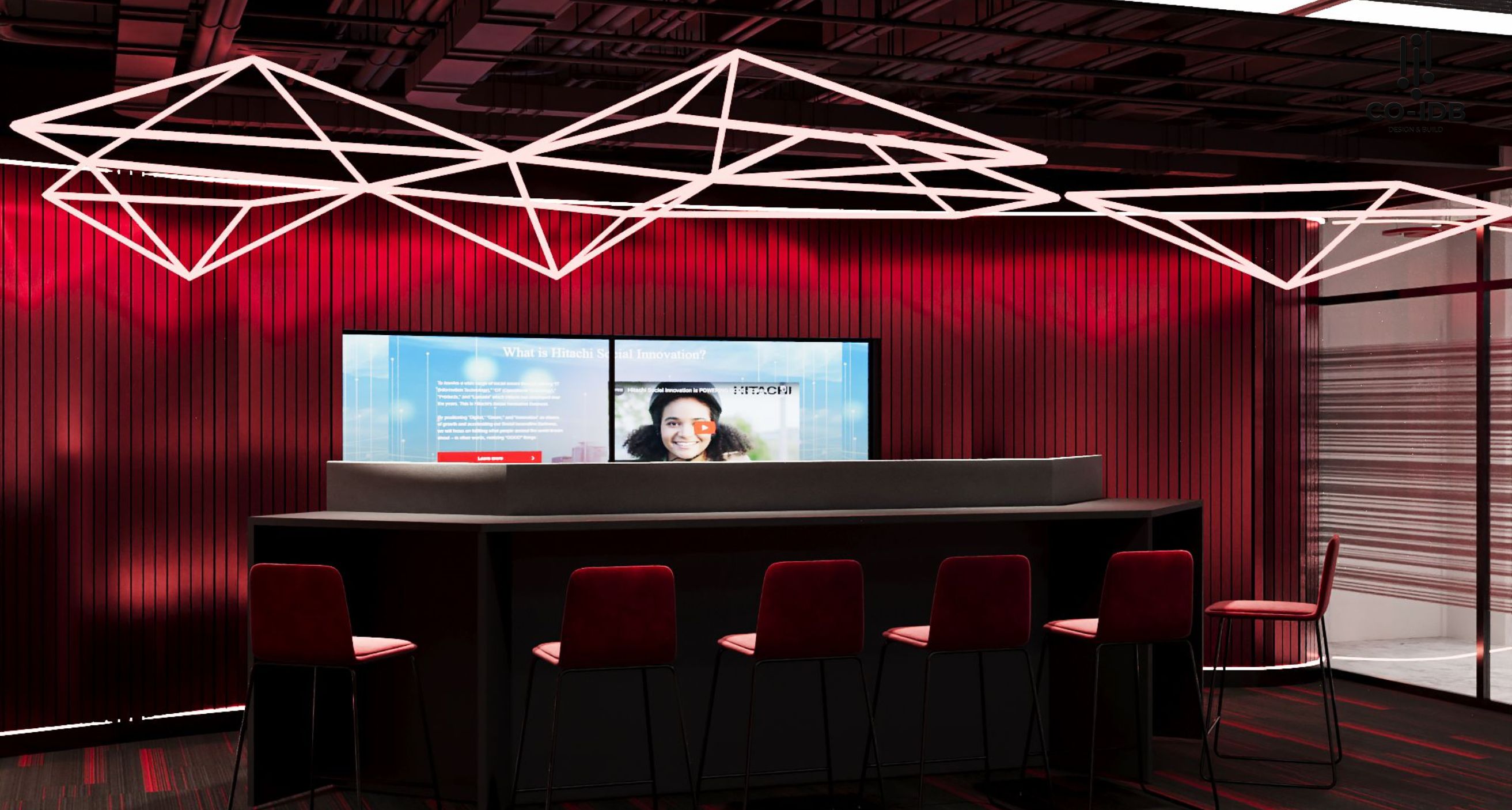
Mastering essential office interior design principles is the key to boosting workplace performance. This article analyzes how these principles impact the work environment and provides specific guidance for practical application. Understanding and correctly applying these rules will help you create an office space that is not only visually stunning but also highly functional and inspiring.

The Principle of Balance and Harmony in Office Spaces
Balance in office design creates a sense of stability and equilibrium for users. This principle serves as the foundation for a pleasant and efficient environment. Balance can be achieved through two primary methods: Symmetrical Balance and Asymmetrical Balance.
Symmetrical balance fosters a sense of order and is often applied in reception areas or main boardrooms to create a strong impression of professionalism. Conversely, asymmetrical balance brings a more dynamic and creative atmosphere, suitable for coworking zones or creative hubs.
Table 1: Examples of Creating Balance and Harmony in the Office
| Area | Balance | Harmony |
| Reception Area | Symmetrical layout with a central reception desk | Using brand colors and logos for identity |
| Coworking Space | Asymmetrical layout with diverse desk clusters | Using furniture with similar shapes and tones |
| Meeting Room | Symmetrical arrangement with a central table | Combining modern tech with natural elements |
>> See more: Office Design Standards

The Principle of Rhythm and Repetition in Interior Design
Rhythm in office design creates a sense of movement and visual interest. This principle is vital for guiding the viewer’s eye and creating a dynamic space. Rhythm is achieved through the intentional arrangement of design elements like color, shape, or lighting.
Types of rhythm in office interiors:
- Repetition: Using the same element multiple times.
- Alternation: Using two or more elements alternately.
- Progression: Gradually increasing or decreasing the size or intensity of elements.
- Radiation: Arranging elements around a central point.

The Principle of Contrast and Emphasis
Contrast in office design generates visual interest and energy. It helps break monotony and defines clear functional zones. Emphasis (Focal Points) are standout design elements that draw attention, helping to organize and orient the space.
Table 2: Examples of Contrast and Emphasis
| Area | Contrast | Emphasis |
| Reception | White walls with a bold-colored company logo | Uniquely designed reception desk |
| Open Workspace | Dark office chairs on light-colored flooring | Brainstorming area with a large interactive board |
| Meeting Room | Natural wood table on a modern carpet | Greenery wall creating a vivid focal point |

The Principle of Movement Flow and Space Planning
Traffic flow directly affects work efficiency and employee comfort. This principle focuses on optimizing how people move and interact. Proper space planning facilitates natural and efficient movement.
Functional Zoning is an effective method to optimize this flow. For example:
- Focused Work Zones: Placed away from high-traffic and noisy areas.
- Collaboration Zones: Near open workspaces for easy communication.
- Utility Zones: Centrally located for easy access.
- Break Zones: Separated from work areas but still accessible.

Gestalt Principles in Office Organization
Gestalt principles help create a workspace that is harmonious and easy to perceive. These rules are based on how the human brain organizes visual information.
- Proximity: Grouping desks of the same team together to indicate connection.
- Similarity: Using consistent chair styles or color palettes to create unity.
- Closure: Using low bookshelves or plants to create “private corners” without solid walls.
- Figure/Ground: Using accent walls to highlight important functional areas.
- Continuity: Designing straight, clear pathways to guide natural movement.

>> See more: Latest Office Design Trends
By intelligently and creatively applying these design principles, businesses can create workspaces that not only look professional but also drive organizational success and growth.