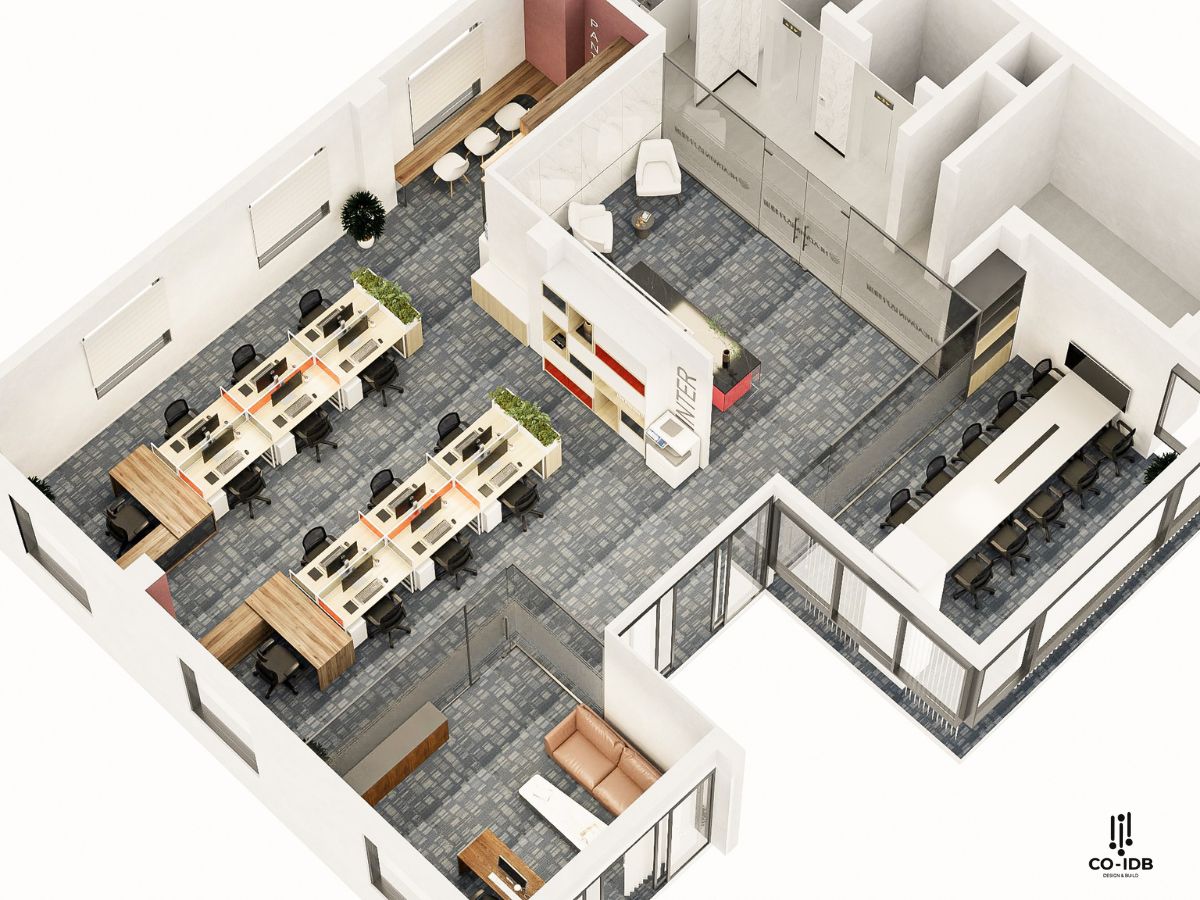
An office functional diagram is a crucial element that provides a comprehensive overview for business owners and contractors before starting any project. It not only reveals the overall structure of the office but also illustrates detailed furniture layouts. Join Co-IDB as we explore office floor planning through functional diagrams and their importance in project execution.
What is a Functional Diagram?
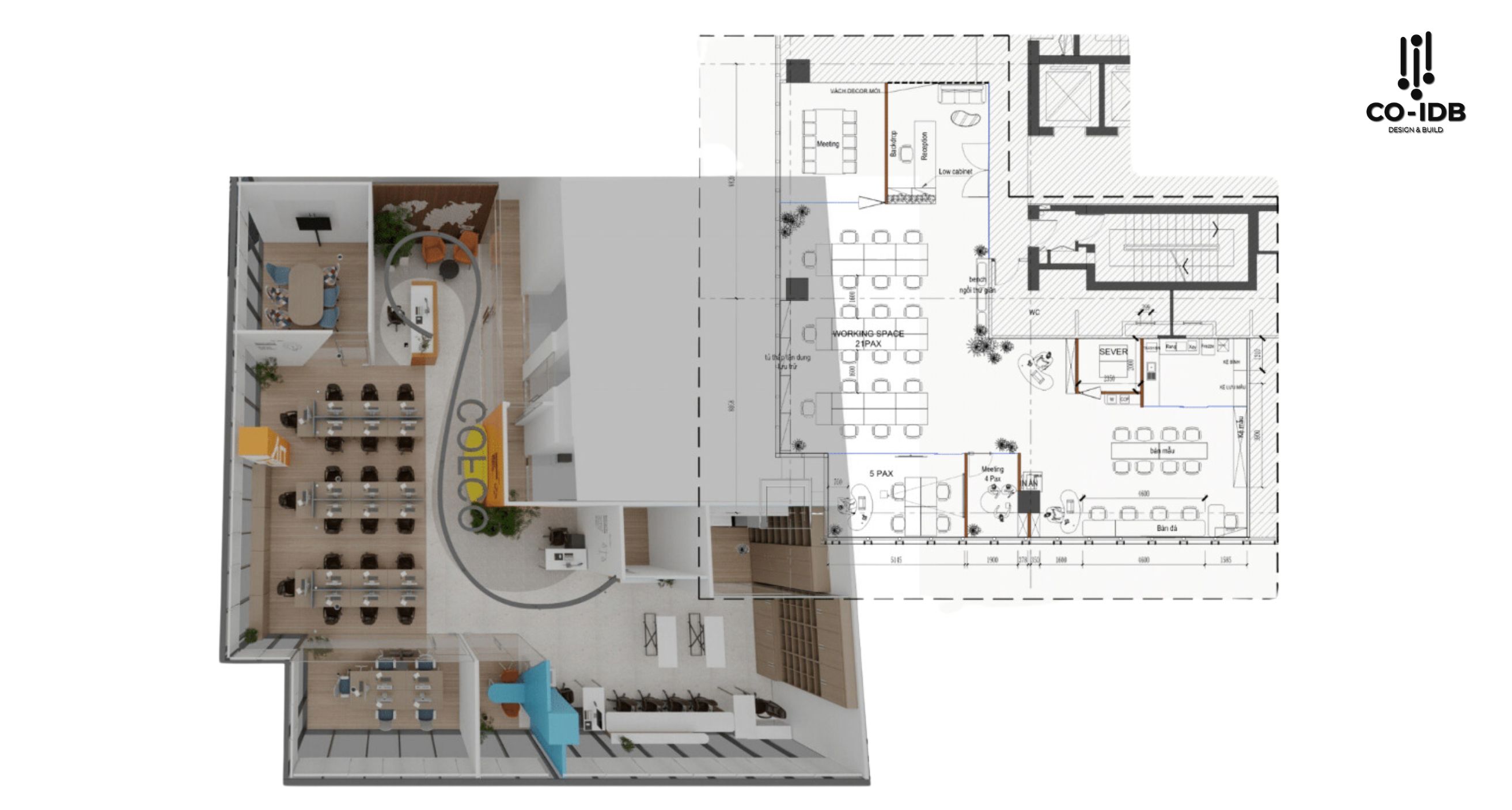
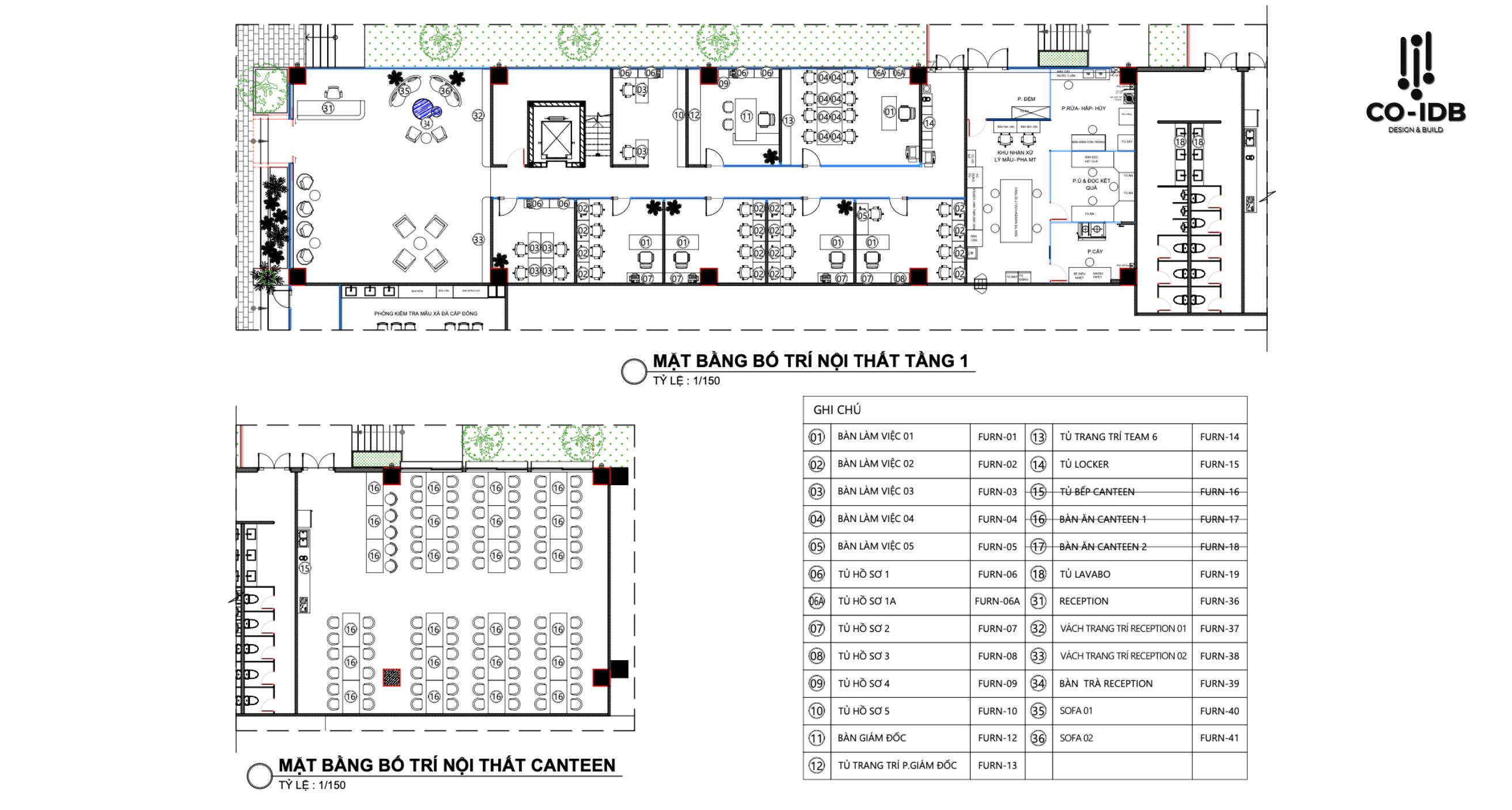
An office functional diagram is a floor planning drawing that helps construction teams understand how to divide and arrange furniture within each area of the space.
In architectural construction, space is typically divided into five basic functional groups:
-
Economic Function: Flexibly applied to commercial/service spaces, small production zones, and office workstations.
-
Rest & Relaxation Function: Meets basic physiological needs such as eating, sleeping, and hygiene. These spaces include pantries, dining areas, break rooms, corridors, and restrooms.
-
Educational Function: Includes research rooms, libraries, individual study areas, and common rooms to maintain culture and learning.
-
External Communication Function: Reception rooms, main dining rooms (for guests), gardens, entrances, lobbies, and public corridors.
-
Aesthetic & Physical Development Function: Includes areas for beauty, entertainment, exercise, and healthcare activities.
Characteristics of an Office Functional Diagram
Strictly adhering to office layout standards ensures a safe and aesthetic environment while helping owners visualize the interior architecture clearly. Key highlights include:
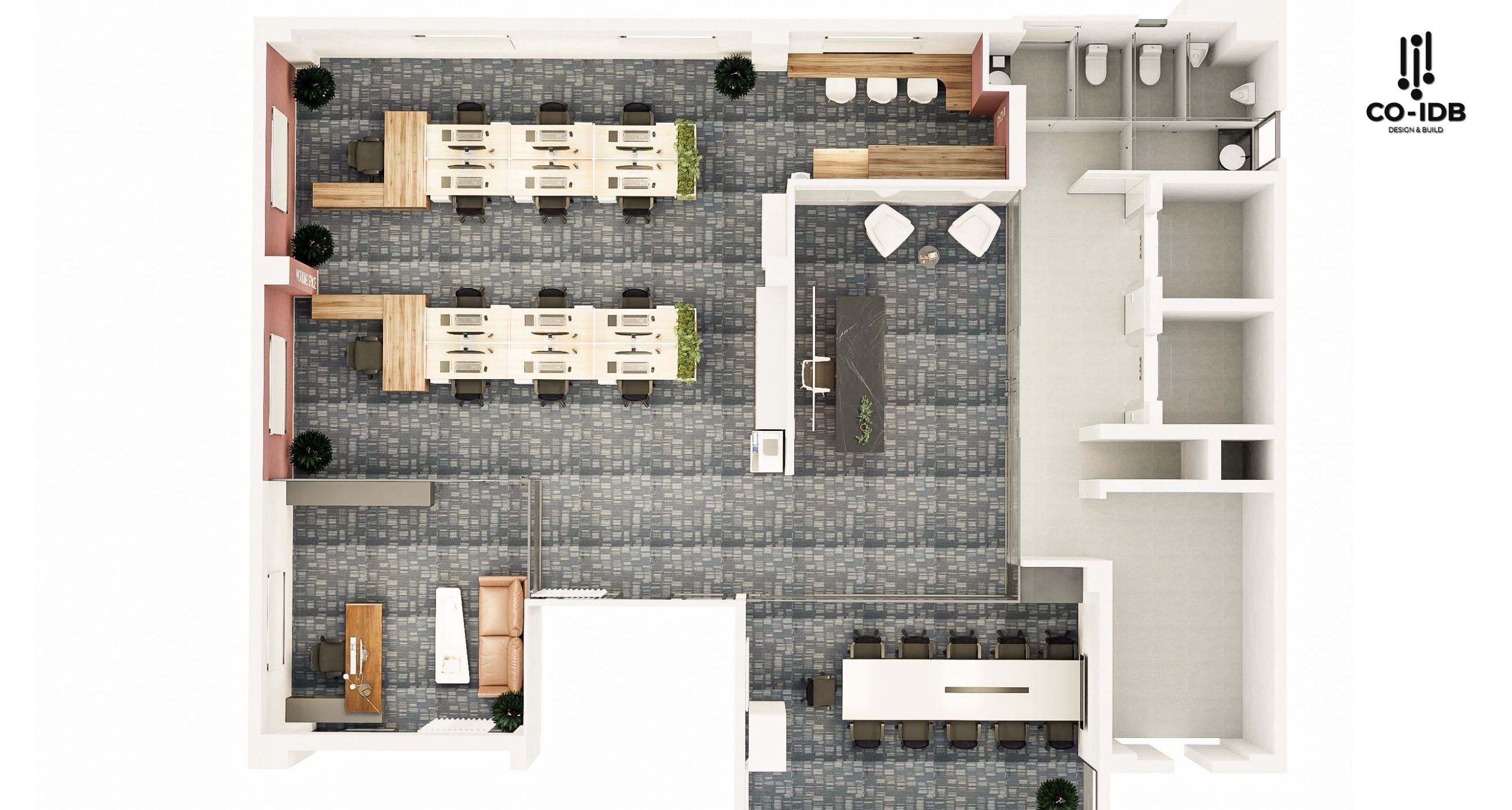
- Clear and intuitive images providing a 90-degree top-down view.
- Cross-sections illustrating the positions of windows, doorways, hallways, and functional rooms.
- Separate drawings for each level in multi-story offices (basement, upper floors, rooftop).
- Use of uppercase symbols to specify objects, interior details, and equipment.
- Removal of unnecessary blind spots and dead zones in the project.
Types of Office Layout Diagrams
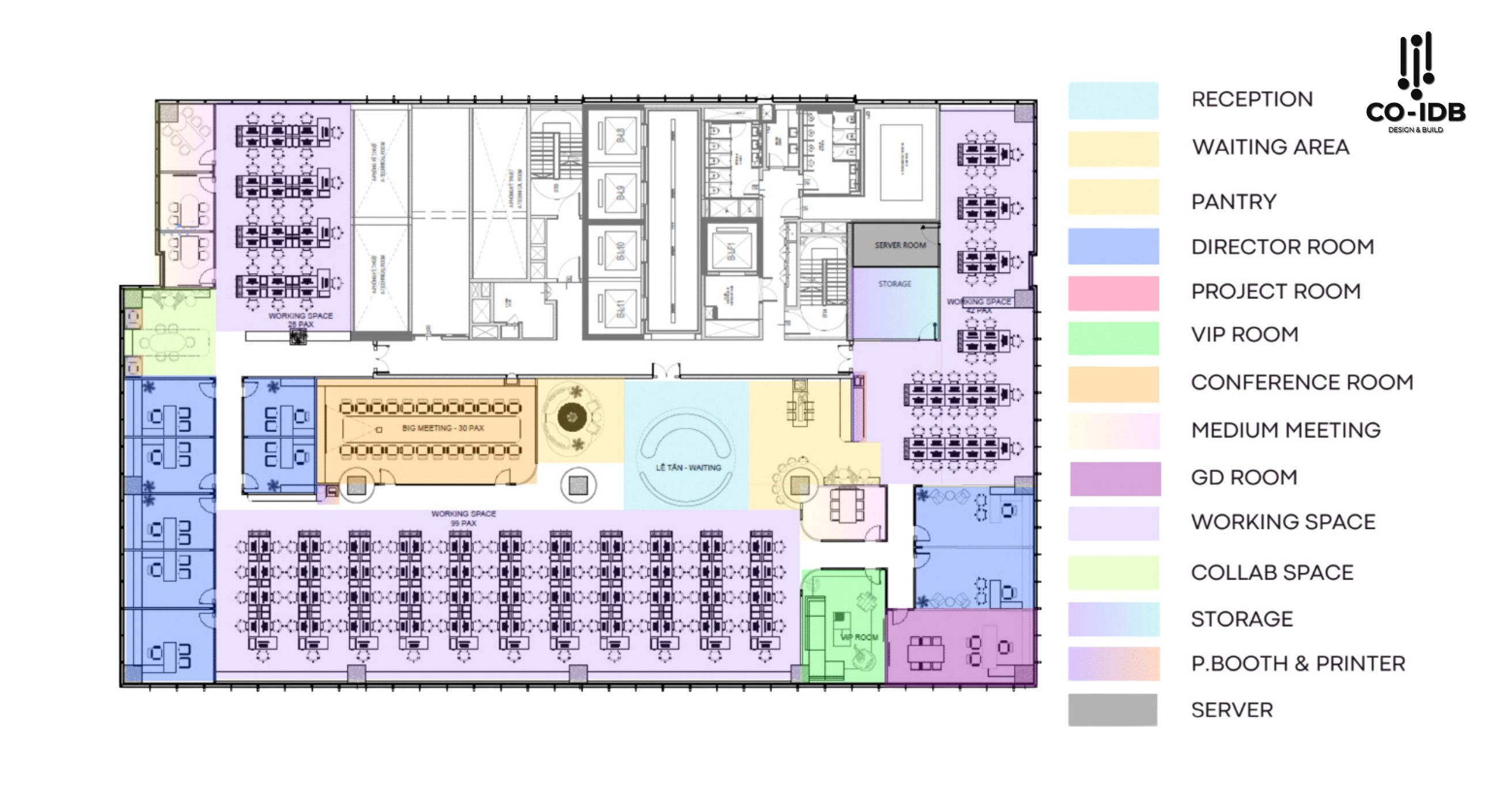
Master Floor Plan
This describes the overall arrangement, interior decoration, and space allocation for all departments across the entire company. It helps owners easily identify the number of floors, zones, and special amenities, usually annotated and numbered in order.
Specific Floor Plan
A detailed drawing showing clear information about the area of each department and its standard dimensions (width, length, and height) for each specific floor.
The Role of Functional Diagrams in Design
In modern office construction, the functional diagram is the foundation for a successful design, ensuring:
- Presentation of basic construction parameters.
- Effective project management.
- Scientific accuracy of the workspace.
- Logical furniture arrangement.
Common Symbols on an Office Floor Plan
To help you read these diagrams effectively, Co-IDB provides a table of common abbreviations used in modern office planning:
| Symbol | English | Vietnamese |
| AC | Air Conditioner | Điều hòa |
| B | Basin | Chậu rửa |
| BC | Bookcase | Kệ sách |
| CAB | Cabinet | Tủ/kệ |
| CF | Concrete floor | Sàn bê tông |
| CLG | Ceiling | Trần nhà |
| COL | Column | Cột |
| LTG | Lighting | Chiếu sáng |
| VENT | Ventilator | Quạt thông gió |
| WD | Window | Cửa sổ |
What Does an Office Functional Diagram Include?
Interior Layout Plan
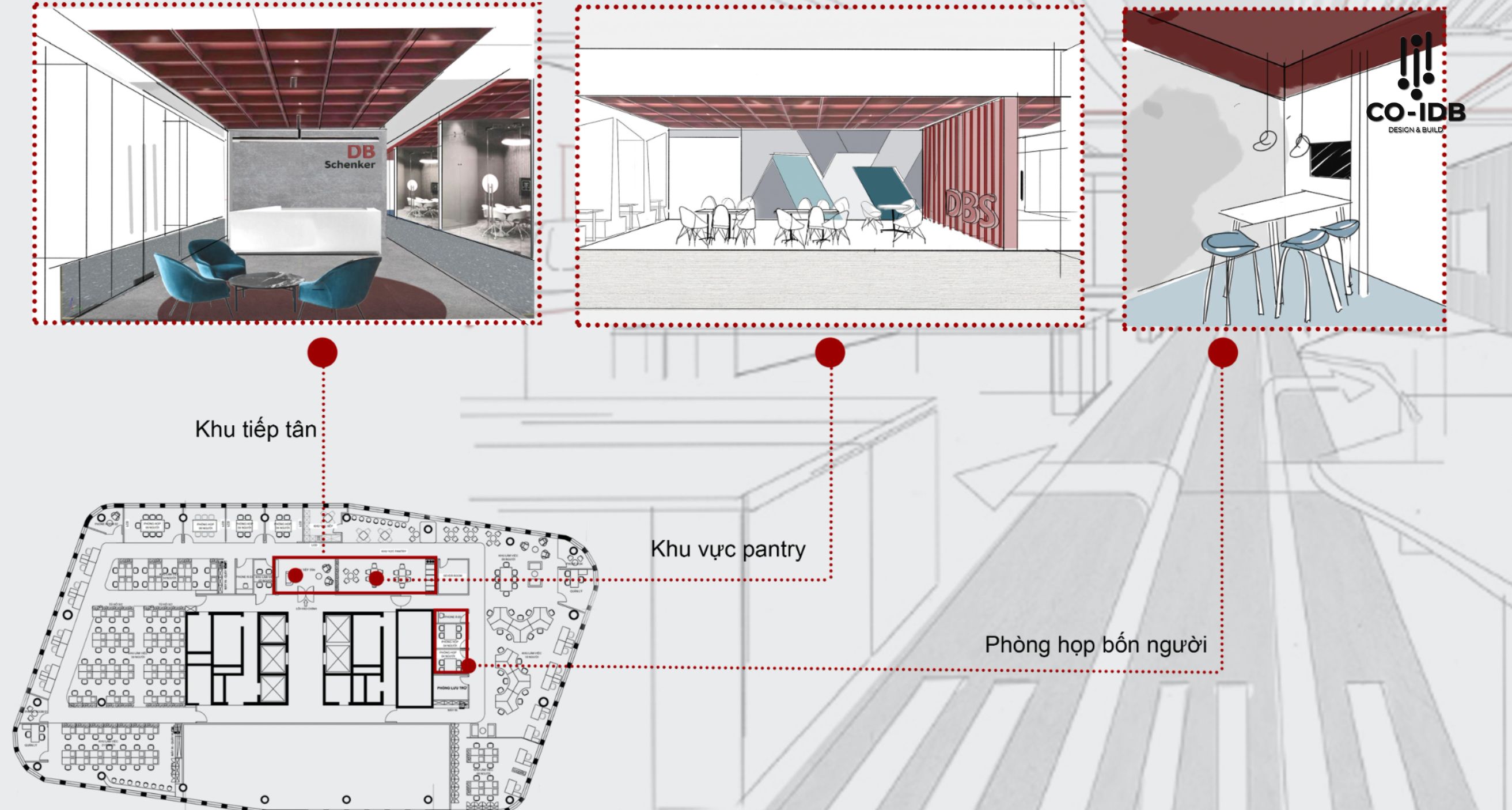
A 2D diagram illustrating the placement of departments, functional zones, or office partition designs from a bird’s-eye view, adhering to Vietnamese Design Standards (TCVN).
2D Drawings
A flat drawing providing an overview of the space, including walls, doors, and windows, though it lacks depth and height information.
3D Perspectives
A three-dimensional representation providing a realistic view of height, depth, and spatial relationships. It helps stakeholders visualize how the space will function in reality.
Plumbing System Drawings
Necessary if the office includes a pantry or restrooms. It illustrates all pipes, pumps, and drainage systems, providing exact locations for connections.
Electrical Layout Drawings
Maps out lighting systems, wiring, power sources, and circuits. Symbols show components like circuit breakers, transformers, and electrical panels.
We hope this guide helps you understand how to read and interpret office functional diagrams. For any further questions regarding office interior design and construction, contact Co-IDB for quick and free support.
>> See more: