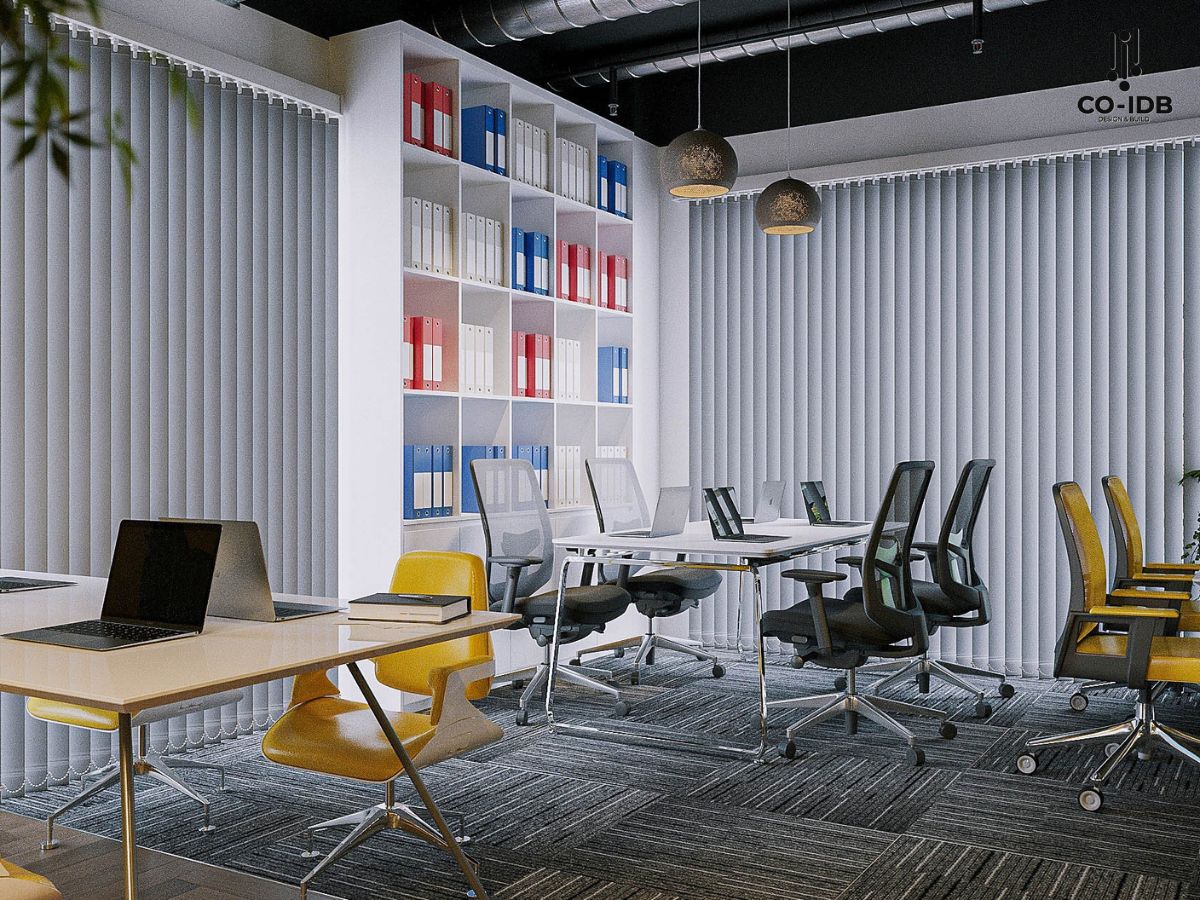
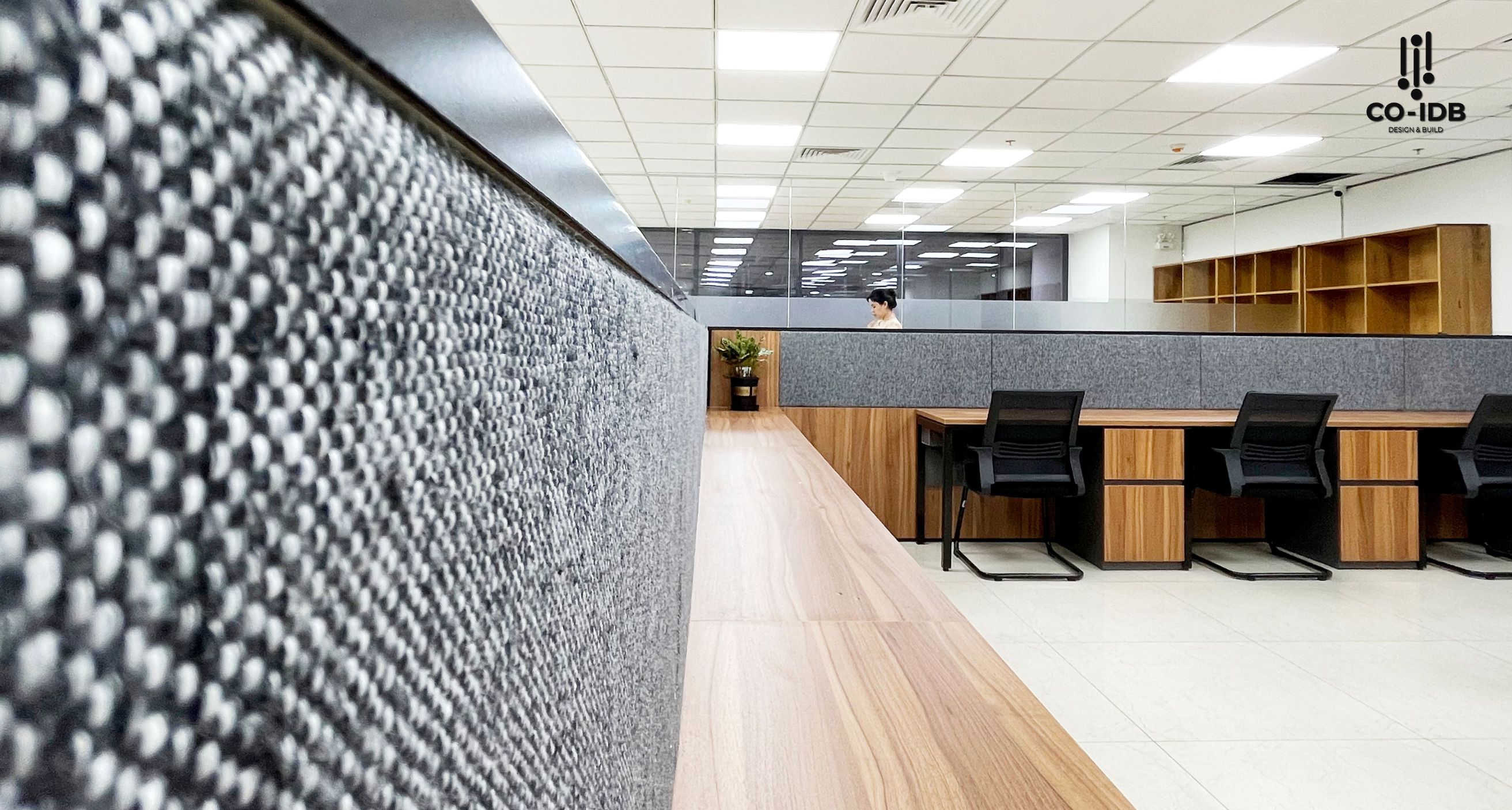
Layout in office interior design plays a pivotal role in creating a harmonious, visually appealing, and comfortable working environment for employees. To achieve this, designers need to grasp some basic layout rules. Through this article, Co-IDB will help you discover these rules, which not only make the workspace aesthetically pleasing but also boost work performance.
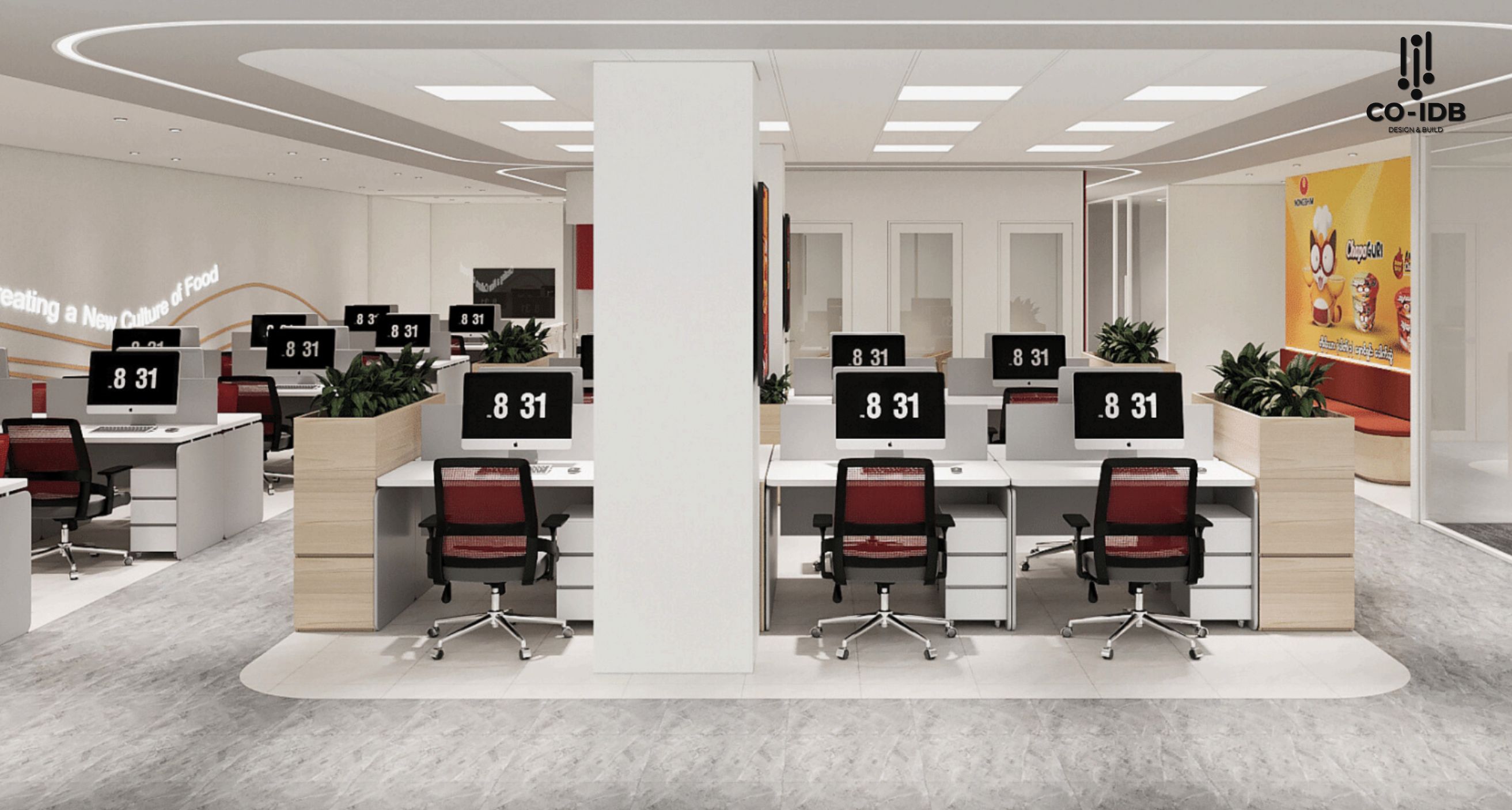
The Importance of Layout in Office Interior Design
Layout in office interior design determines the aesthetics and functionality of a space. By carefully arranging every component like furniture and color, a business can transform the workspace into a multidimensional picture, where every element is coordinated subtly and scientifically, creating a harmonious and effective working environment.
A smart layout not only creates a space that reflects the style and personality of the business but also enhances the working experience and quality. Below are some key aspects of layout importance in interior design:
-
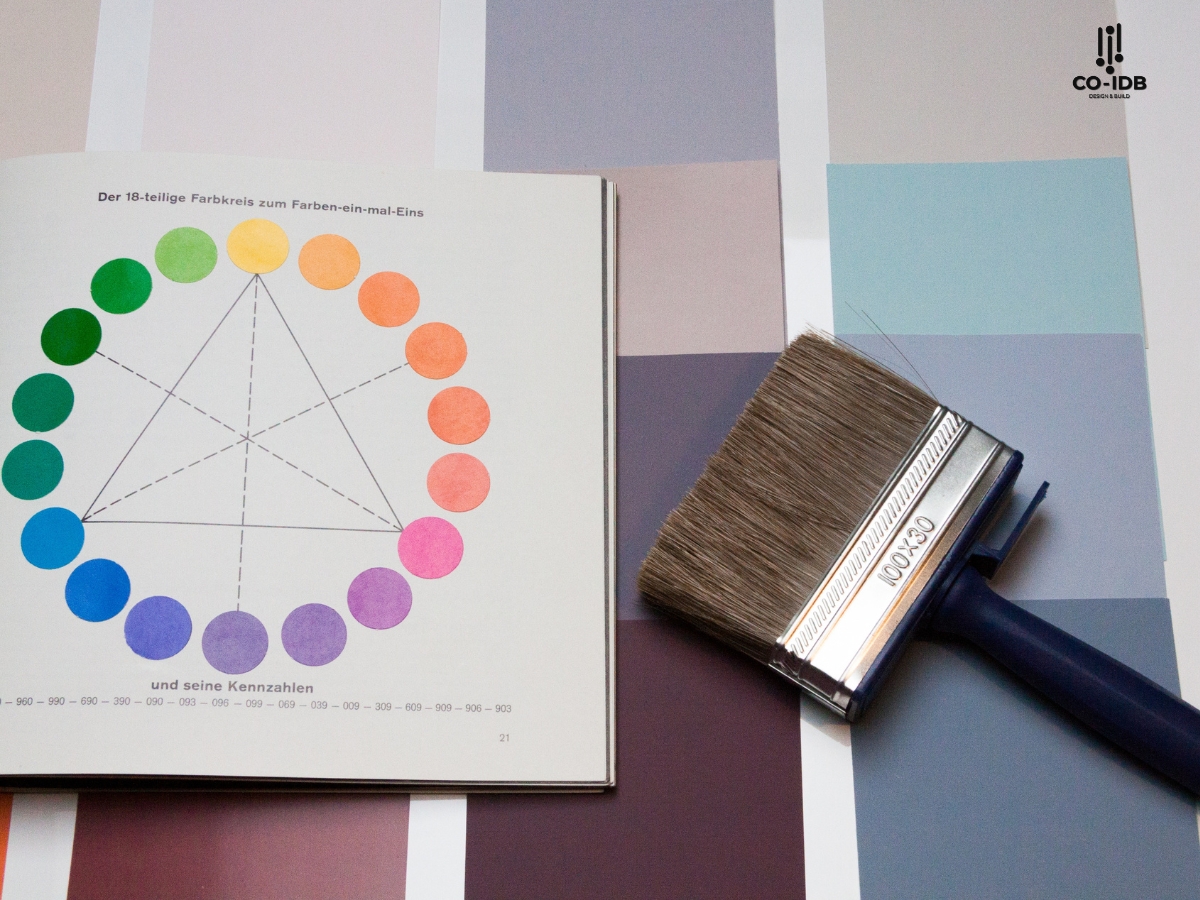
Increased Harmony: Selecting appropriate colors and objects helps create special focal points and brings a sense of harmony to the entire space.
-
Design Highlight: A smart layout helps clearly distinguish between primary and secondary elements, thereby expressing the design’s purpose. Prioritizing the arrangement of objects, along with carefully considering intensity, size, color, and background, elevates the original design intent.
-
Increased Design Value: A detailed and easily understandable layout increases the value of the office space. Skillful selection of colors, lines, and rational arrangement of furniture not only makes the workspace special and more attractive but also brings high value in terms of aesthetics and functionality.
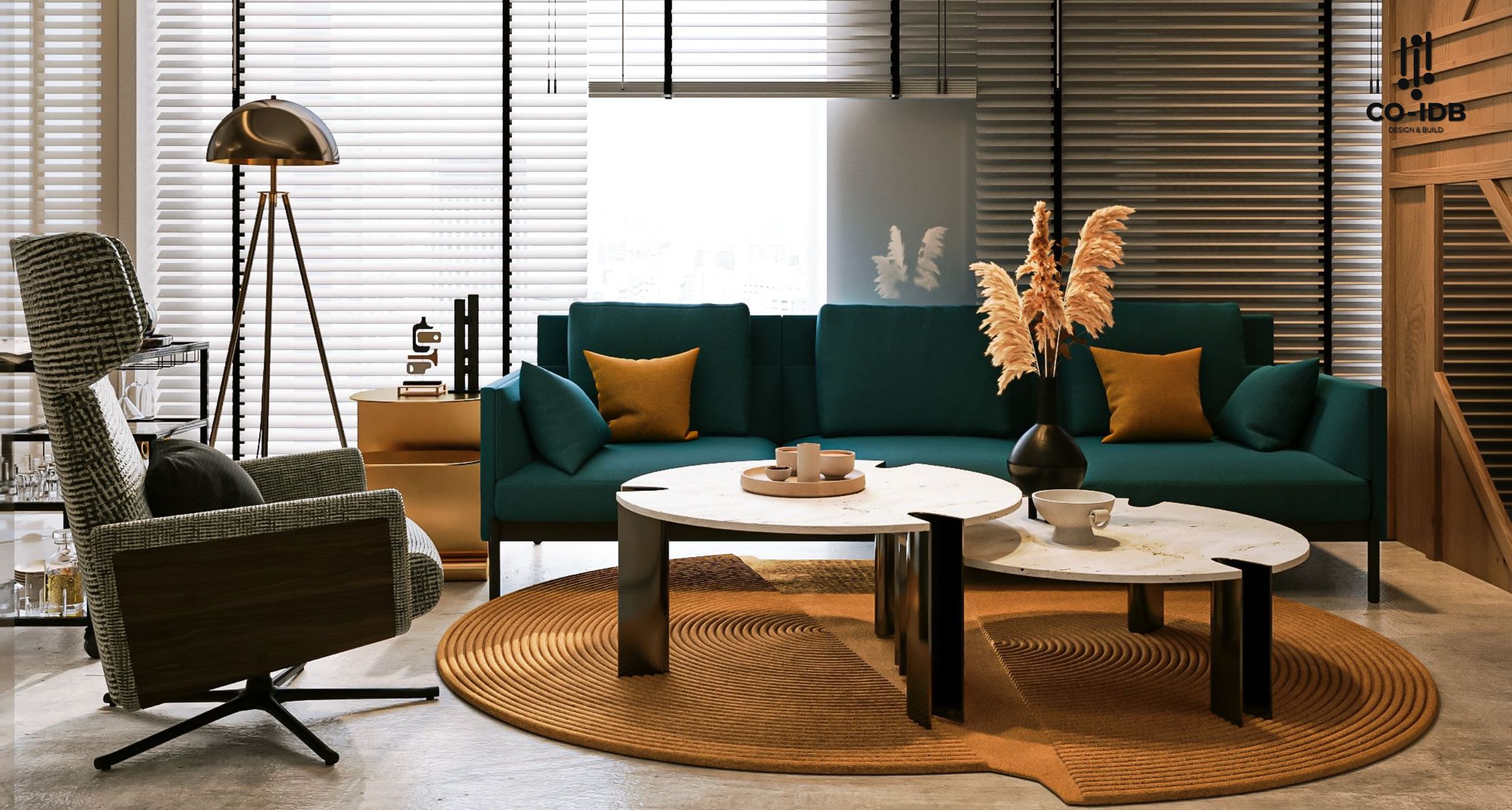
>> See more: What basic office furniture items are included?
Basic Layout Rules in Office Interior Design
Balance Layout Rule
Symmetrical Balance Rule
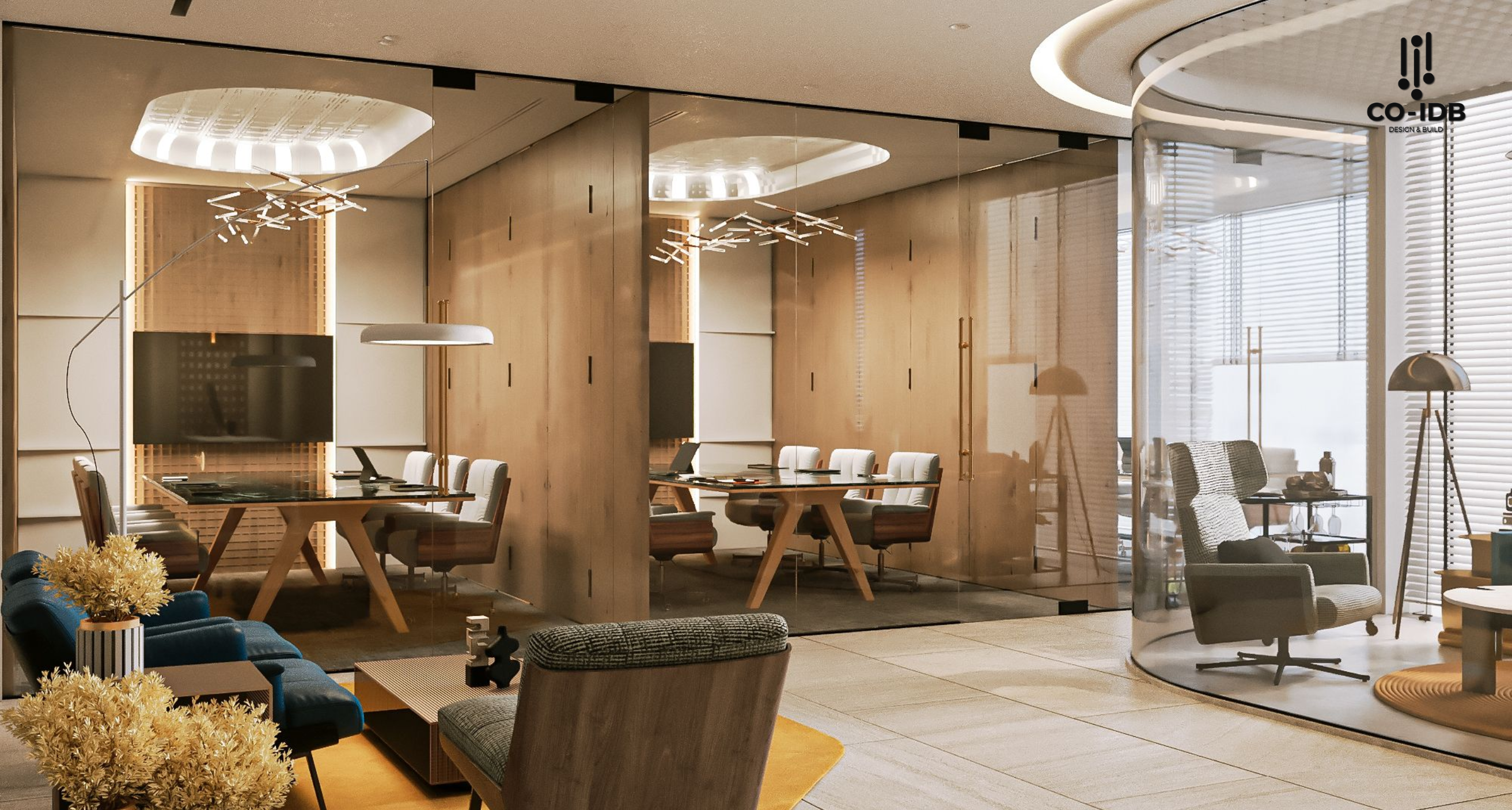
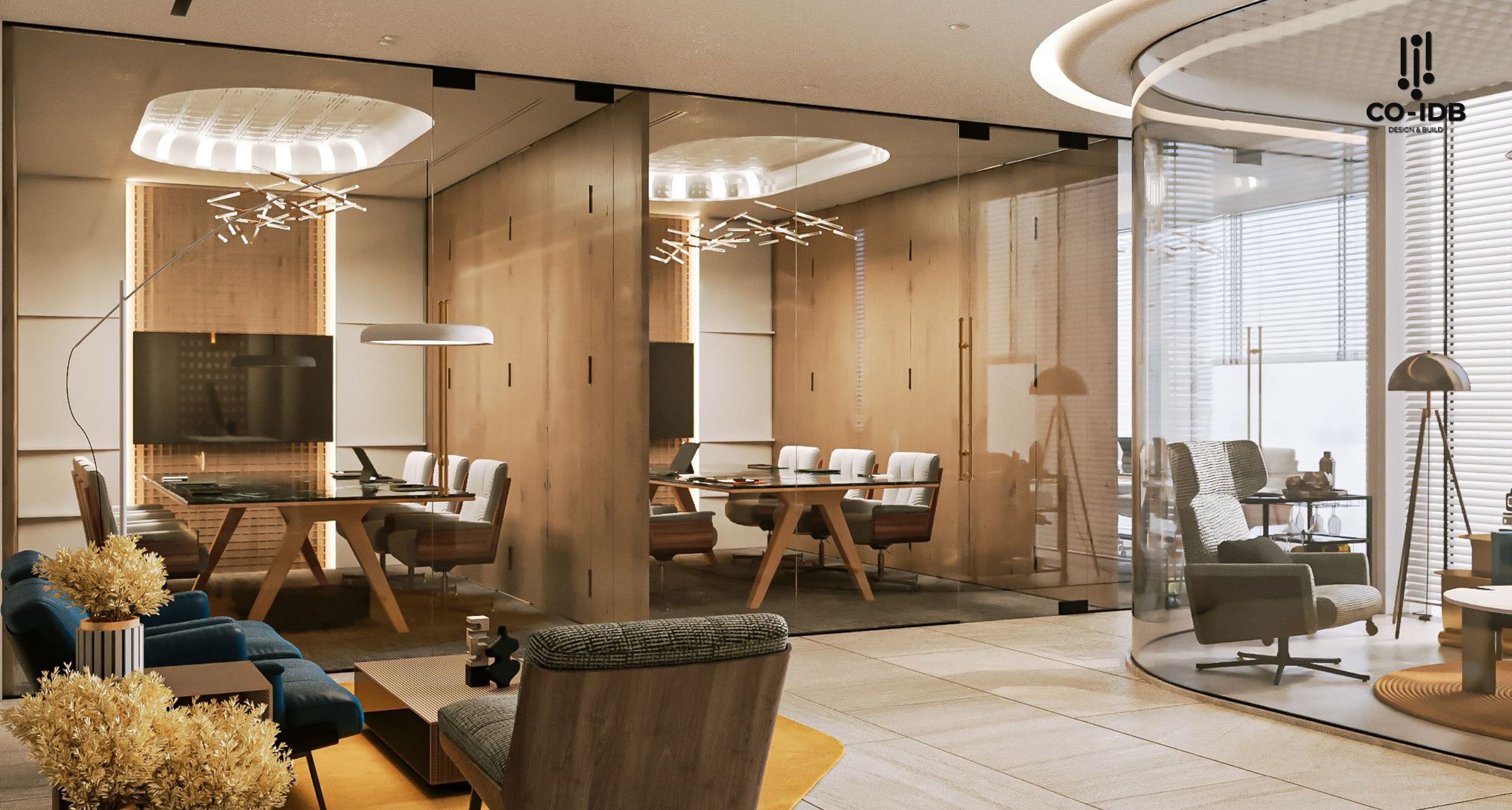
The basic principle of symmetrical layout in interior design is often applied in traditional architecture. The architect takes the center of the room as the dividing point, creating two identical symmetrical parts. This is expressed through the decoration of details such as lamps, pillows, flower pots, and other furniture. This design technique shows that the business owner prefers orderly spaces, favoring a sense of harmony and balance.
Asymmetrical Balance Rule
The asymmetrical balance rule uses different objects that have similar size and visual weight. When one side of the room or architecture contains furniture of equivalent size or visual presence to the other, it creates balance in the space. This not only creates a novel focal point but also makes the space more captivating.

Radial (Central) Balance Rule
For this principle, the interior design layout takes one object as the center and arranges furniture radiating outwards in a spiral pattern. If the business wants its office to be more beautiful, it can consider arranging the interior layout reasonably according to this principle. The spiral layout not only creates a unique aesthetic but also brings harmony and appeal to the workspace.
Emphasis Layout Rule
Every office should have one or more focal points to attract the eye and create an impression. The focal point is the center of attention, and all other interior design elements such as color, texture, size, and object placement direct the gaze towards that point. This emphasis is created through the rational arrangement of elements, or by using the art of contrast to highlight them.
Rhythm Layout Rule
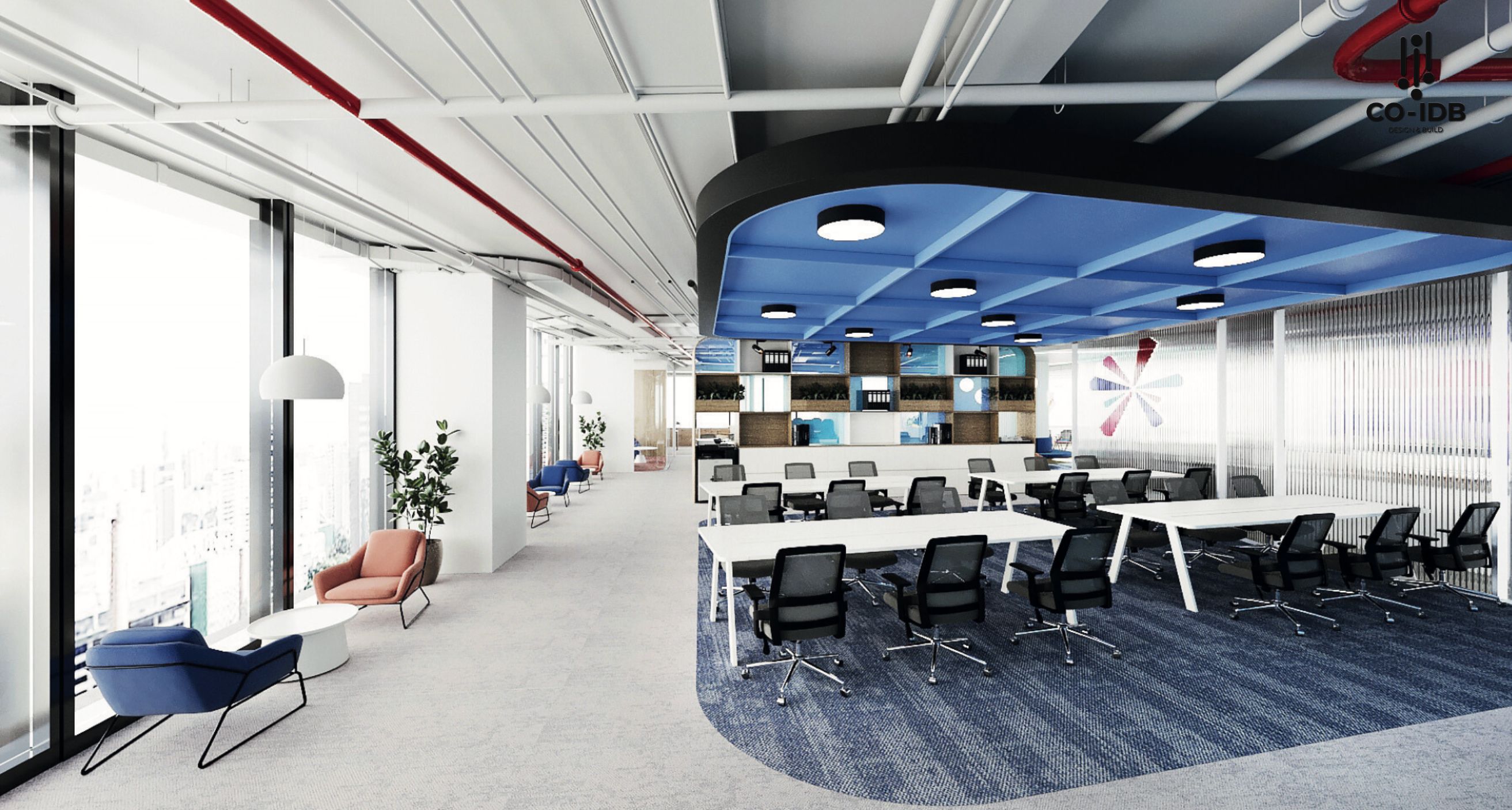
Rhythm in the interior design layout focuses on repetitive arrangement, creating a smooth and continuous flow for visual perspective in an office. Rhythm can be created in three ways: repetition, progression (sequence), and continuous flow. Interior design units often use all these forms of rhythm in a layout to create harmony for the space.
-
Repetitive Rhythm: Objects are repeated, such as colors or furniture.
-
Continuous Rhythm: A seamless rhythm guides the eye to move from one point to another smoothly. This can be created through architectural elements such as arches, moldings, or shelving units.
-
Progressive Rhythm (Sequence): Progression in rhythm can be understood as a change in shape or size from large to small or vice versa, creating an attractive and interesting visual flow.
Size and Proportion Layout Rule
The rule of proportion in the interior design layout is the harmony between shape and size to achieve balance between height, width, depth, and surrounding space. This helps create a harmonious and aesthetic interior arrangement, ensuring comfort and balance for users. For example, a small office would not be suitable for an excessively large file cabinet, and vice versa.
Unity Layout Rule
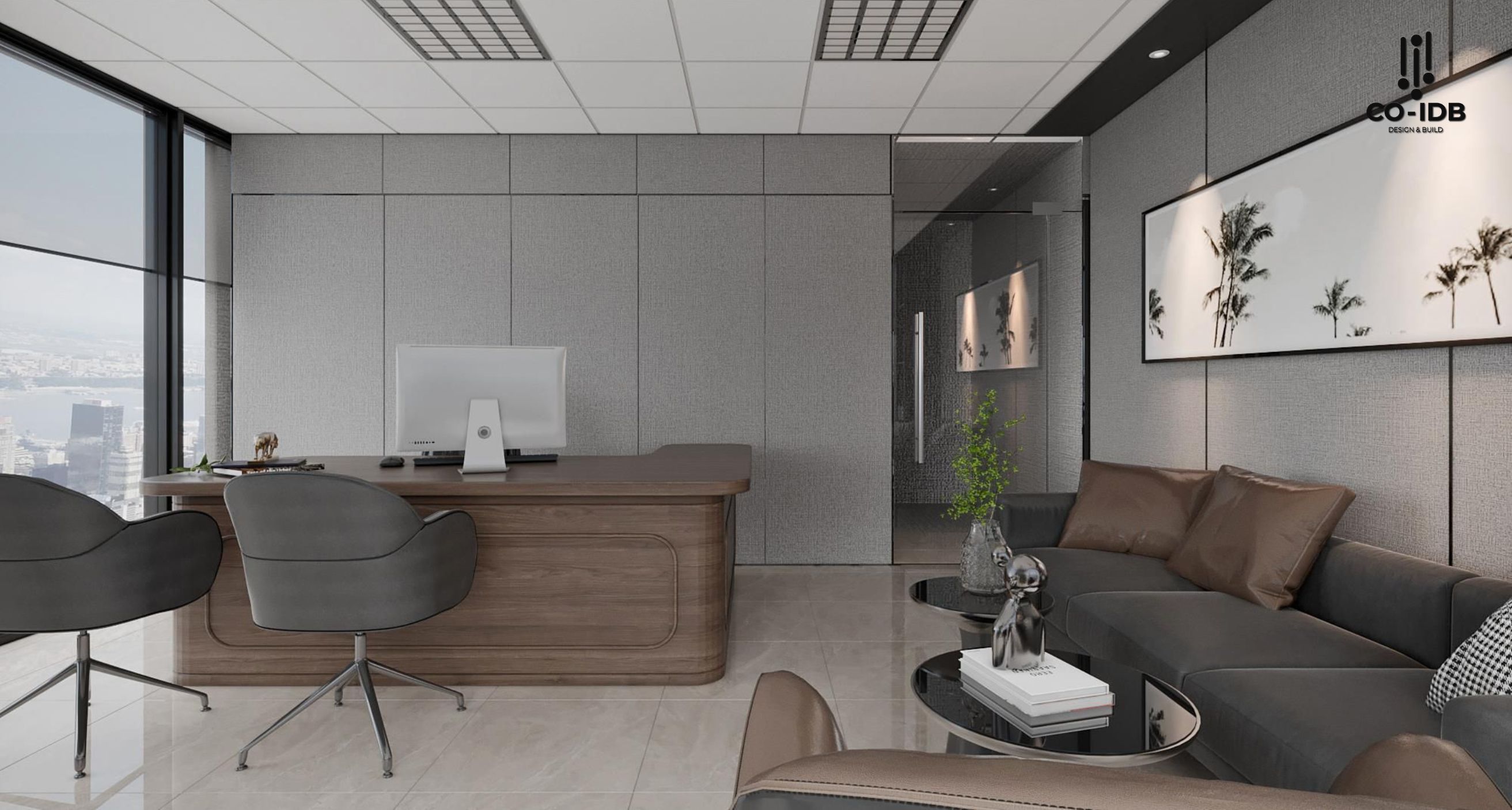
Every object in the office complements the overall design, creating unity and harmony. This unity creates a strong connection between elements, providing a unified look. Interior harmony is based on a set of common elements such as shape, color, arrangement, material, and style. This is the goal when decorating interiors harmoniously, creating a visually appealing and balanced space.
>> See more: Choosing unified interior materials
Layout Rules by Space Type
Open Office Layout
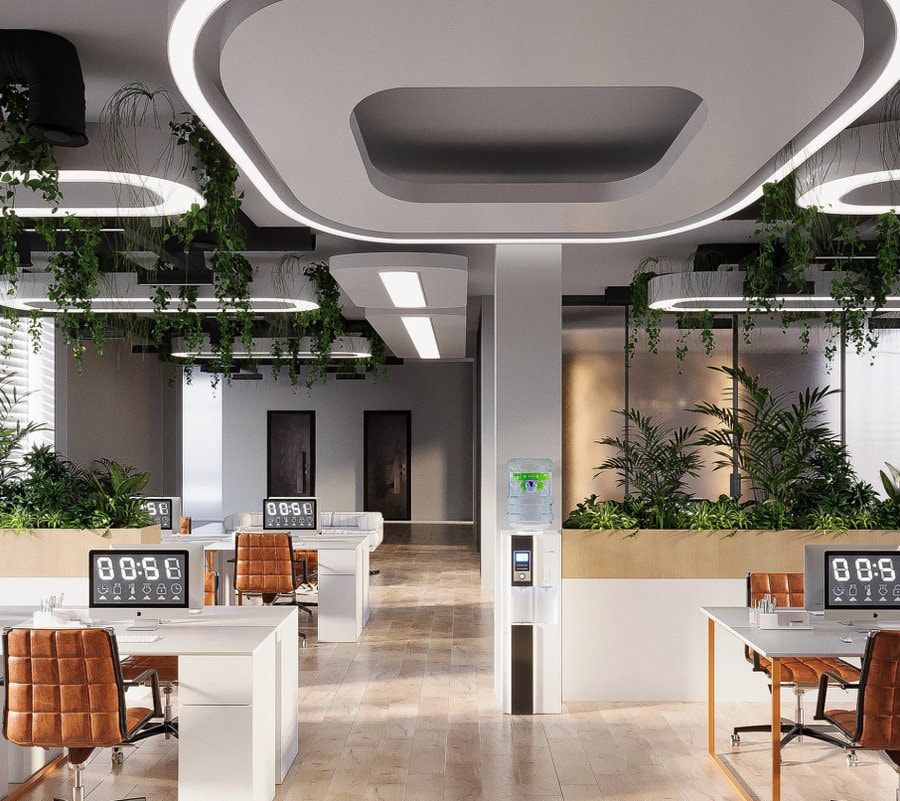
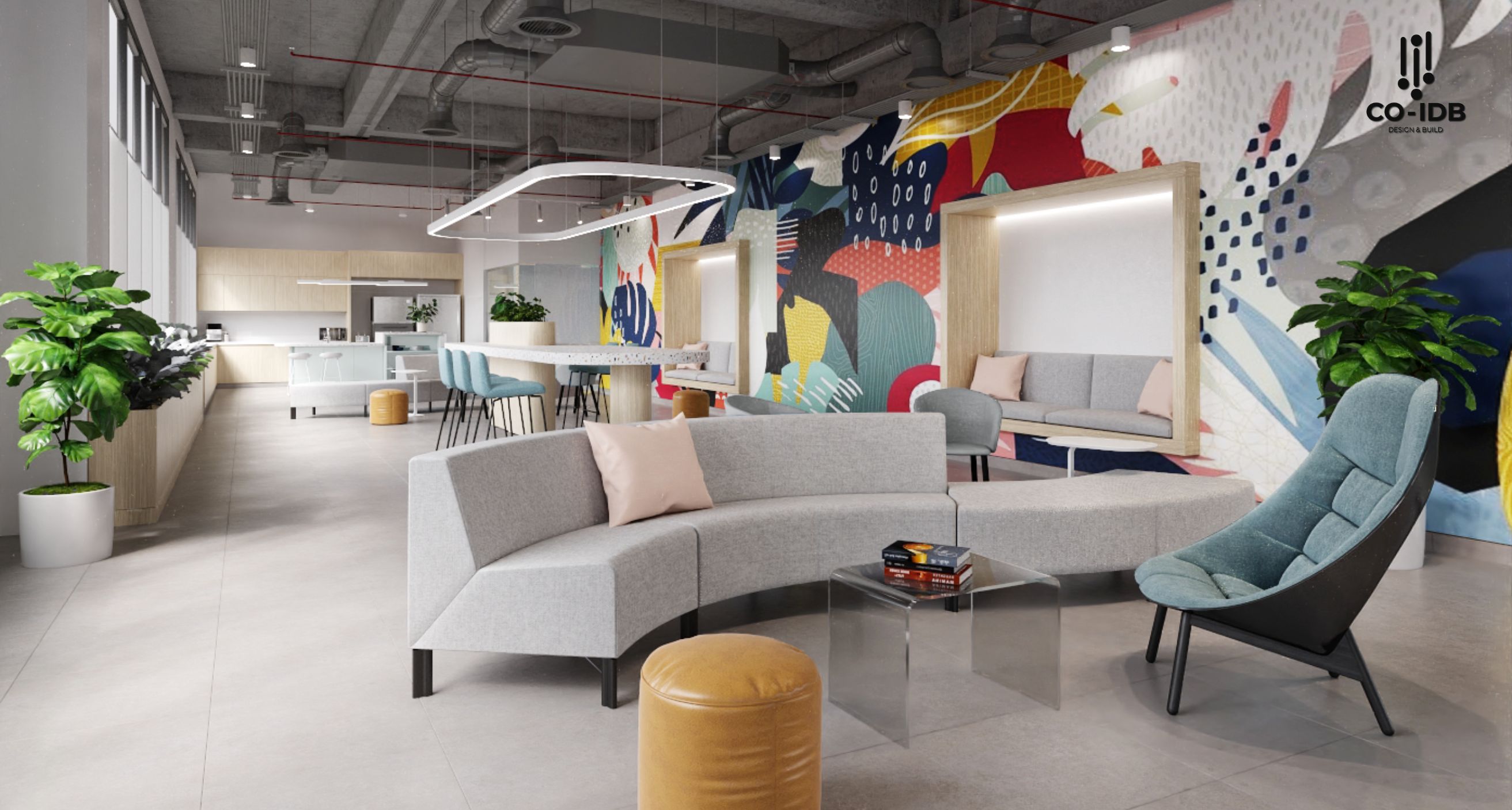
This layout rule focuses on eliminating rigid partitions, creating a continuous and flexible office interior design workspace. In an open office, workstations are arranged in groups, encouraging communication and interaction. Natural light is optimized thanks to large windows and the use of transparent materials.
Common areas such as small meeting rooms, relaxation corners, and green spaces are smartly integrated. With rational and flexible arrangement, the open office not only helps increase work productivity but also creates a friendly and inspiring working environment.
Flexible Office Layout
This layout rule uses smart solutions like mobile furniture. By using movable partitions and adjustable desks, the flexible office allows for easy rearrangement to serve different purposes such as meetings, teamwork, or individual work.
The integration of modern technology such as smart lighting and temperature control systems helps optimize work performance. The flexible office not only enhances creativity and productivity but also contributes to building a dynamic working environment that quickly meets job requirements and brings satisfaction to employees.
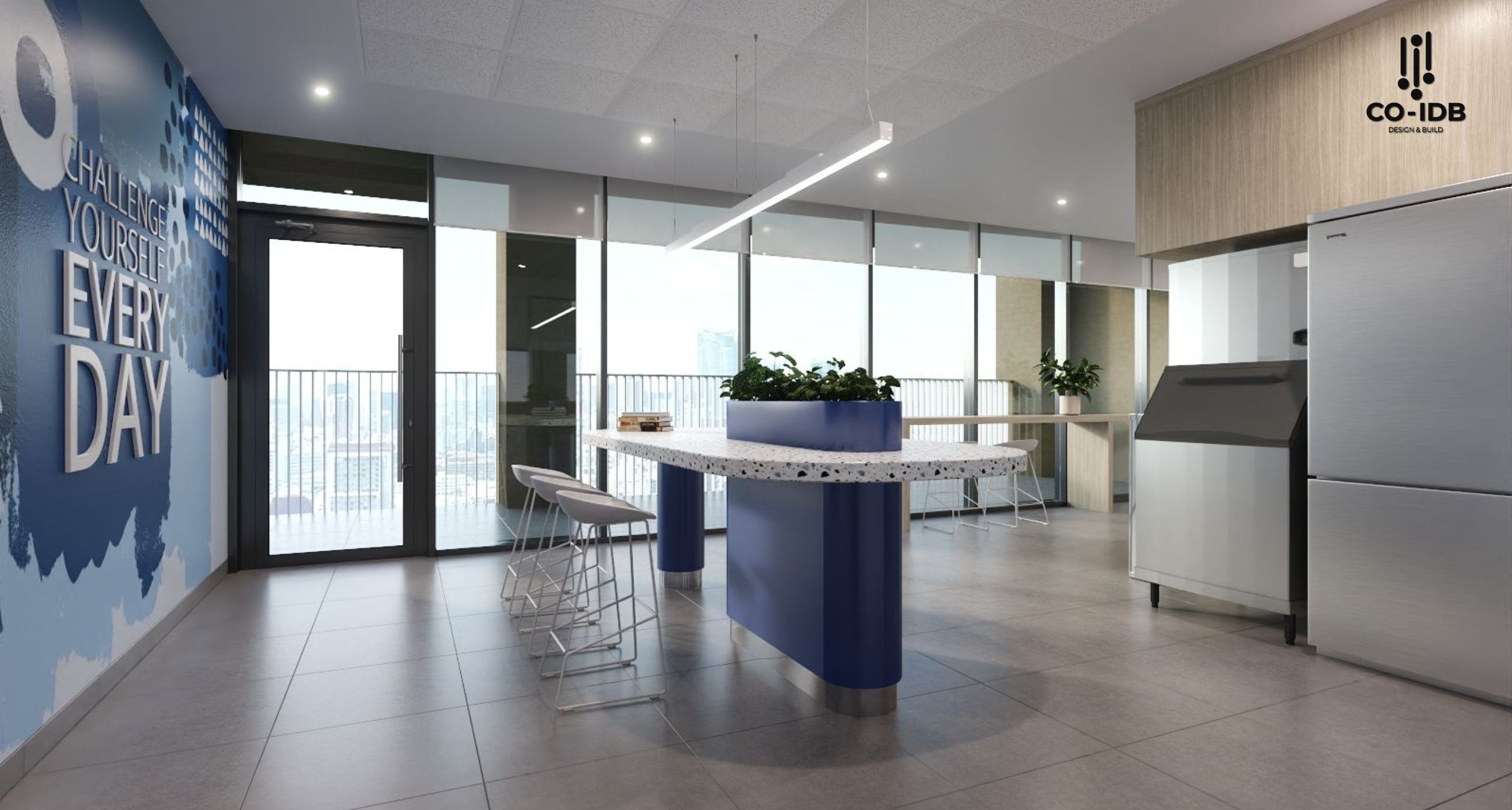
Traditional Office Layout
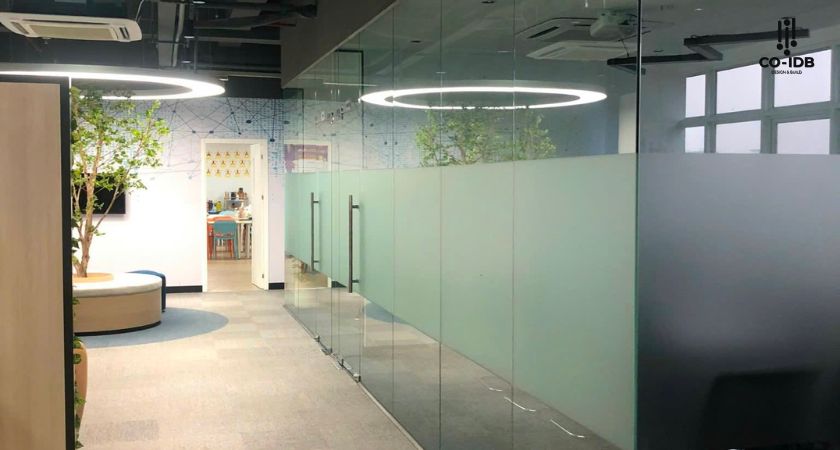
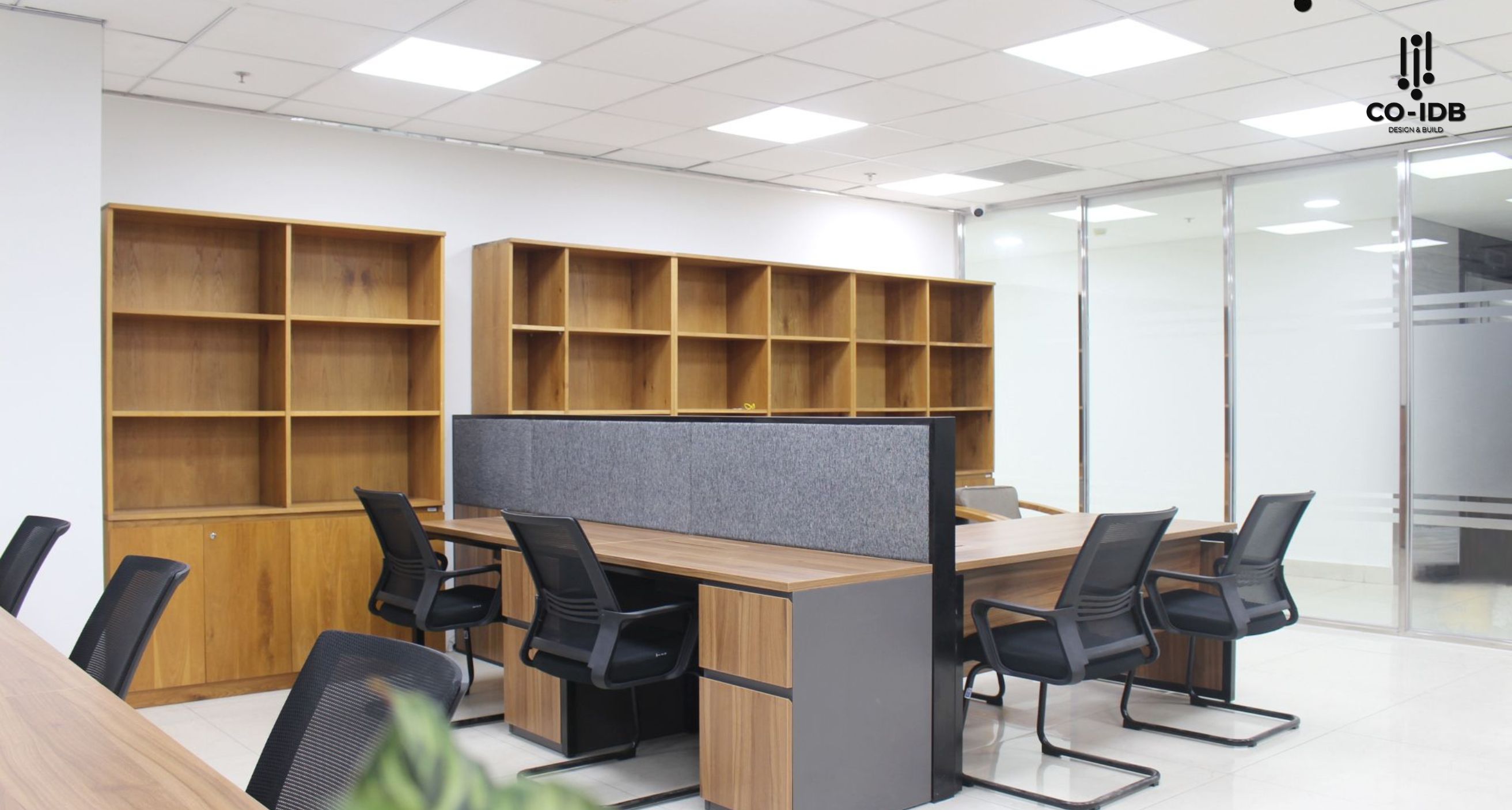
This layout rule typically uses fixed partitions, creating individual or small group private offices, ensuring privacy and concentration. In a traditional office, departments are arranged in a logical order, often along hallways or around a central area, such as a meeting room or reception area.
Furniture is carefully selected to demonstrate professionalism and formality, with desks, chairs, and storage cabinets arranged neatly and systematically. Lighting in a traditional office is often tightly controlled, using artificial light sources to ensure adequate brightness for work.
Although this layout may lack flexibility, it provides a stable and structured working environment, suitable for professions that require high concentration and security.
Above is all the information about the layout rules in interior design that businesses can refer to. Hopefully, this article will help you build a workspace suitable for your business style. If you still have questions related to the topic of office interior design and construction, contact Co-IDB immediately for the quickest support.
>> See more: